In the News
APF Canada's media responses to the latest issues and events in Asia presented in chronological order
The Hill Times
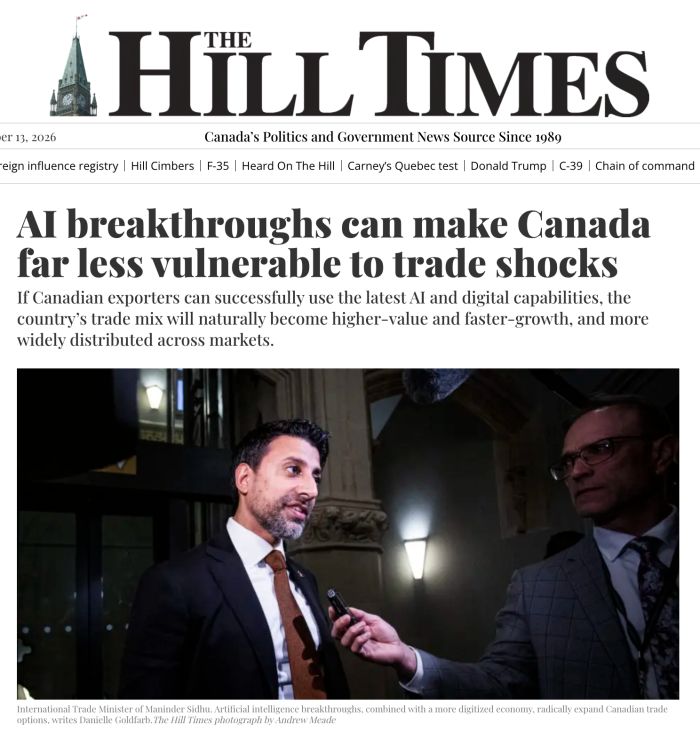
AI breakthroughs can make Canada far less vulnerable to trade shocks
The Hill Times, October 12, 2026
Guest Contributor: Danielle Goldfarb, McArthur Research Fellow and Distinguished Fellow, APF Canada
Excerpt: "United States President Donald Trump’s import bans and 50-per-cent tariffs are the latest in a relentless series of shocks to Canadian trade... But a massive opportunity to reduce the country’s risk is largely missing from the national conversation: artificial intelligence breakthroughs, combined with a more digitized economy, radically expand Canadian trade options.
"...New and improved digital and AI-based tradables create a huge and mostly untapped opportunity for Canada to boost its living standards and withstand shocks... Digital and AI-based exports are the fastest-growing and highest-value parts of global trade. But Canada is not taking full advantage. This country’s digital services exports account for less than two per cent of the global market. Neither that share, nor the dollar value of those exports, has grown since the AI breakthroughs a few years ago."

"As It Happens" on CBC Radio
Geely Enters Canada
"As It Happens" on CBC Radio, October 9, 2026
Featuring: Elizabeth Donkervoort, Senior Advisor, China Programs, APF Canada
Excerpt: [10:00 to 17:40]
Host Dave Seglins: "Elizabeth, why do you think Geely is the first Chinese automotive manufacturer [with plans to enter the Canadian market]?"
Elizabeth: "I don't think it's really coming as a surprise, Dave, because, if you recall, back in July, it was actually Geely-owned Lotus EVs that were the first shipment of Chinese-owned and manufactured cars that came into Canada under this quota system. But really, the story goes back even further.
"We look to 2021: Geely had already filed a trademark for its domestic brand, Zeekr, with the Government of Canada, and it had already begun the certification process for different models... potentially as early as late 2025.
"... Geely actually acquired controlling ownership of Volvo in 2017, and Volvo Canada reported having a record year of sales, selling about 12,000 cars in 2025. So [Geely] has a history with Canada that doesn't make [this move] very surprising at all."
Canadian Global Affairs Institute
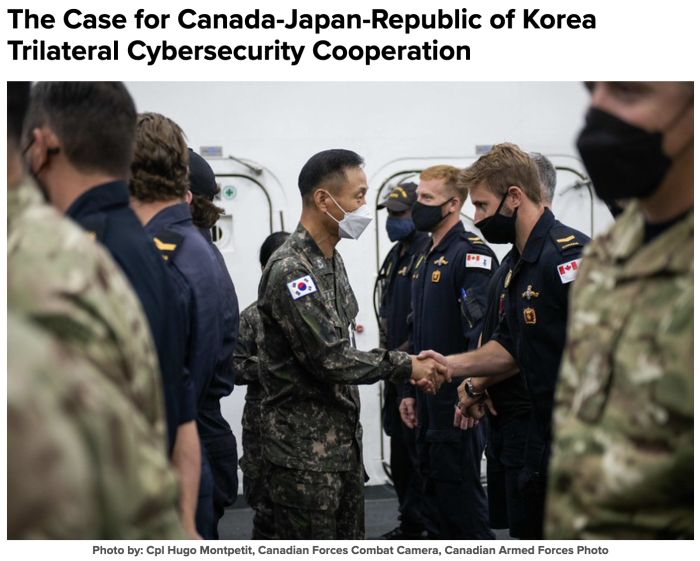
The Case for Canada-Japan-Republic of Korea Trilateral Cybersecurity Cooperation
Canadian Global Affairs Institute, October 2, 2026
Guest Contributors: Jeehye Kim, Senior Program Manager of Northeast Asia, APF Canada; Tae Yeon Eom, former Research Scholar, APF Canada
Excerpt: "In February 2025, the Lazarus Group stole an estimated US$1.5 billion in Ethereum from the cryptocurrency exchange Bybit, marking the largest cryptocurrency theft on record. The Federal Bureau of Investigation identified North Korea’s TraderTraitor cluster as responsible within days.
"...This article argues that trilateral cooperation among Canada, Japan, and South Korea can close those gaps in ways bilateral action alone cannot. The article first documents these limits through three cases of North Korean cyber operations, then examines how institutional norm-building and operational cooperation could work in practice and finally addresses the practical challenges to building this framework before concluding with a series of policy recommendations."
The Hill Times
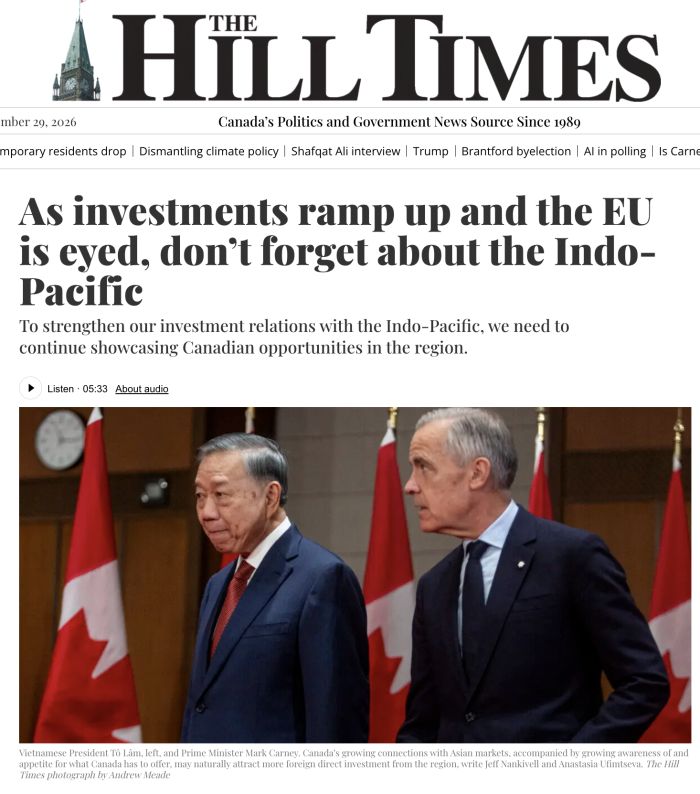
As investments ramp up and the EU is eyed, don’t forget about the Indo-Pacific
The Hill Times, September 28, 2026
Guest Contributors: Jeff Nankivell, President & CEO, APF Canada; Anastasia Ufimtseva, Senior Program Manager, International Trade & Investment, APF Canada
Excerpt: "Prime Minister Mark Carney convened the first Canada Investment Summit in Toronto earlier this month, drawing investors from nearly 30 countries managing more than $100-trillion in assets, and announcing close to $500-billion in new commitments from domestic investors.
... While $500-billion in commitments and new investment incentives are welcome . . . it remains to be seen whether the participation of major Indo-Pacific players at the summit will lead to the concrete investments needed to raise Canada’s investment numbers, and boost our economy.
Preliminary data from APF Canada’s Investment Monitor for the first quarter of 2026 indicates that Indo-Pacific FDI into Canada has continued to decline and was approximately 73 per cent lower than in the first quarter of 2025, signalling there is still much work to be done. "
Vietnam.VN
Canadian media highlight new milestone in Viet Nam–Canada relations
Vietnam.VN, September 26, 2026
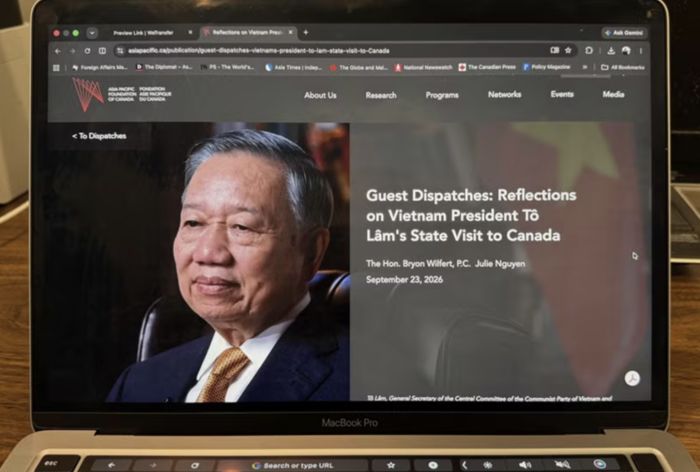
Featuring: Guest Dispatches: Reflections on Vietnam President Tô Lâm's State Visit to Canada by The Hon Bryon Wilfert and Julie Nguyen
Excerpt: The coverage by Canadian media and researchers shows that the top Vietnamese leader's state visit was seen not only as an important diplomatic milestone but also as an opportunity for the two countries to deepen substantive cooperation, diversify partnerships and seek new drivers of development amid a changing global landscape.
CBC quoted Jeff Nankivell, President and CEO of the Asia Pacific Foundation of Canada, as saying Viet Nam could play an important role in Canada's efforts to conclude a free trade agreement with the Association of Southeast Asian Nations (ASEAN).
The Asia Pacific Foundation of Canada also published commentaries by former parliamentarian Bryon Wilfert and researcher Julie Nguyen on the significance of the visit.
Wilfert said Canada should seize opportunities from Viet Nam and translate the Strategic Partnership framework into concrete cooperation in agriculture, energy, critical minerals, aerospace, clean technology, semiconductors and education. He also proposed enhancing direct air connectivity to promote trade, investment and people-to-people exchanges.
Meanwhile, Nguyen analyzed similarities between Canada and Viet Nam as middle powers seeking to maintain strategic autonomy in relations with larger neighboring countries. She said Viet Nam's experience in preserving independence, maintaining flexibility in international relations and pursuing long-term development interests offers lessons of interest to Canada.
Vietnam.VN
International media highlights Vietnam's impact from New York to Ottawa.
Vietnam.VN, September 26, 2026
Featuring: Jeff Nankivell, President & CEO, APF Canada
Excerpt: Speaking to CBC, Jeff Nankivell, President and CEO of the Asia Pacific Foundation of Canada (APF Canada), said that Vietnam could play a crucial role in Ottawa's efforts to boost economic relations with ASEAN. He noted that, as economies seek diversification, Canada and Vietnam share similar interests in expanding their networks of partners and markets.
This interest became even more apparent on September 24th, when General Secretary and President To Lam and Canadian Prime Minister Mark Carney officially announced the upgrading of Vietnam-Canada relations to a Strategic Partnership.
CityNews
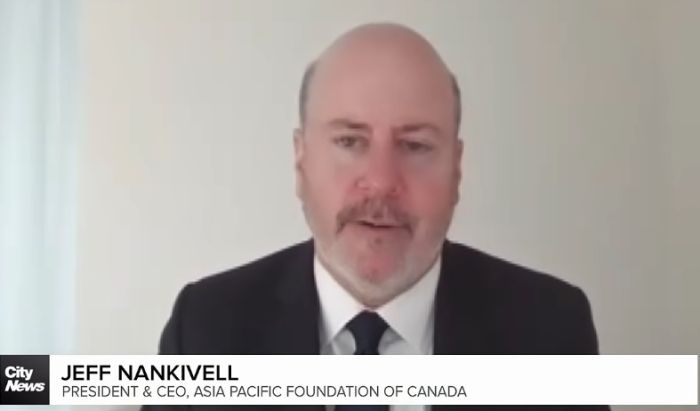
Canada and Vietnam agree to strategic partnership
CityNew, September 24, 2026
Featuring: Jeff Nankivell, President & CEO, APF Canada
Excerpt:
Jeff Nankivell of the Asia Pacific Foundation of Canada says Vietnam is a booming economy in need of energy and is one of the only countries expanding refining capacity that can take the kind of crude Canada exports.
“If you want to establish long-term markets, long-term buyer relationships, you need to have local partners and there's a lot of competition for those players from other would be exporters to Vietnam.”
(Nankivell) adds the nation is also seeking clean energy solutions and is wary of growing too close to China.

CTV News
Trump’s meeting with Xi Jinping could include energy talks: policy expert
CTV News, September 24, 2026
Featuring: Jeff Nankivell, President & CEO, APF Canada
Excerpt: Jeff Nankivell told CTV News that both Trump and Xi are looking for, to paraphrase Chinese officials, a "relationship of constructive, strategic stability." He adds that Trump is aiming for a smooth visit that "avoids [any] further escalation of the trade war . . . the overriding objective is to keep things on an even keel for now."
Behind closed doors, Nankivell says he "wouldn't be surprised if President Trump were to be asking President Xi to help [stabilize the price of oil] by leaning on Iran" to conclude the war through China's diplomatic channels and by adjusting China's oil reserves. "If China draws down on its oil reserves, that helps keep the international price of oil lower. If China decides to start buying [oil] again, that will drive the price up. So President Xi has a lot of leverage in that conversation."
POLITICO - Playbook Canada
Trade war vibe check
POLITICO (Playbook Canada), September 24, 2026
Featuring: Jeff Nankivell, President & CEO, APF Canada
Excerpt: On the docket: Critical minerals, Bill C-238 and home-energy refits:
Heather Exner-Pirot (Macdonald-Laurier Institute), Pierre Gratton (Mining Association of Canada), Jeff Nankivell (Asia Pacific Foundation of Canada) and Todd Smith (Candu Energy) are on the expert roster at the House International Trade Committee as it studies clean energy and critical minerals exports.
CBC News
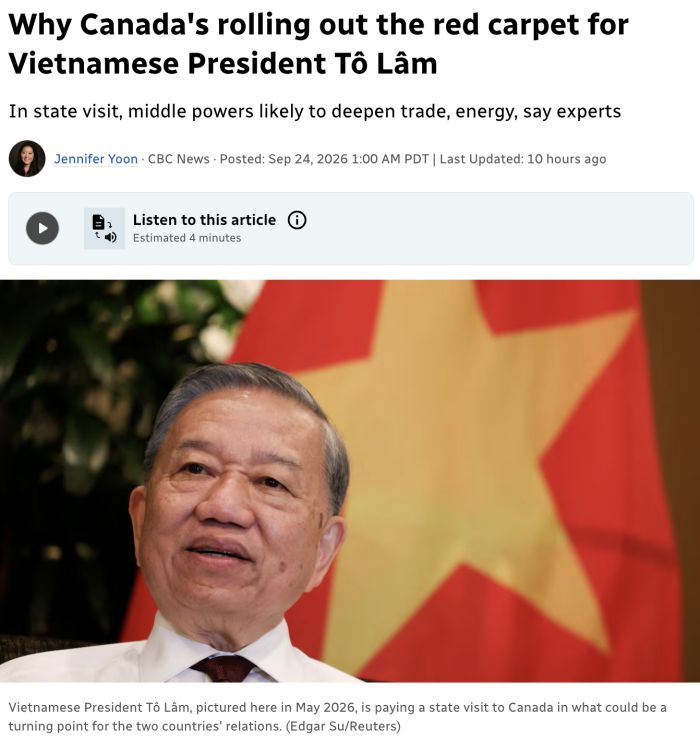
Why Canada's rolling out the red carpet for Vietnamese President Tô Lâm
CBC News, September 24, 2026
Featuring: Jeff Nankivell, President & CEO, APF Canada
Excerpt: Canada is also working to finalize a free trade agreement with the Association of South East Nations (ASEAN). Vietnam could prove clutch in those efforts, since it is a prominent member of the intergovernmental regional organization, says Jeff Nankivell, President & CEO of the Asia Pacific Foundation of Canada.
Nankivell says Canada is likely to find a willing partner in Vietnam, which has also faced punishing American tariffs, with the U.S. at one point slapping a 40 per cent levy on goods determined to have been transshipped through Vietnam.
"Everyone in the world is looking to diversify," he said. "When we knock on the door of a country like Vietnam, it opens very quickly because they have a similar interest in diversifying."
"...On conventional energy, LNG and crude oil, there could be statements of intention on the Vietnamese side to look to Canada for future supplies."
Yukon News
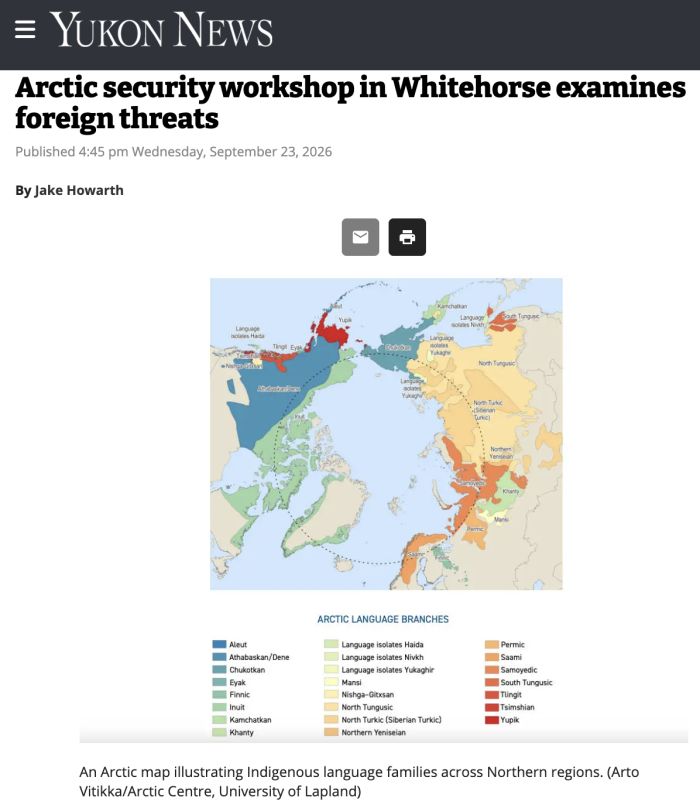
Arctic security workshop in Whitehorse examines foreign threats
Yukon News, September 23, 2026
Featuring: Arctic Workshop (Yukon): Confronting Hybrid Threats in the Arctic
Excerpt: A two-day workshop bringing together roughly 30 representatives from the military, governments, First Nations, industry, and international think tanks began in Whitehorse on Sept. 22.
The Asia Pacific Foundation of Canada aims to make the gathering on emerging Arctic security challenges a regular fixture on Canada’s security calendar.
The workshop comes as the Foundation cites federal intelligence officials warning Parliament that China poses a threat to Canada’s economic security, particularly around Northern critical minerals.
Vietnam.VN
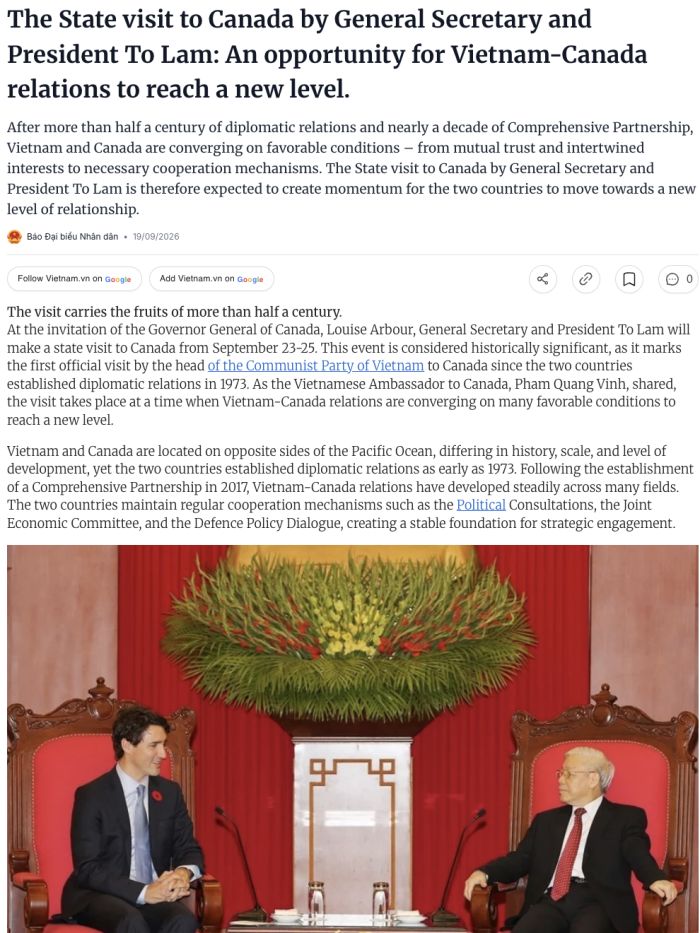
The State visit to Canada by General Secretary and President To Lam: An opportunity for Vietnam-Canada relations to reach a new level.
Vietnam.VN, September 19, 2026
Featuring: Barrett Bingley, Asia Regional Director, Singapore Office, APF Canada; Ari Van Assche, 2025-26 John H. McArthur Research Fellow, APF Canada.
Excerpt: "In an analysis from early 2026, Professor Ari Van Assche of HEC Montréal, a research fellow at the Canada Asia Pacific Foundation, argued that trade diversification cannot simply be about selling more goods outside the US market or signing more agreements, but more importantly, about positioning partners within strategic value chains. He called this approach “managed interdependence”: choosing reliable partners, identifying vulnerable links, and investing in sectors that determine resilience. Canada, he argued, must choose depth of linkage in strategic sectors rather than spreading itself too thin.
...A July 2026 report by Barrett Bingley, Asia Regional Director of the Asia-Pacific Foundation of Canada, highlighted an imminent challenge. The CPTPP and the European Union (EU) have been in formal dialogue since November 2025 on digital trade and supply chains. The 11th CPTPP Ministerial Council meeting in Hanoi in November 2026 will demonstrate the potential for transformation. Combined, the two blocs account for approximately 32% of global GDP and 37% of world trade, providing a significant counterweight to protectionism and the fragmentation of the rules of the game."
Center for Strategic & International Studies (CSIS)
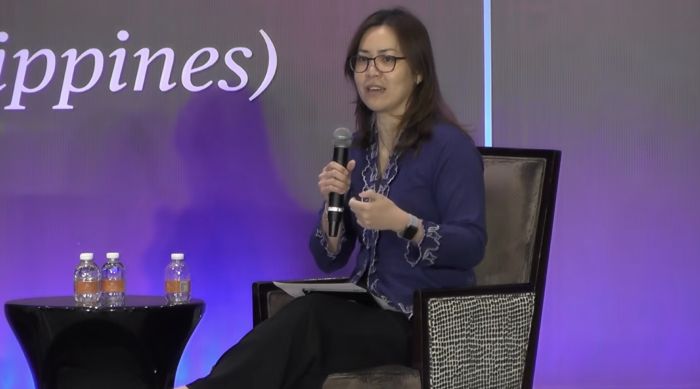
Panel 4: Tariffs, Trade Deals, and International Geoeconomic Shocks | Manila Strategy Forum 2026
Center for Strategic & International Studies (CSIS), September 19, 2026
Featuring: Irene Chan, Senior Research Program Manager, Singapore Office, APF Canada.
Excerpt: "Southeast Asian governments, Canada, and other middle powers are facing external shocks such as intensifying Sino-U.S. competition, technological restrictions, wars, and supply chain restrictions. But these restrictions play out across very different domestic economies and political priorities. For instance, Vietnam's dependence on the U.S. export market creates one set of vulnerabilities, Indonesia's industrial policy ambitions create another, and the Philippines' maritime dispute with China and its alliance with the U.S. creates yet another set of vulnerabilities.
So when we ask whether geopolitical shocks are pushing Southeast Asia towards China or the U.S., I think we need to look at individual policy choices that governments are actually making."
The Business Times (Singapore)
Canada is upping oil flows to Asia, but South-east Asia’s refineries aren’t ready to handle them yet
The Business Times (Singapore), September 17, 2026
Featuring: Barrett Bingley, Asia Regional Director, Singapore Office, APF Canada
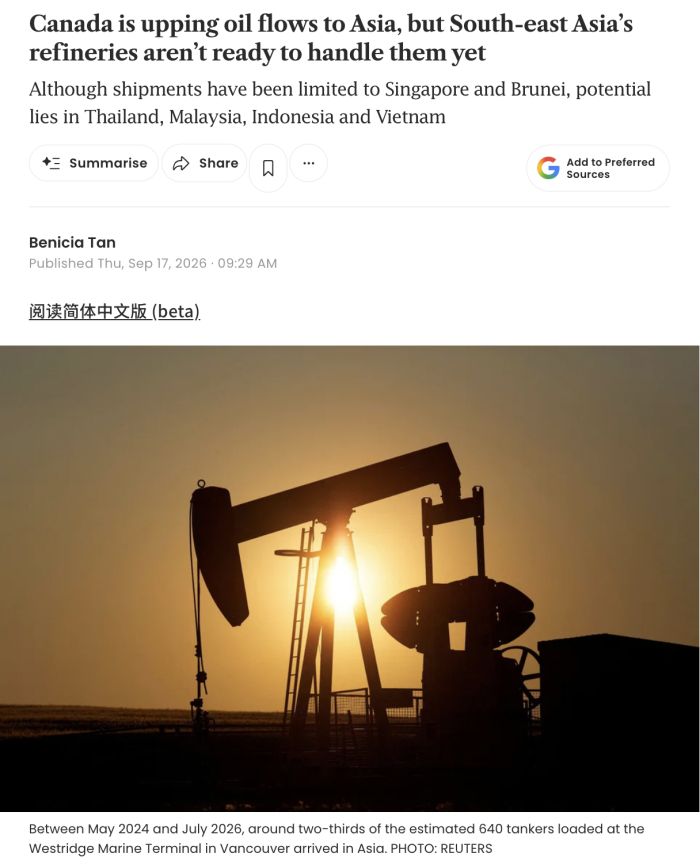
Excerpt: Canada is ramping up its oil exports to Asia as the Middle East conflict disrupts energy flows, but South-east Asia’s refineries are finding that incompatible infrastructure is preventing them from readily tapping this new supply.
... In 2025, Canada’s non-US crude exports surged to C$10 billion (US$7.2 billion), averaging roughly 430,000 barrels a day, up from “effectively zero”, noted Barrett Bingley, Asia regional director at the Asia Pacific Foundation of Canada.
With Canada looking for alternative markets, Trans Mountain data showed that between May 2024 and July 2026, around two-thirds of the estimated 640 tankers loaded at the Westridge Marine Terminal in Vancouver arrived in Asia.
Fortune
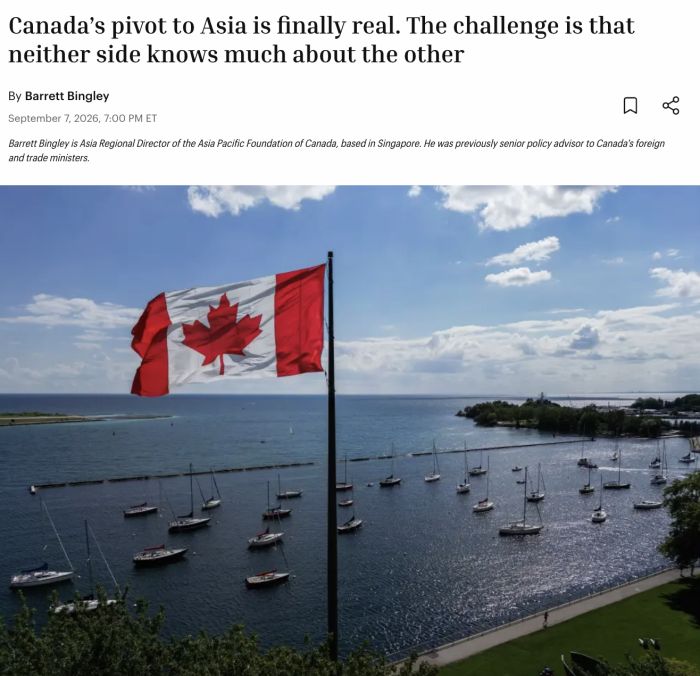
Canada’s pivot to Asia is finally real. The challenge is that neither side knows much about the other
Fortune, September 7, 2026
Contributor: Barrett Bingley, Asia Regional Director, Singapore Office, APF Canada
Excerpt: "For four decades, Canadian commercial life has been organized around the belief that access to the U.S. market was a constant, rather than a variable. That assumption no longer holds, whether or not tariffs are here to stay.
So where should Canadians look to next? The answer is Asia—if both sides can overcome their mutual ignorance.
... Fortunately, the groundwork for Canada’s expansion into Asia has already been laid.
... Yet with all this support, too few businesspeople—on either side of the Pacific—know what’s going on.
Polling by the Angus Reid Institute for the Asia Pacific Foundation of Canada found that 73% of Canadians say they know little or nothing about South Korea; 82% say the same of Singapore, and 90% of Malaysia. Yet 78% supported Canada’s CPTPP membership. Canadians endorse the agreement while knowing almost nothing about the countries inside it."
Editor & Publisher
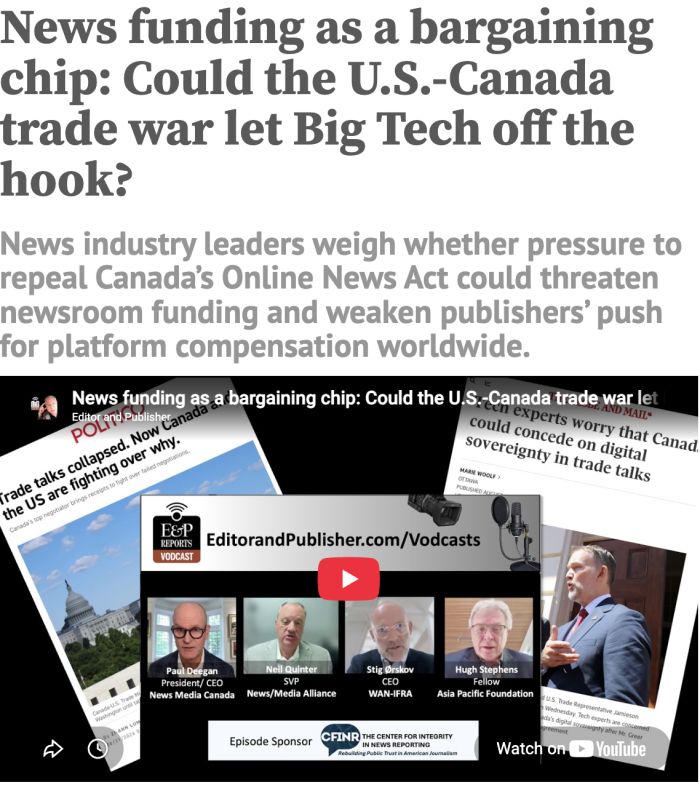
News funding as a bargaining chip: Could the U.S.-Canada trade war let Big Tech off the hook?
Editor & Publisher, September 5, 2026
Featuring: Hugh Stephens, Distinguished Fellow, APF Canada
Excerpt: "Hugh Stephens, a distinguished fellow with the Asia Pacific Foundation of Canada and executive fellow at the University of Calgary, drew a distinction between a trade grievance and a trade violation.
Discussing the United States-Mexico-Canada Agreement, known in Canada as CUSMA, Stephens explained that American lists of trade irritants contain a broad assortment of industry objections. Inclusion does not establish that a policy breaches the agreement. “Well, it hasn't been challenged by the US,” he said of the news law. “I don't think it is a violation.”
You can watch the accompanying vodcast with Hugh Stephens here.
VN Economy
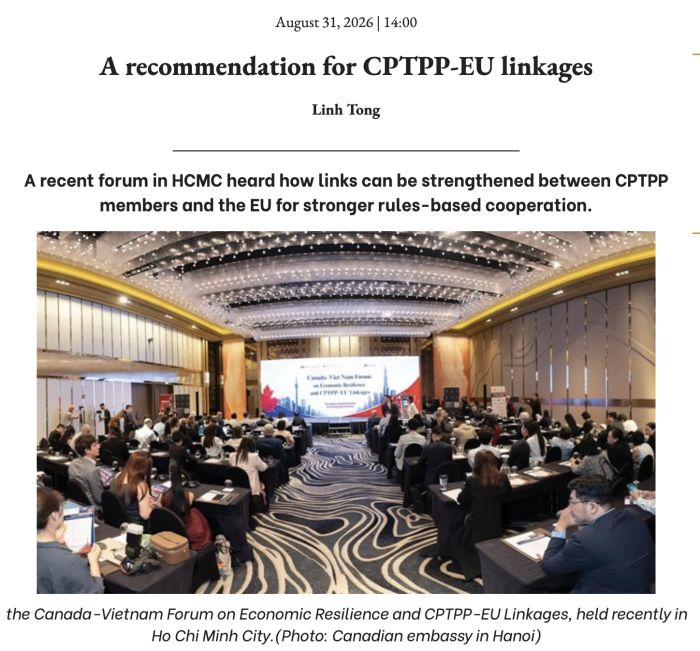
A recommendation for CPTPP-EU linkages
VN Economy, August 31, 2026
Featuring: Barrett Bingley, Asia Regional Director, Singapore Office, APF Canada
Excerpt: Opening the Canada-Vietnam Forum on Economic Resilience and CPTPP-EU Linkages, held recently in Ho Chi Minh City, Mr. Barrett Bingley, Asia Regional Director at the Asia Pacific Foundation of Canada, said the world was confronting unprecedented pressure on the rules-based trading order. In that environment, he argued, the CPTPP and the EU represent two of the world’s most robust high-standard trading frameworks, making the case for bringing them closer together “both strategically urgent and practically achievable.”
...For many speakers, the objective is best understood as improving interoperability rather than harmonization. Mr. Dan Ciuriak, Distinguished Fellow at the Asia Pacific Foundation of Canada, argued that globalization has always been driven more by production than by trade itself. The WTO, he said, effectively provided the “operating system” that allowed globally-distributed manufacturing networks to function, while later generations of regional trade agreements continued to update that system after multilateral negotiations stalled.
The Hub
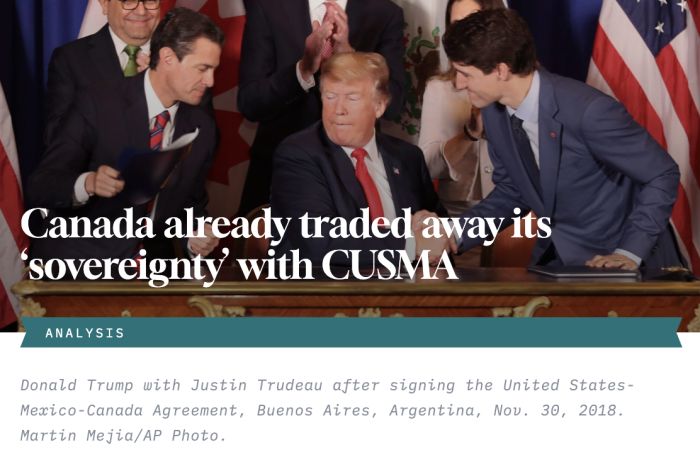
Canada already traded away its ‘sovereignty’ with CUSMA
The Hub, August 28, 2026
Featuring: Hugh Stephens, Distinguished Fellow, APF Canada
Excerpt: According to Prime Minister Mark Carney, last weekend’s decision to dramatically leave the negotiating table with the U.S. came down in large part to Canada’s outright refusal to trade away its most precious product: its sovereignty
But hidden in the fine print of the Canada-United States-Mexico Agreement (CUSMA) was a line that gave the U.S. a sort of veto over any future free trade agreement we might plan to sign with China, or any other “non-market country.”
“Of all the penalties we have had to pay to get the North American free-trade agreement essentially renewed, this is the highest. We have just sacrificed our independent trade (and arguably foreign) policy on the altar of the USMCA,” said Hugh Stephens, Distinguished Fellow at the Asia Pacific Foundation of Canada in 2018. “What were our negotiators thinking?”
South China Morning Post
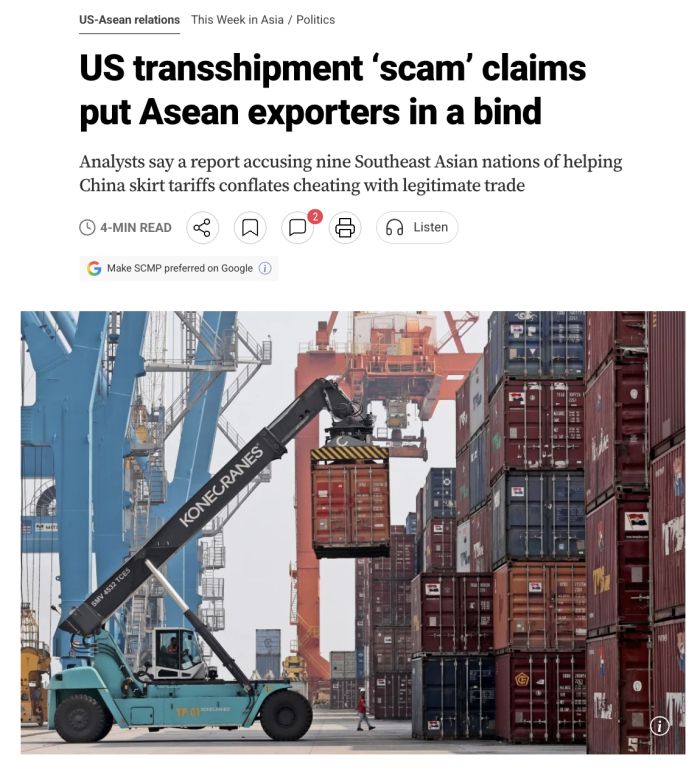
US transshipment ‘scam’ claims put Asean exporters in a bind
South China Morning Post (SCMP), August 18, 2026
Featuring: Barrett Bingley, Asia Regional Director, Singapore Office, APF Canada
Excerpt: Southeast Asian exporters may soon face a heavier burden of proof to show they are not helping Chinese goods dodge US tariffs after the White House named nine countries in the region as part of what it called a global “Shadow Transshipment Network”.
“A supply chain touching China is different from illegal transshipment, and we cannot let [Peter] Navarro gaslight the region on this,” said international trade specialist Barrett Bingley, Asia Regional Director for APF Canada, referring to the White House trade adviser who led the report.
“A multinational corporation moving production to Vietnam, Malaysia, Thailand or Indonesia can be doing real diversification, not just slapping a new label on Chinese goods.”
The Canadian Press
Turmoil in the Middle East has upended the world’s helium supplies, Canada has the resources to help
The Canadian Press (via The Globe and Mail), August 2, 2026
Featuring: Karen Hui, Project Co-ordinator, Indo-Pacific Critical Minerals Hub, APF Canada
Excerpt: Helium has a wide array of uses, and in almost all cases there is nothing that can act as a substitute. The inert element cools MRI machines, pressurizes rocket components and helps detect leaks in nuclear plants. It’s also a vital input in the manufacturing of advanced computer chips, representing an estimated 10 to 15 per cent of global helium demand as the artificial intelligence sector booms.
“And that share is rising pretty fast,” said Karen Hui, project co-ordinator with the Asia Pacific Foundation’s Canada-Indo-Pacific Critical Minerals Hub. Big Asian players in the chip manufacturing space, like Taiwan and South Korea, are hugely dependent on Qatari helium, and tend not to keep much in the way of backup supplies, she said.
And then there’s the Strait of Hormuz to contend with. Since the war began, few ships have been able to exit the narrow waterway connecting the Persian Gulf with the open sea.
“It’s very likely that Qatar won’t fully restart until they trust the strait is genuinely safe, and we are not seeing that right now,” Hui said.