Dans l'actualité
Réactions médiatiques de la FAP Canada aux derniers enjeux et événements en Asie
The Globe and Mail
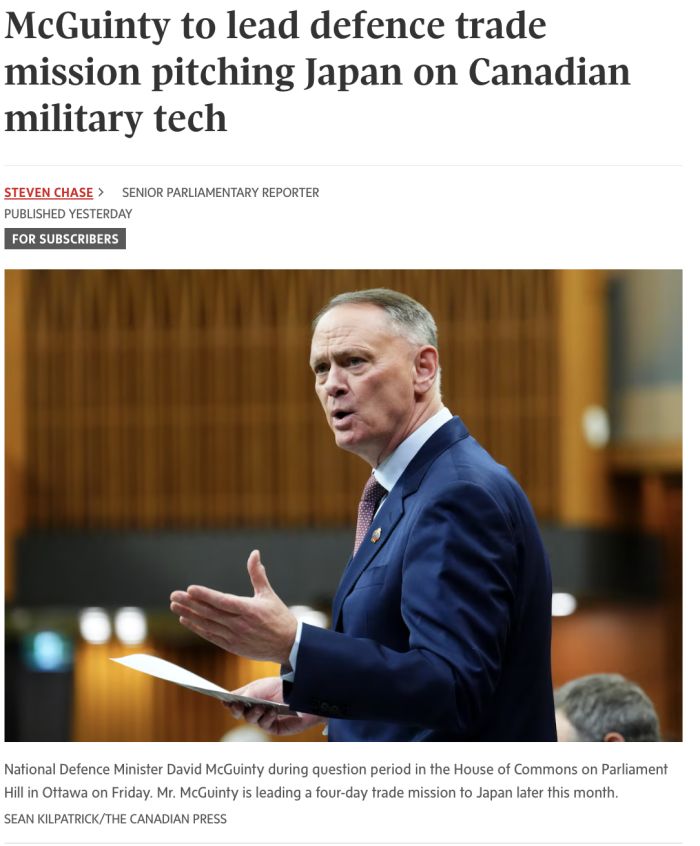
McGuinty to lead defence trade mission pitching Japan on Canadian military tech
The Globe and Mail, June 8, 2026
Featuring: Vice-President Research & Strategy Vina Nadjibulla, APF Canada
Excerpt: Vina Nadjibulla, vice-president of research and strategy at the Asia Pacific Foundation of Canada, said the timing of this trip is good because both countries are making “generational investments in our defence sector” as they seek to maintain peace and stability in both the Indo-Pacific and the Arctic.
Mr. Carney, saying that Canada could no longer rely on the United States for protection, used his first budget last November to deliver a defence-spending increase of more than $84-billion over five years – which is believed to be the biggest short-term cash infusion for the military since the Korean War.
Ms. Nadjibulla said increased focus by Canadian cabinet ministers on Japan is important as Ottawa seeks to build middle-power coalitions around the world.
CTV News
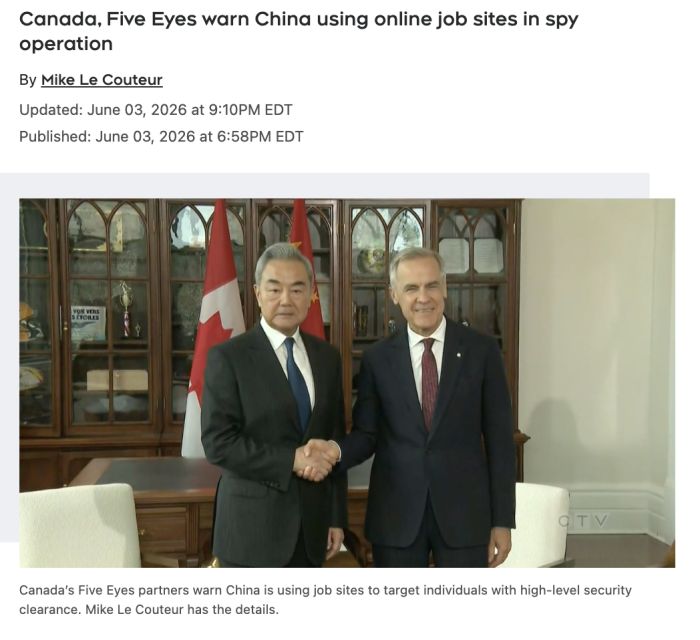
Canada, Five Eyes warn China using online job sites in spy operation
CTV News, June 3, 2026
Featuring: Vice-President Research & Strategy Vina Nadjibulla, APF Canada
Excerpt: Vina Nadjibulla told CTV News that China’s spy operation “really is a sophisticated campaign.”
“It shows an evolution in tactics from the Chinese security institutions,” said Nadjibulla. “I think the alert that we saw issue today really should be taken seriously, and it is quite an unprecedented development.”
Nadjibulla says the timing of all this reinforces the point that engagement with China “cannot mean silence on national security”. She also stressed how important it is that the Five Eyes partners are issuing such a public statement.
“Transparency is part of building resilience,” Nadjibulla told CTV News. “The purpose of this alert is not to create panic or stigmatize communities. It is to inform people who may be targeted and give them practical tools to act and respond.”
CTV News - Power Play
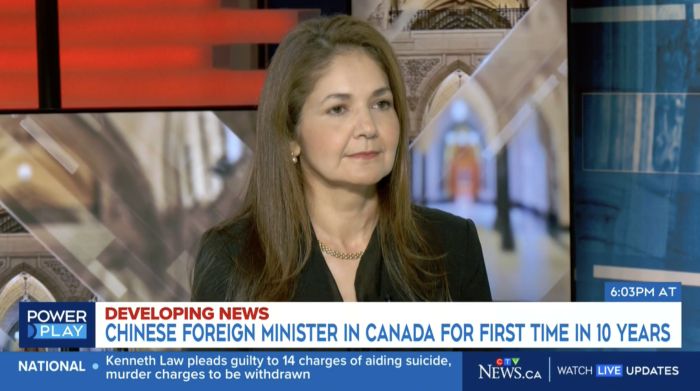
Can Canada deepen economic ties with China without sacrificing security and human rights?
CTV News - Power Play (via BNN Bloomberg), May 29, 2026
Featuring: Vice-President Research & Strategy Vina Nadjibulla, APF Canada
Excerpt: Nadjibulla says the key question in the Canada-China relationship hinges on whether or not Canada can "deepen economic engagement [with China] where it serves our interest while at the same time protecting national security, economic security, as well as human rights and other issues that are important to Canadians."
"So far, we haven't heard much about the guardrails [Ottawa intends to set with China] publicly, we only know that the government thinks they're important and they should exist. I think the purpose of this visit from foreign minister Wang Yi is broadly to have those difficult discussions... [such as] which sectors will be open for Chinese investment, and which areas will not be? How will they define issues around foreign interference and transnational repression? What kind of mechanisms will be set in place to deal with those difficult issues and challenges?"
She adds that despite lots of talk on Canada's economic relationship with China, "a lot of questions still remain about the guardrails, what they will look like, and how the government will be managing them."
The Canadian Press via The Globe and Mail
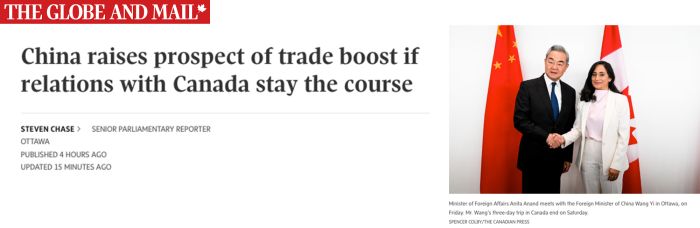
China raises prospect of trade boost if relations with Canada stay the course
The Globe and Mail – May 29, 2026
Featuring: Vice-President Research & Strategy Vina Nadjibulla, APF Canada
Excerpt: During his high-stakes visit to Ottawa, Beijing’s top diplomat on Friday dangled the prospect of Canada doubling its exports to China by 2030, if relations stay positive.
“The ups and downs in China-Canada relations over these years have brought us many important lessons,“ he said in remarks translated by the Asia Pacific Foundation of Canada.
“We need to uphold mutual respect, seek common ground while reserving differences, maintain strategic independence, and pursue mutual benefit and win-win outcomes,” Mr. Wang said. “I believe that no matter how the international situation changes, we should adhere to these beneficial experiences.”
Vina Nadjibulla, vice-president of research and strategy at the Asia Pacific Foundation, cautioned about the risk that China will weaponize closer trade relations that make Canada more dependent on Chinese companies. More exports, particularly when concentrated in a single product or sector, can give Beijing leverage, she said. It could use the threat of future export boycotts to force Canada to align with its policies, whether on Taiwan, the South China Sea, the United States or other matters.
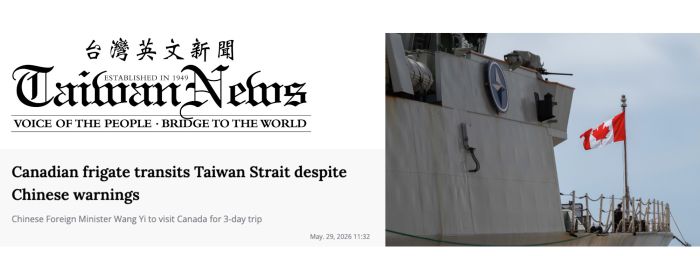
Courtesy Taiwan News via Zuma Press Wire, Laurent Coust, via Reuters Connect photo
Canadian frigate transits Taiwan Strait despite Chinese warnings
Taiwan News – May 29, 2026
Featuring: Vice-President Research & Strategy Vina Nadjibulla, APF Canada
Excerpt: Ahead of Chinese Foreign Minister Wang Yi’s visit to Canada, a Canadian naval frigate transited the Taiwan Strait last week despite earlier warnings from Beijing’s ambassador to Canada against such actions.
Vice-President of Research and Strategy at the Asia Pacific Foundation of Canada Vina Nadjibulla told The Globe and Mail that Canada’s actions in the South China Sea and East China Sea are being closely watched by Beijing, Tokyo, Taipei, Australia, and the U.S. She said the latest transit signals Canada’s intention to maintain an independent Indo-Pacific strategy.
“It shows that Canada is committed to upholding international law and ensuring that international waterways, such as the Taiwan Strait, remain open to all countries, including Canada,” Nadjibulla said.
Nadjibulla added that Canada must simultaneously pursue multiple policy goals, including deepening limited economic co-operation with China, one of the key objectives of Wang Yi’s visit, while also maintaining a firm position on broader national security issues.
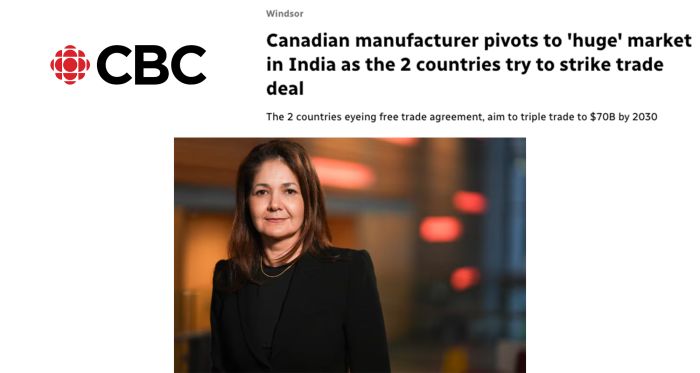
Andrew Lee/CBC
Canadian manufacturer pivots to 'huge' market in India as the 2 countries try to strike trade deal
CBC News (Windsor) – May 29, 2026
Featuring: Vina Nadjibulla, Vice-President Research & Strategy, APF Canada
Excerpt: Vina Nadjibulla of the Asia Pacific Foundation of Canada said this is a pivotal moment for the two countries.
“India is an important part of Canada's diversification agenda," Nadjibulla said. "We're trying to reduce our overreliance on the U.S., and India is one of the fastest-growing major economies. It has a growing middle class. Its economy is really complementary to Canada's.
“It has a need for energy, for food, technology, for investment — all the things that Canada is able to provide. So there is an interest on the part of Canada to do more when it comes to commercial and economic relations with India.”
For India, too, Nadjibulla said, Canada is also an important trade partner. She said the two countries are in a “full reset” mode and the momentum for a free trade agreement is in full swing, with two rounds of negotiations already completed.
While it’s an ambitious timeline, Nadjibulla said it’s needed to bring more predictability to the markets.
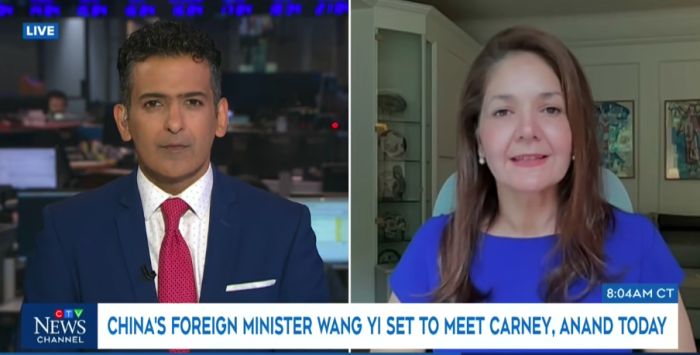
CTV News
Foreign minister visit signifies China’s interest in ‘deepening partnership’ with Canada
CTV News – May 29, 2026
Featuring: Vina Nadjibulla, Vice-President Research & Strategy, APF Canada
Excerpt: “[The visit] shows that China is also interested in deepening a partnership because of what they can get from Canada but also because of the kind of messaging that China wants to send to the U.S., with whom China is, of course, in a strategic competition for influence.
“There's also going to be discussions around investment. Canada wants to have more investment for our own economic growth and resilience. But on the other hand, of course, there are sectors in which we don't want to have Chinese investment because of national security concerns, because of economic security concerns. So, there would need to be some clarity about what are those guardrails? What kind of investment from China is welcome in what sectors? And where we would actually continue to hold the red line?
“Of course, there will also be sensitive discussions on issues of foreign interference,
transnational repression, national security, rule of law concerns. A lot of that has been behind closed doors. I think it will be important for Canadians to be reassured that Canada is standing firm on those while we are trying to negotiate some economic trade and commercial benefits from this relationship.”
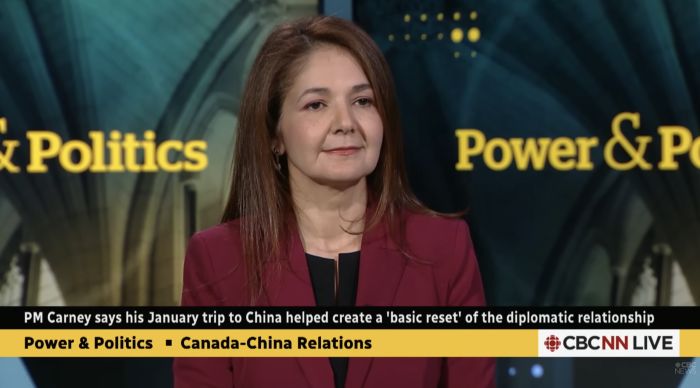
CBC News - Power & Politics
China 'sending a message' to the U.S. by deepening ties with Canada: expert | Power & Politics
CBC News – Power & Politics, May 28, 2026
Featuring: Vina Nadjibulla, Vice-President, Research & Strategy, APF Canada
Excerpt: Nadjibulla told CBC News that this visit by Chinese Foreign Minister Wang Yi "shows that China cares about this relationship [with Canada] as well, that they want to advance the new partnership and they want to discuss issues that matter to them as well."
She adds that amid Canada's uncertain relationship with the U.S., the visit is "good propaganda and good messaging for China to show that it’s able to create more...division between Washington and Ottawa."
"While Canada is moving forward with China, we're not naive or blind to the fact that there are structural issues and there are limits to what we can do while we are also trying to preserve preferential access to the U.S."
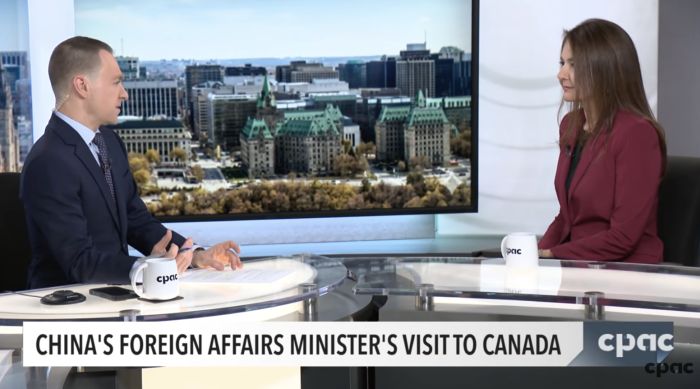
CPAC
China's Foreign Minister Visits Canada for First Time in a Decade
CPAC, May 28, 2026
Featuring: Vina Nadjibulla, Vice-President, Research & Strategy, APF Canada
Excerpt: Nadjibulla says that "Wang Yi's visit is really about implementation, about really getting down to business and figuring out what specifically Canada and China can do together. What are the sectors in which we will be doing more together, and what are those guardrails that we often hear about from Prime Minister Carney... about being clear-eyed?"
She adds that while the usual suspects in bilateral negotiations will be on the table for discussion, like trade and investment, there is also a "trilateral element" to this meeting. Nadjibulla says that the messaging from Yi's meeting will also be heard and assessed in the U.S.
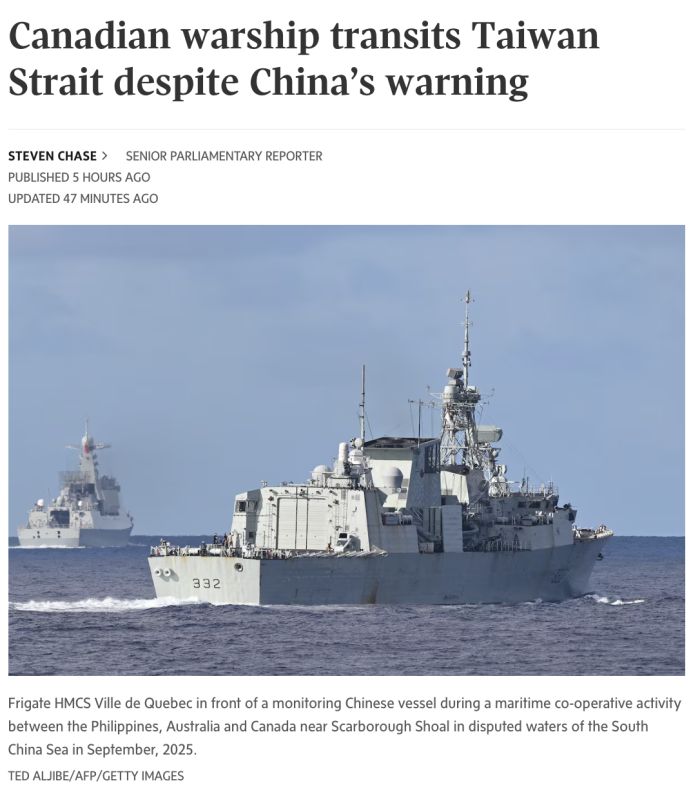
The Globe and Mail
Canadian warship transits Taiwan Strait despite China’s warning
The Globe and Mail, May 28, 2026
Featuring: Vina Nadjibulla, Vice-President, Research & Strategy, APF Canada
Excerpt: Nadjibulla said Canada’s behaviour in the South China Sea and East China “was being watched closely,” in Asian capitals from Beijing to Tokyo to Taipei as well as Australia and in the United States.
She said it’s a strong signal that Canada will plot its own course in the Indo-Pacific.
It’s the first time Canada has used the route since Mr. Carney’s visit to China in January and the announcement of the new strategic partnership with Beijing.
“It shows that Canada is committed to upholding international law and ensuring that international waterways, such as Taiwan Strait, are free for passage for all, including Canada,” Ms. Nadjibulla said.
“We have to advance multiple objectives at the same time: deepening some economic engagement with China, which is going to be the purpose of the Wang Yi visit, while also standing firm on our overall national-security agenda.”
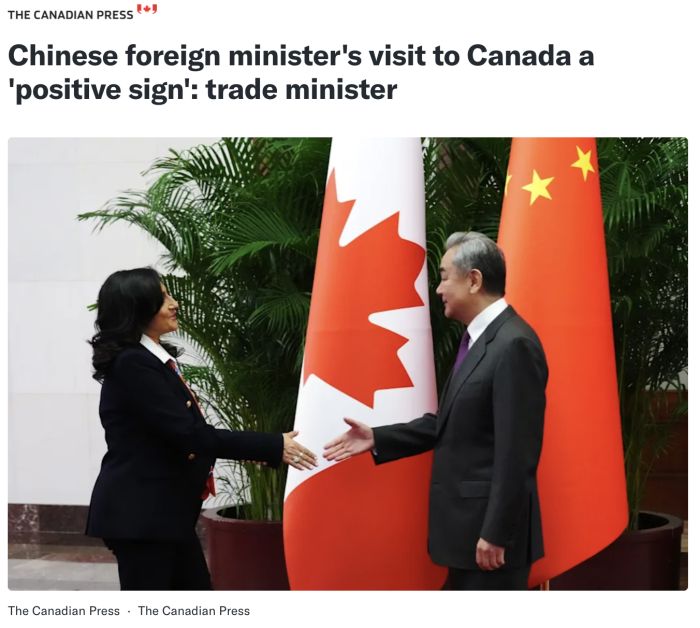
The Canadian Press
Chinese foreign minister's visit to Canada a 'positive sign': trade minister
The Canadian Press (via Yahoo Finance), May 27, 2026
Featuring: Vina Nadjibulla, Vice-President, Research & Strategy, APF Canada
Excerpt: Vina Nadjibulla, vice-president of research and strategy at the Asia Pacific Foundation of Canada, told The Canadian Press the planned visit is "significant."
"We'll see what the discussions are like, especially when it comes to investment, to sensitive areas like EVs, batteries," she said.
Nadjibulla also said the fate of Taiwan could come up during the visit.
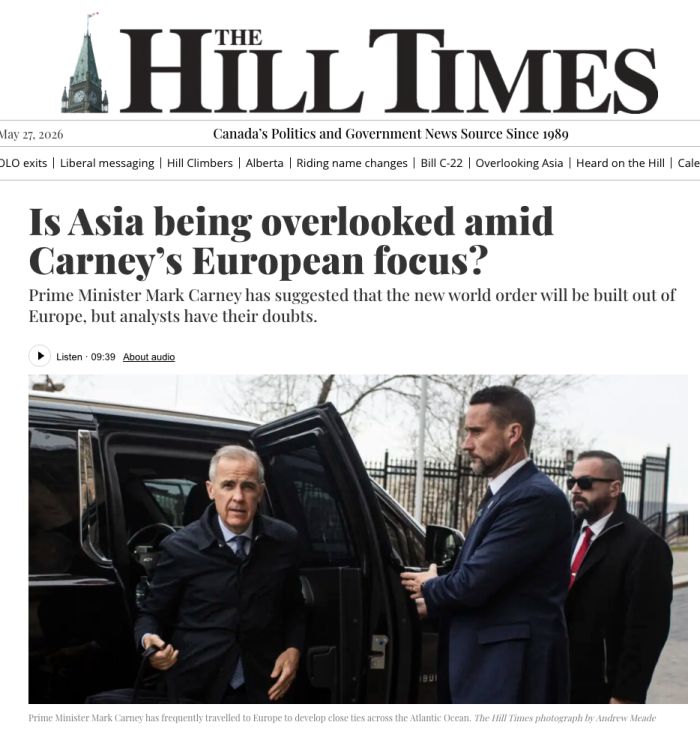
The Hill Times
Is Asia being overlooked amid Carney’s European focus?
The Hill Times, May 27, 2026
Featuring: Vina Nadjibulla, Vice-President, Research & Strategy, APF Canada
Excerpt: Nadjibulla called Carney’s comment on Europe’s place in a new world order “a little bit perplexing.”
“It’s difficult to imagine that the next global order will be built out of Europe given the significance of the Indo-Pacific,” she said. “There’s a recognition that Canada is much more interested, and much more visible, and much more relevant in the region...That is largely credited to Prime Minister Carney’s own vision of a pragmatic foreign policy.”
She said that Canada getting closer to Europe while doing more in the Indo-Pacific is a complementary process, highlighting Carney’s desire to see bridges built between Canada’s trade deal with the EU and the CPTPP.
Nadjibulla said Canada is still implementing Canada's Indo-Pacific Strategy while it’s being reviewed and updated. “Bottom line, the strategy needs to be updated. It needs to be launched as a second phase with additional resources. And new language around China [and] around India, as well as a greater focus on energy … as well as AI and technology and innovation and services,” she said.
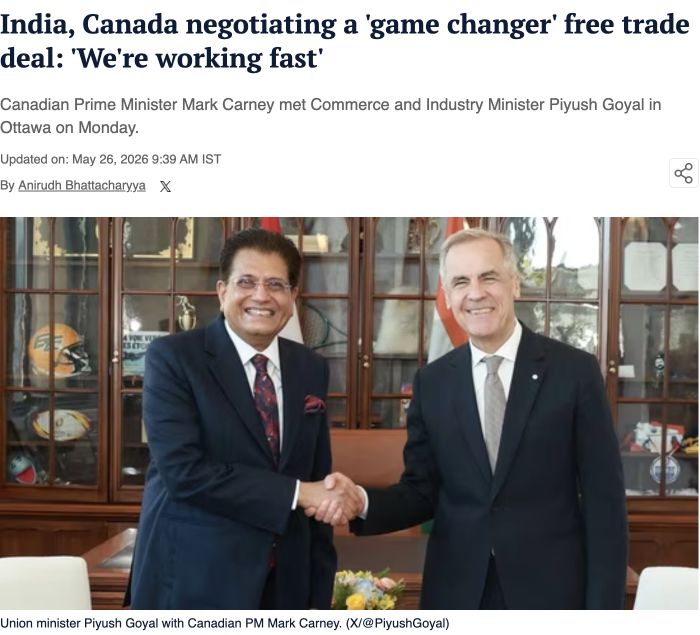
Hindustan Times
India, Canada negotiating a 'game changer' free trade deal: 'We're working fast'
Hindustan Times, May 26, 2026
Featuring: Vina Nadjibulla, Vice-President, Research & Strategy, APF Canada
Excerpt: Remarking on Carney meeting a visiting Cabinet Minister, Vina Nadjibulla, vice-president research and strategy for the Asia-Pacific Foundation of Canada, said, “This is a testament to his interest in deepening the relationship and also to the strategic nature of the relationship.” She said it was significant because it signals the desire to build a “genuine partnership” beyond the trade and commercial aspect of ties.
She added the “overall messaging” also underscored the fact that the Indian side “recognizes Prime Minister Carney’s leadership in the relationship.”
ABC News
India's trade minister says visit by Canada's Carney reset ties after 2023 killing of Sikh activist
Associated Press (via ABC News), May 26, 2026
Featuring: Vina Nadjibulla, Vice-President, Research & Strategy, APF Canada
Excerpt: Vina Nadjibulla, Vice-President, Research & Strategy at the Asia Pacific Foundation of Canada, said both countries are looking to diversify their relationships and reduce their dependence on the United States, increasingly seen as unreliable by some partners.
India recently signed trade deals with the European Union, the United Kingdom and New Zealand.
“India is now pivoting to Europe as well as to other Western economies like Australia and Canada to be able to meet its needs for capital, technology and innovation,” said Nadjibulla.
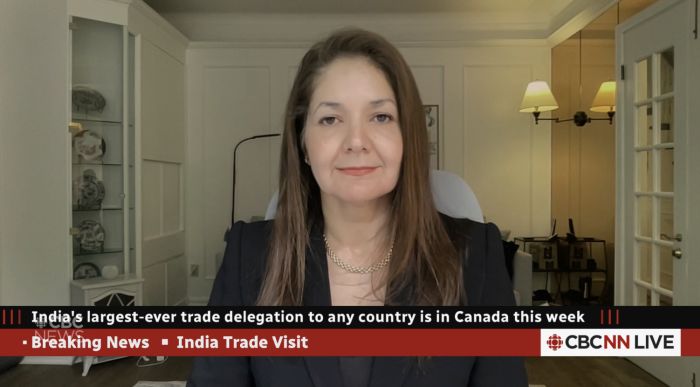
CBC News
CBC's Aarti Pole speaks with Vina Nadjibulla of the Asia Pacific Foundation of Canada
CBC News, May 25, 2026
Featuring: Vina Nadjibulla, Vice-President, Research & Strategy, APF Canada
Excerpt: Nadjibulla says this "significant visit... builds on the reset in the Canada-India relationship that was launched by Prime Minister Carney a year ago."
As the reset aims to "accelerate the free trade negotiations that are now happening between Canada and India... Minister Goyal's visit to Canada is in some ways keeping up that momentum." She adds that the delegation is made up of "Indian businesses who are interested in doing more with Canada... this is about building confidence, about showcasing that there is a lot of opportunity" between the two economies.
"There is a lot of complementarity, but Canada and India need to spend a lot more time getting to know each other."
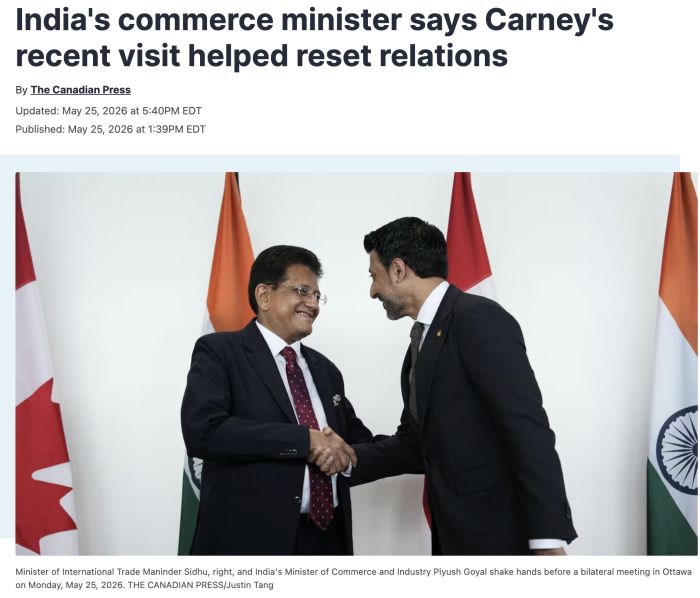
BNN Bloomberg
India's commerce minister says Carney's recent visit helped reset relations
The Canadian Press (via BNN Bloomberg), May 20, 2026
Featuring: Vina Nadjibulla, Vice-President, Research & Strategy, APF Canada
Excerpt: “Vina Nadjibulla, vice-president of research and strategy at the Asia Pacific Foundation of Canada, said in an interview that there is political will on both sides to move as quickly as possible on a free trade agreement.
She said both countries are looking to diversify their relationships and reduce their dependence on the United States. India recently signed trade deals with the European Union, the United Kingdom and New Zealand.
“With the U.S. becoming unreliable, India is now pivoting to Europe as well as to other Western economies like Australia and Canada to be able to meet its needs for capital, technology and innovation."
India is also "completely dependent on exports of gas and (liquefied petroleum gas) and about 50 per cent of that comes from the Middle East and by way of Hormuz,” she said. “India is very much in the market now to find other sources for its energy needs.”
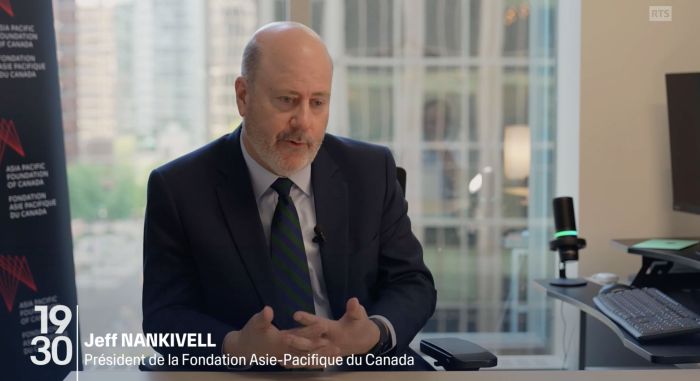
Radio Télévision Suisse
Canada-US relations ahead of the World Cup
Radio Télévision Suisse, May 21, 2026
Featuring: Jeff Nankivell, President & CEO, APF Canada
Excerpt: Nankivell says that a "majority of Canadians feel they need to distance themselves from the U.S., compared to the relations they had before" the second Trump Administration. "But it is with a lot of regrets, sincere regrets."
He adds that "Canadians believe that they were the ones who were rejected by the government of the United States."
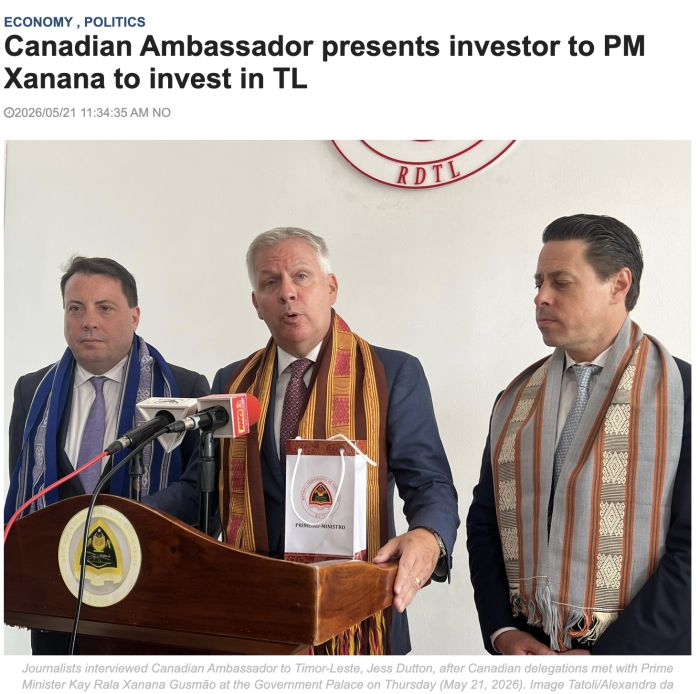
Tatoli
Canadian Ambassador presents investor to PM Xanana to invest in TL
Tatoli, May 21, 2026
Featuring: Barrett Bingley, Asia Regional Director (Singapore Office), APF Canada
Excerpt: “Canadian Ambassador to Timor-Leste, Jess Dutton, said he and the delegation were honoured to meet the Prime Minister, to discuss cooperation services that they prioritize investing in."
He also said that "Canada is very proud to have provided $15 million in concessional funding for the new solar park being built" and is interested in exploring other future investment opportunities.
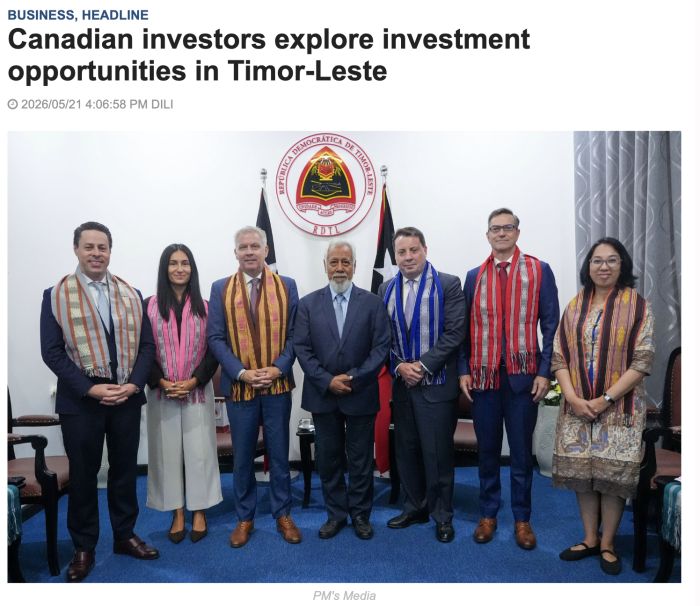
Tatoli
Canadian investors explore investment opportunities in Timor-Leste
Tatoli, May 21, 2026
Featuring: Barrett Bingley, Asia Regional Director (Singapore Office), APF Canada
Excerpt: “The Ambassador of Canada to Indonesia and Timor-Leste, Jess Dutton, on Thursday held a productive bilateral meeting with Xanana Gusmão at the Government Palace in Dili.
...During the meeting, Ambassador Jess Dutton introduced a delegation comprising representatives from the Canada-ASEAN Business Council, the Asia pacific Foundation of Canada, BlackBerry Government Solutions, National Bank of Canada and export Development Canada (EDC), who are seeking to explore investment opportunities in the country."
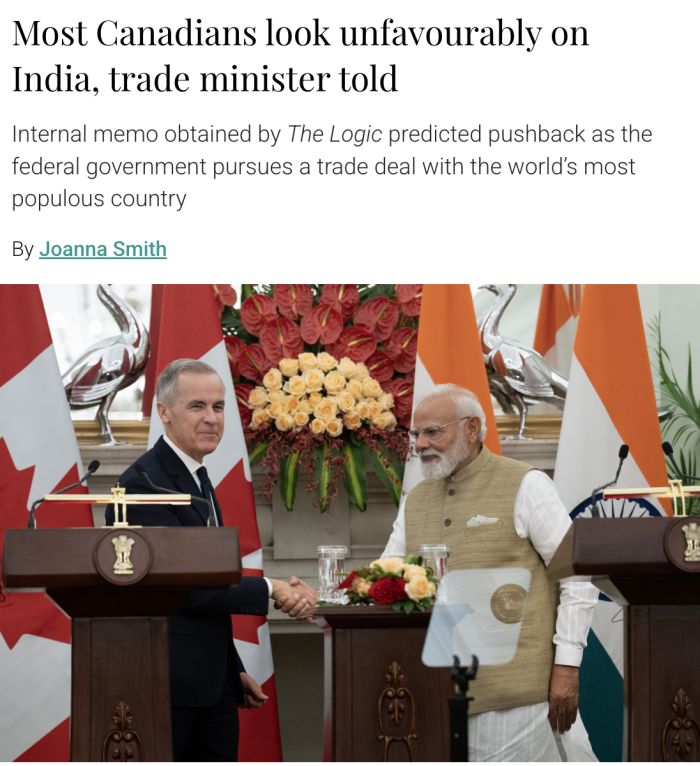
The Logic
Most Canadians look unfavourably on India, trade minister told
The Logic, May 20, 2026
Featuring: Vina Nadjibulla, Vice-President, Research & Strategy, APF Canada
Excerpt: “In a report published in March shortly after Carney’s visit to Mumbai and New Delhi, the Asia Pacific Foundation of Canada said trade between Canada and India was already performing below expectations and Canada is now at risk of getting crowded out by others. “Without preferential access,” the think tank wrote, “Canadian exporters would risk a gradual erosion of their competitiveness in one of the world’s fastest-growing markets.”
Vina Nadjibulla, vice-president of research and strategy at the Asia-Pacific Foundation, said much has evolved since Ottawa last consulted with Canadians on a trade deal with India in 2009.
“The world is in a very different place,” Nadjibulla said in an interview. “Canada’s diversification imperatives are now much more urgent and India is a much more powerful economy now.”