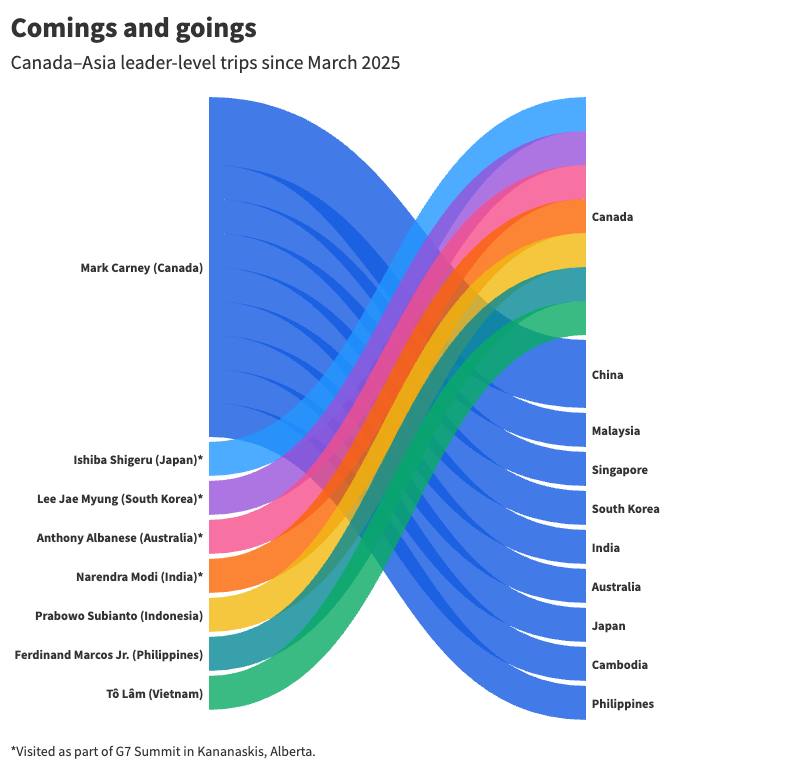
Over the past nine days, Canadian Prime Minister Mark Carney has zigzagged his way around the globe, flying 36,000 kilometres from Ottawa to Ireland to Alaska, then on to the Philippines, Cambodia, and China, and back again.
His travels were roughly equivalent to crossing Canada — from its easternmost point to its westernmost point — seven times, and he will end his odyssey with two new trade agreements in hand, an extended trade truce with Beijing, and an approved bid to host an international summit.
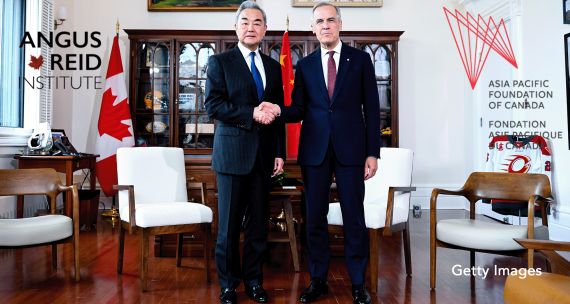
Carney's highest-profile meeting came on Tuesday morning in Shenzhen, where he spoke with Chinese President Xi Jinping on the margins of the Asia-Pacific Economic Cooperation (APEC) Summit.
Xi agreed to temporarily suspend tariffs on C$400 million worth of Canadian exports, including most frozen pork and a raft of seafood products. In return, Carney committed to extend and broaden remission measures for certain Chinese steel and aluminum products.
The two leaders also welcomed various arts agreements, including a deal to bring a Cirque du Soleil show to Shanghai next year. Ottawa also teased a "major trade mission" to China in 2027 and the launch of a Canada–China CEO Roundtable.
The dizzying range of deals and talks — spanning, over the last year, trade, education, environment, tourism, AI, energy, defence, and culture — suggests the two countries are inching closer to a full restoration of ties after seven turbulent years.
But not all Canadians are on board: our recent poll showed 53 per cent of Canadians hold an "unfavourable" view of China. Ottawa will have to tread lightly when it comes to co-operation with China on sensitive issues, particularly AI, security, and investment.
A thrilla in Manila
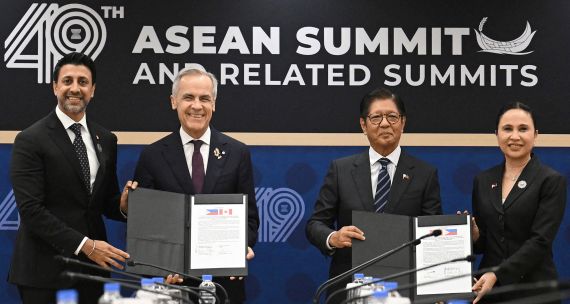
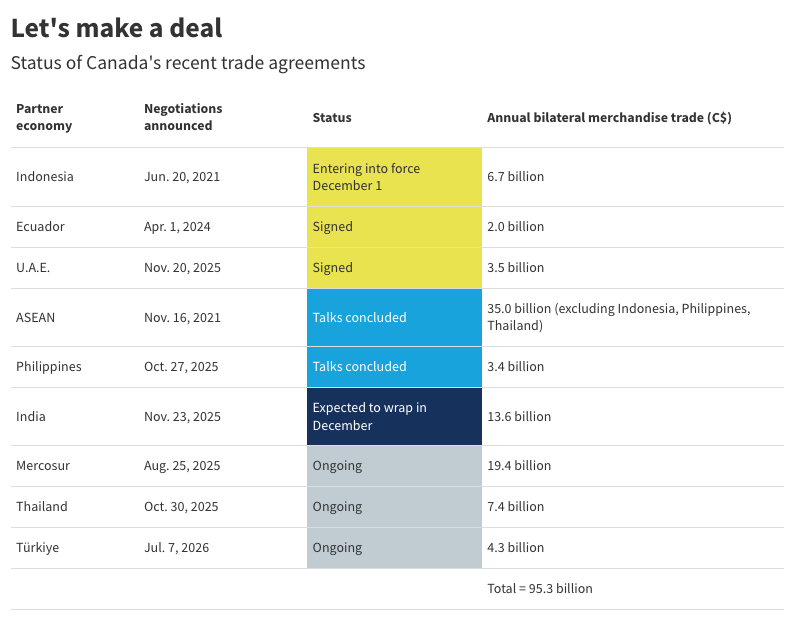
Philippine President Ferdinand Marcos Jr., this year's ASEAN chair, welcomed Carney to Manila — joking that he was "worried" about Carney's jet lag — and announced the conclusion of talks towards a bilateral free trade agreement.
The deal is a welcome step in Canada's diversification strategy — and the Philippines sees Canada, currently the country's 16th-largest trading partner, as a key economic partner going forward. Ceferino Rodolfo, the head of the Philippine Board of Investments, a government agency responsible for investment attraction, said Sunday that "we hope that Canada, within the next three years, will be part of the top 10." Carney singled out agriculture, aerospace, and AI as sectors set to gain from the agreement.
But Canada–Philippines goods trade is relatively modest, totalling just C$3.4 billion in 2025 — equivalent to 1.5 weeks' worth of Canada–China goods trade.
Defence, security, and people-to-people ties are the real stars of the relationship. Over the weekend, the two countries launched a new cybersecurity dialogue, regular military-to-military talks, and "steps toward" agreements on customs co-operation and the protection of sensitive information. This builds on the recent implementation of a Status of Visiting Forces Agreement, which allows both sides to work more closely together in each other's territories.
Crucially, Carney also extended Canada's Dark Vessel Detection program until 2033, allowing the Philippines to counter (mostly Chinese) vessels that have gone 'dark' by turning off location transmitters, strengthening Manila's ability to police its waters and protect its maritime sovereignty.
Manila seems the centre of gravity for Ottawa's Indo-Pacific diplomacy, and the proof is in the personnel: Canada's embassy in Manila is its second largest diplomatic mission in the world, trumped only by Canada's embassy in Washington. Manila is also home to an Export Development Canada office, Canada's Indo-Pacific Agriculture and Agri-Food Office, and Canada's first Senior Military Representative for the Indo-Pacific.
Trade deals 'important signals' for business: Ufimtseva
In Manila, Carney also announced the substantive conclusion of trade talks between Ottawa and ASEAN, an 11-member bloc representing 700 million people and US$4.5 trillion in GDP.
APF Canada's Senior Program Manager, International Trade and Investment, Anastasia Ufimtseva, told Asia Watch that "the recently negotiated Canada–ASEAN and Canada–Philippines free trade agreements could advance Canada’s Indo-Pacific diversification by expanding access to Southeast Asia’s growing markets and regional supply chains."
"ASEAN is already Canada's fifth-largest merchandise trading partner, with two-way trade more than doubling from C$21.6 billion in 2016 to C$52.5 billion in 2025, driven largely by rising Canadian imports, particularly from Vietnam," she noted. "Canada’s FDI stock in ASEAN grew nearly fivefold during this period, from just under C$11 billion in 2016 to over C$51 billion in 2025 but represented only two per cent of its total outward FDI stock."
The completed negotiations, she says, "act as an important signal for businesses that there will be more opportunities to expand their footprint in the region once the agreements enter into force."
From Russia, with loathing
In Phnom Penh, Carney met with Cambodia's prime minister, Hun Manet, this year's host of the Francophonie Summit. The two leaders initiated exploratory talks on a Canada–Cambodia Foreign Investment Promotion and Protection Agreement and a potential double-taxation agreement. Cambodia also joined Canada’s Military Training and Cooperation Program.
Francophonie members formally approved Canada's bid to host the summit in 2028. Canada (i.e. the federal government and participating provinces) is now the largest financial contributor to the organization, eclipsing France.
Ottawa is also angling to host APEC in 2029. However, APEC members must unanimously endorse hosts, and Moscow — likely peeved at Ottawa's recent decision to bar Russia from competing at the upcoming World Juniors in Alberta (in addition to Canada's longstanding support for Ukraine) — is playing spoiler. Canada last hosted APEC in 1997.