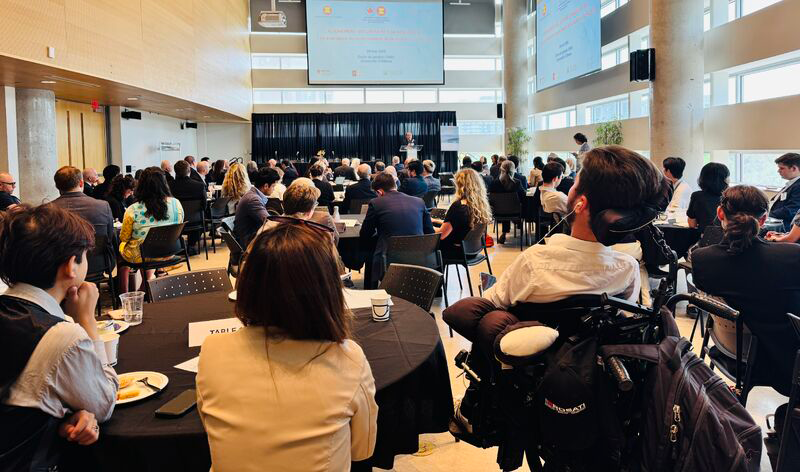
On May 26, 2026, a symposium on “Canada-ASEAN Security Alignment: The Case for Building Collective Resilience” was held in Ottawa. It brought together speakers from four Canadian government agencies, ambassadors from the region, academics and think-tank experts, and Ontario’s Agent General in ASEAN. This third annual Canada-ASEAN security symposium was co-organized by the Canada-ASEAN Initiatives based at York Centre for Asian Research and the ASEAN Committee in Ottawa, with support from the Asia Pacific Foundation of Canada and the Telfer School of Management at the University of Ottawa, as well as the Canadian International Council – National Capital Chapter.
This symposium took place at a critical juncture as Canada moves into the next phase of its Indo-Pacific Strategy (IPS), in which the Association of Southeast Asian Nations (ASEAN) features prominently among Canadian priorities. Capitalizing on ASEAN’s role as a platform for dialogue, reassurance, and deterrence, an array of Canadian government departments and agencies is actively engaging on security issues in Southeast Asia, deepening the practical impact of Canadian involvement in the region and the Indo-Pacific more broadly.
According to speakers, Canada’s interest in the Indo-Pacific is not fleeting, despite “riding three horses at once” (i.e. the Atlantic, Pacific and Arctic). This remains true whether Canada’s Indo-Pacific Strategy is renewed after its initial five years in 2027 or whether there are shifts in nomenclature. Canada was urged by an Indo-Pacific ambassador to stay the course with an IPS 2.0 to maintain consistency and prioritize diplomatic, defence, and investment engagement in the region.
Canada’s commitment to ASEAN security resilience
 Considering the erosion of the rules-based international order, middle powers can play a more active role in global and regional security. Illustrating this, speakers from Global Affairs Canada, the Department of National Defence, and Fisheries and Oceans (DFO) highlighted Canada’s efforts to reinforce security resilience in Southeast Asia, including support for regional stability and rule of law, for example by mitigating challenges to international law and embracing policy connections and collaboration. These contributions have been channelled both through ASEAN mechanisms such as the ASEAN Regional Forum and Post-Ministerial Conference, and the IPS, for example through defence engagement responding to traditional and non-traditional threats in the region.
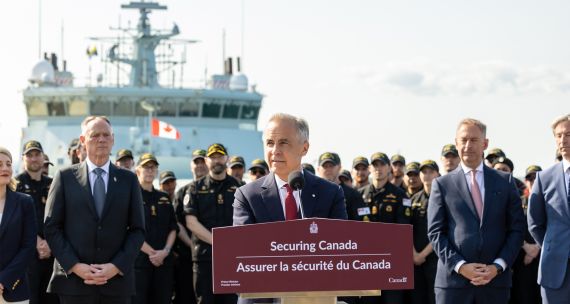
Naval deployments such as Operation Horizon promote regional stability and adherence to international law in the Indo-Pacific, while naval dialogues have involved multiple agencies across the Canadian government, including National Defence, DFO, Global Affairs, Public Safety, and the Canada Border Service Agency. Canada continues to support ASEAN in upholding freedom of navigation, lawful commerce, and sustainable marine resource management amid persistent challenges, including shadow fleets, South China Sea contestation, and the conflict in Myanmar.
Governance, enforcement action, and partnerships constitute the foundations of DFO’s engagement in Southeast Asia. However, there is an enforcement gap between agreements and implementation related to inconsistent rules on fisheries management measures in the region. Multiple layers of surveillance, monitoring, and enforcement are required, as evidenced by the Dark Vessel Detection Program, to address illicit activities such as smuggling, sanctions evasion, and illegal, unreported and unregulated fishing. Partnerships (bilateral, multilateral, and involving non-government organizations) allow analysis of real-time data for enforcement action, including high seas boarding and inspection to address issues such as forced labour and exploitative practices at sea.
When will Canada ratify the High Seas Treaty – and will it have an impact on maritime disputes?
Participants expressed interest in seeing Canada ratify the High Seas Treaty, or the Agreement on Biodiversity Beyond National Jurisdiction (BBNJ) under the UN Convention on the Law of the Sea, which entered into force in January 2026. The High Seas Treaty is intended to provide a framework for collaboration on marine governance rather than for addressing boundary disputes and is therefore unlikely to provide a solution to broader maritime issues in the South China Sea. There is strong interest, nevertheless, in ensuring the success of the Treaty, given that the oceans are crucial for human survival in terms of food security, oxygen production, and the reliance of the global economy on marine transport. However, implementation will be challenging given the diversity among the 146 countries that have signed the Treaty. Legislation to allow Canadian ratification is expected to be addressed in Parliament in June, with the hope of ratification by September in time to allow Canada to be a decision-making party at the Treaty’s Conference of Parties in January 2027.
Maritime security – at sea and in cyberspace
 In the past two years, the scale and change in modes of media production have accelerated vastly due to generative artificial intelligence; synthetic voices and hyper-realistic imagery have been designed to bypass factual verification and instead prompt a physiological response. In other words, fear and panic are increasingly structurally embedded in influence operations by governments, organizations, and other nefarious actors. For example, specific maritime claims (some false, others overblown) in local languages are often made to appear authentic where they are not, skewing public perception. This deception deliberately targets institutional authority and credibility and requires moving from reactive debunking to proactive validation of information through authoritative date-stamping and other authentication measures.
The symposium heard that building security resilience in ASEAN requires the capacity to verify online claims, including those related to maritime disputes, in real time to maintain public trust amid synthetic media production. In other words, digital resilience does not exist purely online; it requires offline resilience as well, building digital literacy into the local context so people feel secure within their communities, trust is the common currency, and marginalized communities are protected against online vulnerability.
A novel framework was proposed for analyzing maritime security through three interconnected dynamics:
- algorithmic mediation, where digital platforms shape visibility and public perception;
- affective economies (how emotion is capitalized as part of the platform economy), given that emotionally arousing content travels faster than verification; and
- infrastructural invisibility, where opaque technological systems increasingly shape how synthetic realities are produced, circulated, and encountered.
Security and intelligence equities in Southeast Asia
Symposium participants particularly appreciated insights on “crunchy questions” from the Canadian Security Intelligence Service (CSIS) about its partnerships and capacity building in the region. And its role in economic security and building domestic resilience in Canada, for example, through the Major Projects Office and the assessment of foreign investment to ensure that capital does not leave Canada vulnerable to unwanted leverage. CSIS was described as a “heavy lifter” in delivering on the IPS, including by increasing its footprint in Asia, expanding intelligence diplomacy, and increasing analytical exchanges on regional issues and capacity building. Participants heard how this includes proactive relationship-building and training, as well as the collection and analysis of intelligence to disrupt threats to Canada, thereby improving Canada’s ability to support partners in Southeast Asia on issues such as cybersecurity, espionage, foreign interference, and terrorism assessments. The return on this investment in capacity building has paid dividends, the Symposium heard, for example, through bespoke training in a range of national security areas. Additionally, Canada’s contribution to cybersecurity capacity building in Southeast Asia was described as “underrecognized.”
Recognizing Canada’s contribution to regional security and collective resilience in the Indo-Pacific
Speakers within and beyond Southeast Asia emphasized that economic resilience and regional security are intrinsically linked, as evidenced by the recurring prominence of economic themes in discussions of security issues, from critical minerals to food and energy supply chains. That linkage is also reflected in the three priorities identified by the Philippines as ASEAN chair in 2026: peace and security, prosperity corridors and equal empowerment, with economic resilience now recognized as a strategic imperative. The alignment of Canada’s renewed focus on defence, economic security, and resilient supply chains with ASEAN priorities in 2026 offers potential for closer Canada-ASEAN co-operation in areas like maritime security, cybersecurity, clean technology, innovation, critical minerals, and disaster resilience.
Participants also heard how current economic shocks arising from global turbulence and conflict in the Middle East have a direct human impact, not just on food and energy security, but also by disrupting the lives of those who depend on remittances from family members working in the Middle East, or seafarers stranded in the Strait of Hormuz.
ASEAN ambassadors welcomed Canada’s continued attention and strong security alignment with the region, including through the next ASEAN-Canada Plan of Action, anticipated in July 2026, and Canada’s new Defence Industrial Policy, intended to align defence procurement with national security, economic growth, and technological sovereignty. They expressed hope that the ASEAN-China Code of Conduct to establish rules for managing disputes in the South China Sea will be finalized this year, and appreciation for Canada’s support, particularly in combating terrorism and transnational crime in Southeast Asia. Southeast Asia has taken note of the recalibration of Canada’s relations with China, and Ottawa’s clear interest in developing closer ties to China while remaining alert to potential risks and threats to Canada. At the same time, one ambassador reminded Canada that, to earn ASEAN’s trust, it needs to respect the non-exclusionary principle of ASEAN centrality.
A closing thought on the Symposium, as expressed by a speaker from the Indo-Pacific: Canada’s contribution to regional security and collective resilience in the Indo-Pacific should not be underestimated, including its capacity to serve as a moral compass, the multiplier effect of its G7 membership, and as “the only non-P5 member with global reach.”