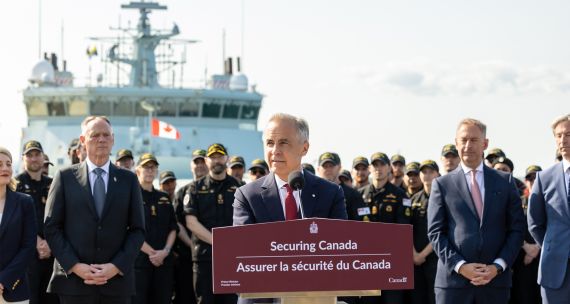
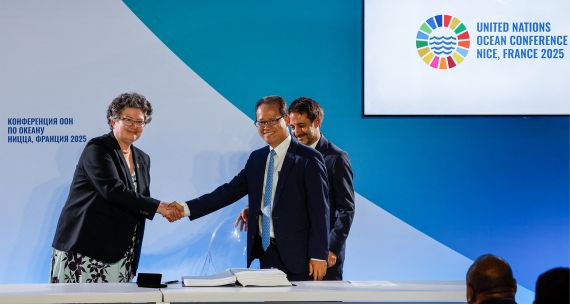
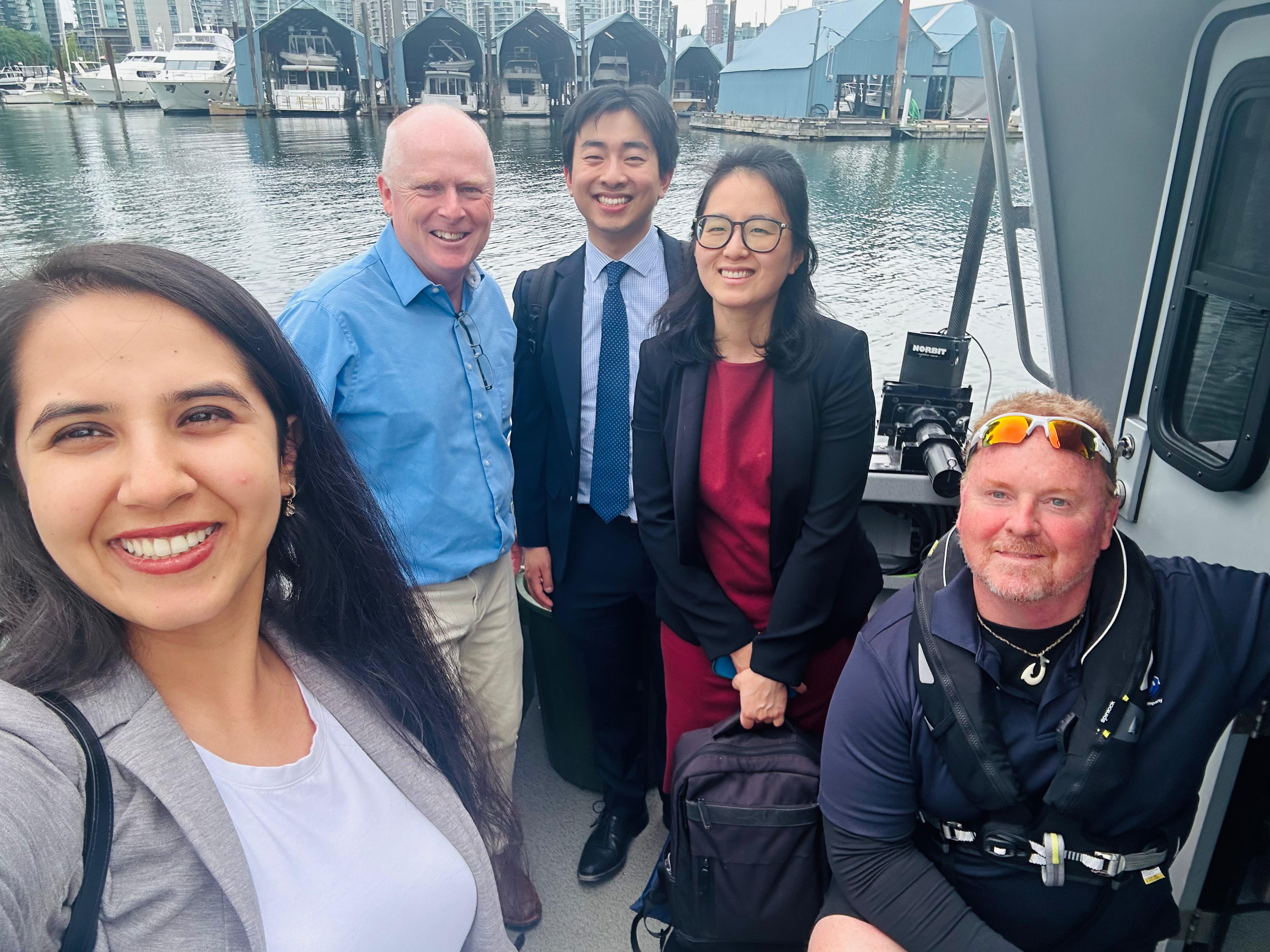
The second-ever Commonwealth Maritime Domain Awareness Summit convened on June 3–4, 2026, at Stanley Park in Vancouver, B.C., in partnership with the Asia Pacific Foundation of Canada and the Association of British Columbia Defence and Marine Industries. The summit highlighted the growing importance of maritime domain awareness (MDA) as a strategic enabler of maritime security, economic resilience, and national sovereignty.
Across eight sessions, participants from Commonwealth state members, industry, and international organizations examined how maritime security is evolving amid geopolitical competition and accelerating technological change. Maritime security can no longer rely on isolated monitoring systems or fragmented institutional responses. Instead, countries must increasingly integrate public-private partnerships to move from awareness towards action.
The opening roundtable emphasized the relationship between maritime security and global prosperity, underscoring that secure and open sea lanes remain fundamental to international trade, economic stability, and national security. Defence leaders from Canada, India, the United Kingdom, Trinidad and Tobago, and Ghana outlined distinct regional priorities and common challenges, including illegal fishing, piracy, maritime crime, and threats to critical undersea infrastructure. Royal Canadian Navy Vice-Admiral Angus Topshee emphasized the urgency of Canada’s maritime sovereignty initiative to address the scale of its vast maritime responsibilities with the world’s longest coastline of 243,042 kilometres.
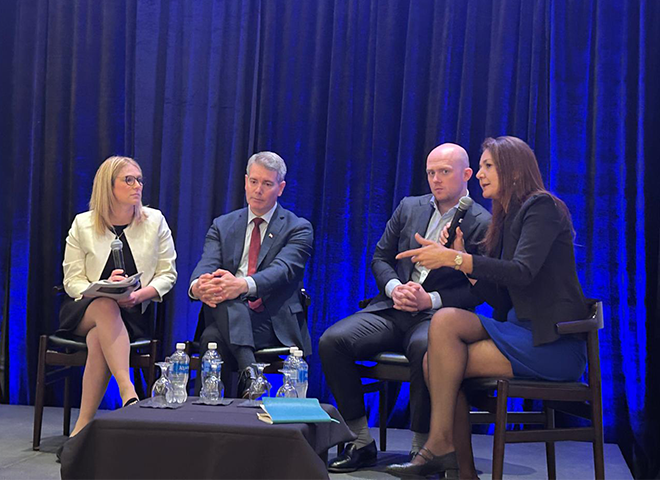 The role of the private sector featured prominently at the conference. In Session Two, “Shipping, Trade and Maritime Domain Awareness,” moderated by Vina Nadjibulla, Vice-President of Research and Strategy at the Asia Pacific Foundation of Canada, speakers stressed that legal authorities, intelligence-sharing mechanisms, and trusted government-industry relationships are increasingly necessary to respond to maritime threats ranging from smuggling and sanctions evasion to cyberattacks and port disruptions. Companies providing satellite imagery and vessel tracking are central to maritime security ecosystems, but rather than replacing government capabilities, these firms should empower state actors to scale situational awareness and improve responsiveness.
In the session on “Geospatial Technology and Illegal, Unreported and Unregulated (IUU) Fishing,” illegal fishing was presented not merely as an environmental issue but as a challenge linked to sovereignty, economic security, and transnational crime. Brett Classen from Fisheries and Oceans Canada highlighted the department’s dark vessel detection (DVD) program, which uses satellite surveillance to support partners such as the Philippines and Taiwan in facing incursions by foreign fishing fleets. Beyond fisheries enforcement, the same capabilities have also supported broader monitoring efforts, including observations of suspicious maritime behaviour in contested regions such as the South China Sea. Similar to the challenges of combating IUU fishing, the session on “Sanctions, Grey Fleets and Illicit Maritime Activity,” highlighted the growing sophistication of maritime sanctions evasion and illicit shipping practices. Participants discussed how vessels increasingly avoid detection by switching off Automatic Identification Systems (AIS), spoofing identities, or conducting covert ship-to-ship transfers. Participants agreed that while technology can improve detection, ultimately interagency co-ordination remains equally important for effective enforcement.
One of the conference’s most forward-looking discussions centred on the digital maritime nexus, described as the convergence of maritime operations, digital systems, AI, and cybersecurity. As digitalization creates new vulnerabilities to cyberattacks, spoofing, and interference with critical infrastructure, participants stressed that human oversight remains essential to fully harness powerful new analytical capabilities.
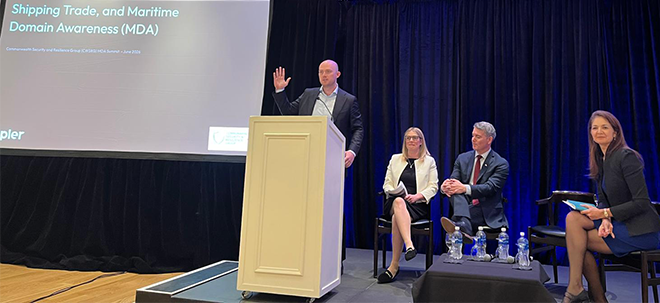 The summit closed with a discussion on the growing importance of maritime autonomy and underwater systems. Autonomous underwater vehicles, autonomous surface systems, and AI-enabled monitoring technologies are increasingly viewed as essential tools for maritime surveillance and infrastructure protection. As governments face persistent resource constraints and cannot realistically monitor vast maritime areas through ships and personnel alone, autonomous systems are consequently becoming a strategic necessity. Yet again, these advanced technologies are insufficient; protecting critical underwater infrastructure such as subsea cables and pipelines will require international collaboration on legal attribution and accountability.
 For Canada, MDA is increasingly important as an Atlantic, Pacific, and Arctic nation. Canada depends heavily on maritime trade for its economic prosperity and faces growing strategic pressures in the Arctic, where climate change is opening new shipping routes and increasing geopolitical competition. In the Indo-Pacific, Canada’s key economic and security partners rely on sea lanes that underpin global trade and energy security. Emerging challenges — including illegal fishing, sanctions evasion, coercive maritime activities, and cyber-enabled interference — require stronger regional information-sharing and coordinated monitoring capabilities among Canada and like-minded partners.
Enhanced digital maritime awareness — including satellite surveillance, AI-enabled analytics, and secure maritime information sharing — can strengthen Canada’s ability to monitor critical infrastructure, support allied co-operation, secure supply chains, and respond to emerging threats in both domestic and international waters.
Stronger maritime awareness partnerships with Indo-Pacific allies will become increasingly important as Canada deepens its regional engagement.
APF Canada Research Scholars Tanya Dawar and Justin Wong also contributed to this report.
• Edited by: Ted Fraser, Senior Editor, APF Canada.