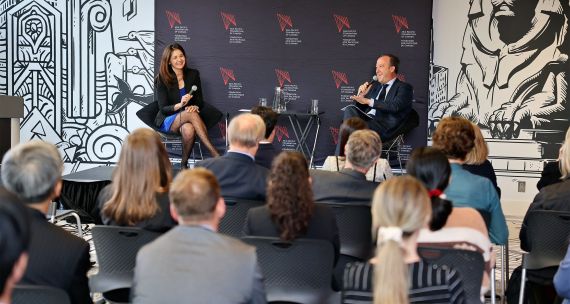
The Asia Pacific Foundation of Canada welcomed Dr. Cheng-Chwee Kuik, Professor of International Relations at the National University of Malaysia, as its 2026 Indo-Pacific Visiting Scholar, hosting him in Toronto, Ottawa, Montréal, and Vancouver to engage with Canadian stakeholders about his new book, “Theorizing Hedging: Explaining Shifts and Variations in Alignment Choices.” This report offers highlights from Dr. Cheng-Chwee Kuik’s Canadian tour.
Recognized among Stanford University's top two per cent of scientists worldwide in the subfield of international relations, Dr. Kuik's research focuses on middle-power alignment behaviour and Southeast Asian international relations.
During his engagements across Canada, he shared insights into alignment decisions in the context of Canada’s evolving relationship with the U.S. and Ottawa’s efforts to diversify its economic and security partnerships, while helping to address a significant knowledge gap on Southeast Asia, a region many Canadians report knowing little about.
During his tour, Dr. Kuik delivered public lectures and engaged with provincial and federal policymakers, academics, and journalists through roundtables and private dialogues, explaining why and how Southeast Asian states hedge and the opportunities these strategies hold for Canada to deepen its engagement with the region.
Expanding Middle Power Agency
During the discussions, Dr. Kuik defined hedging as an insurance-maximizing alignment strategy under conditions of high stakes and high uncertainty, wherein states seek to mitigate risks and preserve strategic flexibility through active neutrality. Long practised by Southeast Asian states, hedging has become increasingly relevant beyond the region as the international order grows more contested. Faced with intensifying great-power competition, many middle powers, including Canada, are seeking to preserve their autonomy by diversifying their economic and diplomatic partnerships.
While middle powers have long played an important role in international affairs, Dr. Kuik argued that a new understanding of middle-power agency is emerging, one that recognizes such powers are no longer confined to the Global North but increasingly include actors from the Global South. Although middle powers often find themselves caught between competing great powers, Dr. Kuik argued that they can strengthen their agency by working collectively, not necessarily because they share common values, but because they face common vulnerabilities.
Dr. Kuik identified three mutually reinforcing pillars middle powers can use to enhance their influence, which he termed the "3 I’s":
- Initiatives: Developing and promoting their own ideas, norms, and policy agendas rather than merely responding to the preferences of larger powers.
- Institutionalization: Building regular and sustainable mechanisms for co-operation that can co-ordinate collective action over time.
- Impact: Ensuring that these initiatives and institutions generate meaningful outcomes and exert sufficient influence on international affairs.
According to Dr. Kuik, greater agency is achieved through hedging, or what he described as adaptive multi-alignment strategies. In times of heightened uncertainty, such as the current transformation of the international order, middle powers are expected to seek to maximize their strategic flexibility and reduce risk by diversifying their partnerships. As a result, hedging functions as an insurance-seeking strategy that enables middle powers to navigate the uncertainties generated by evolving U.S.–China relations while preserving their autonomy.
Three Mechanisms to Multi-Alignment
Dr. Kuik identified three practical mechanisms through which middle powers can pursue multi-alignment strategies and strengthen their strategic autonomy.
The first is active neutrality. Rather than consistently siding with one great power, middle powers should seek to preserve their freedom of action by avoiding the risks of both entrapment and abandonment. Active neutrality is also driven by domestic political considerations, as governments must avoid the perception that they are simply following the preferences of a larger power. This dynamic is particularly evident in Southeast Asia, where postcolonial experiences have reinforced a strong commitment to foreign policy independence.
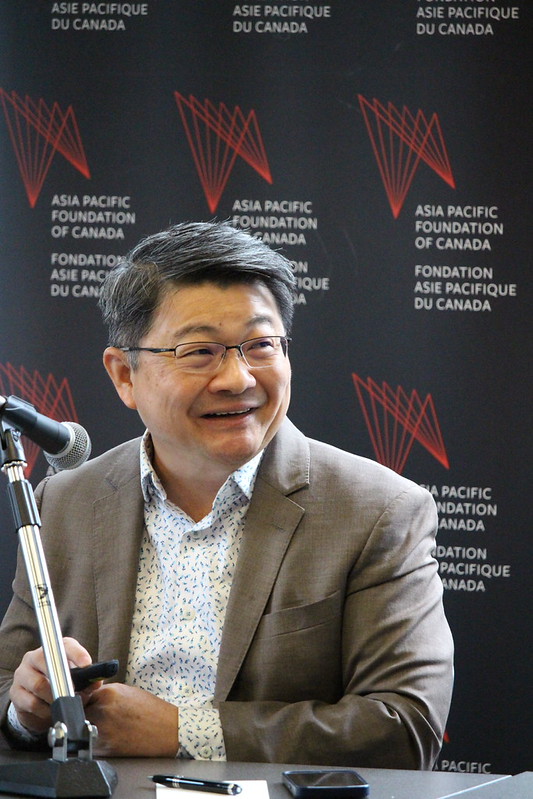
The second mechanism Dr. Kuik identified was inclusive diversification, through which middle powers enhance their autonomy by broadening their network of partnerships. Importantly, Dr. Kuik argued that diversification should not necessarily rest on shared values, but be driven by shared vulnerabilities and a common interest in reducing strategic dependence. With the U.S. retreating from certain areas of global engagement, middle powers have greater opportunities to fill the resulting gap, especially in Southeast Asia, where many states are actively seeking to expand their partnerships without committing to rigid blocs.
Finally, Dr. Kuik pointed to adaptive offsets vis-à-vis the competing powers. Effective hedging requires middle powers to carefully balance engagement and resistance to avoid subservience, while also preventing unnecessary confrontation. It involves combining seemingly contradictory measures, such as deeper engagement and selective distancing, so that states retain the flexibility to adjust their positions as geopolitical circumstances evolve.
These three approaches — active neutrality, inclusive diversification, and adaptive offsets — constitute the practical foundations of hedging, providing middle powers with the flexibility and agency needed to navigate the rapidly evolving international order.
Lessons for Canada
Dr. Kuik’s insights into the hedging strategies of middle powers offer a useful lens for understanding Canada’s recent shift in foreign policy. Canada has traditionally been characterized as bandwagoning with the U.S. in response to strategic challenges, rather than hedging against it. Research suggests that, until 2025, Canada responded to China’s rise and perceived U.S. decline by closing ranks with its Western ally. Perceptions of China as a threat played an important role in this alignment choice, as seen in Ottawa’s 2022 Indo-Pacific Strategy, labelling China “an increasingly disruptive global power.”
That perception has changed considerably over the past year, following U.S. President Donald Trump’s trade war against Canada and talk of Canada being “the 51st state.”
In September 2026, Canadian Prime Minister Mark Carney acknowledged having considered the possibility of U.S. military action against Canada. While extremely unlikely, Washington’s shifting attitude has led Canada to see its dependence on American power as a vulnerability. Canada’s new National Security Policy recognizes that strengthening strategic autonomy requires building national strategic capabilities at home and developing “a global system of partnerships.”
Tensions in Canada–U.S. relations under the second Trump administration show that even longstanding alliances can become sources of uncertainty, and that alignment choices are neither permanent nor immutable. Using Dr. Kuik’s framework, Canada’s moves over the past year point away from ‘bandwagoning’ and toward hedging, and each of the three mechanisms can be seen in practice. Active neutrality, the first mechanism, is visible in Carney’s reset with China, including the announcement of a new Canada-China Strategic Partnership in selected sectors in January 2026.
Inclusive diversification, the second mechanism, is visible in Canada’s push to double its non-U.S. exports over the next decade. The Indo-Pacific has been a particular focus. Canada signed a Comprehensive Economic Partnership Agreement with Indonesia, is negotiating bilateral free trade agreements with India, Thailand, and the Philippines, as well as a regional agreement with ASEAN, and has established strategic partnerships with Vietnam, Japan, the Philippines, and Australia, alongside a defence agreement with South Korea. Many of these middle powers are also diversifying amid geopolitical tensions, which creates an opportunity for Canada. As China and the U.S. exert growing pressure, many ASEAN states are seeking partners who share their vulnerabilities and their interest in reducing strategic dependence, opening a window for Canada to strengthen its presence in a region with strong demand for Canadian energy and technology.
Adaptive offsets, the third mechanism, are visible in how Canada combines engagement and distancing with both powers. With Washington, Ottawa has reaffirmed its commitment to collective defence, meeting NATO’s two per cent target for the first time and pledging to reach five per cent of GDP by 2035, while suspending trade talks in August over last-minute demands. With Beijing, Ottawa has paired firmness with restraint on Taiwan: days before the Chinese foreign minister’s visit in May 2026, a Canadian frigate transited the Taiwan Strait despite Beijing’s warnings, yet a trade framework with Taiwan, finalized in March 2025, remains unsigned, a delay Taipei attributes to Ottawa’s reluctance to antagonize China.
Dr. Kuik’s visit was therefore timely, as Southeast Asian alignment choices are highly relevant to Canada’s current geopolitical context. Like these states, Canada must combine selective resistance with pragmatic engagement toward both great powers to preserve its strategic autonomy. Ultimately, Canada’s challenge is to widen its options by building a broad network of partnerships, so that no single partner can dictate its choices. This is a delicate exercise that Southeast Asian states have navigated for years, and one that Canada is now learning to manage.
• Edited by Ted Fraser, Managing Editor, APF Canada