The Takeaway
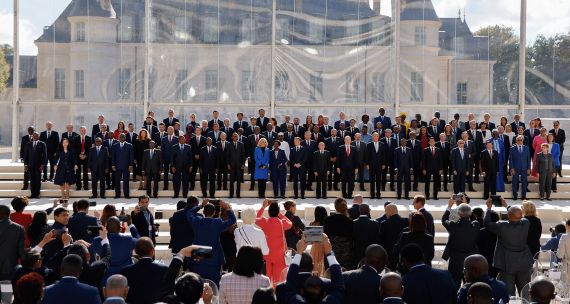
Canadian Prime Minister Mark Carney recently returned from three major meetings in Asia, attending, over the course of five days, the Francophonie Summit in Cambodia, the Association of Southeast Asian Nations (ASEAN) Summit in the Philippines, and the Asia-Pacific Economic Cooperation (APEC) Economic Leaders’ Meeting in China.
During his regional tour, Prime Minister Carney concluded bilateral trade negotiations with the Philippines and, separately, “substantially concluded” talks with ASEAN.
As Canada expands its trade presence in Southeast Asia — a region that has made visible progress on economic integration but still faces unresolved issues in the South China Sea and with Myanmar — Ottawa must navigate a delicate balance between growing Chinese and U.S. influence in the region.
In Brief
- PM Carney attended the ASEAN Summit in Manila as a Guest of the Chair — a designation used for key partners in bilateral and regional dialogues. He also visited Phnom Penh, Cambodia, on November 15–16 for the Francophonie Summit before arriving in Shenzhen, China, for the APEC Summit on November 18–19.
- In the coming years, Canada plans to play a higher-profile role in two of these gatherings: in Phnom Penh, Francophonie members formally approved Ottawa’s bid to host the Francophonie Summit in 2028. Canada is awaiting a final decision on its offer to be the APEC host economy in 2029.
- These summits took place as Canada was concluding negotiations on two regional free trade agreements (FTAs): the Canada–Philippines FTA and the ASEAN–Canada FTA. Both are expected to be signed in 2027.
- Myanmar was again represented at the ASEAN Summit by a non-political representative, not its military or political leadership. ASEAN leaders may consider gradually restoring full political representation if the country makes concrete progress on the Five-Point Consensus — a peace and diplomatic framework adopted by ASEAN leaders in response to the February 2021 military coup.
Implications
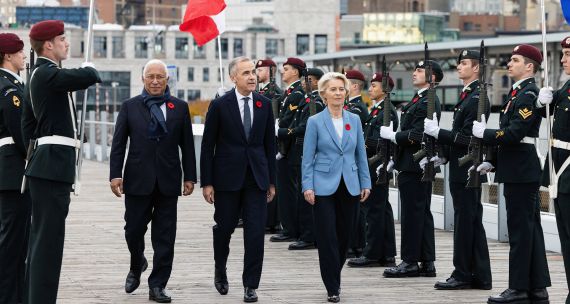
Canada’s prominence in the Francophonie Summit provided entry points into Southeast Asia, a region prioritized in Canada’s 2022 Indo-Pacific Strategy. In Phnom Penh, Carney made an investment pitch, focusing on partnerships and initiatives aimed at promoting the French language and fostering community resilience. Of the 92 states and governments that make up the Organisation internationale de la Francophonie (OIF), including full members, associate members, and observers, nine of them are located in Asia. Cambodia, Laos, and Vietnam are also home to a combined 1.36 million French speakers.
Quebec’s premier, Paul St-Pierre Plamondon, also attended, and Manitoba was welcomed as a full member, becoming the third Canadian province (in addition to Quebec and New Brunswick) to join the OIF, alongside Ontario and Nova Scotia, which are observer governments.
ASEAN showed progress on economic integration, with potential benefits for Canada’s regional trade. All 11 ASEAN members signed the Digital Economy Framework Agreement (DEFA), the bloc’s first legally binding agreement on this issue. Near-term priority projects include digital payments, digital identities, and electronic trade documents. Implementation, expected in early 2027, could be challenging given the variance among ASEAN members in their business readiness, digital infrastructure, and regulatory frameworks. DEFA, however, provides a framework that should assist with interoperability within ASEAN’s digital economy and foster collaboration for growth in this area, allowing businesses to become more competitive.
DEFA will complement the ASEAN–Canada Free Trade Agreement, which will in turn increase access for Canadian businesses and encourage trade with ASEAN’s population of nearly 700 million people and a combined economy of close to US$6 trillion. Once the ASEAN–Canada FTA is in force, it will expand Canada's integration into Asian supply chains and create more predictable conditions for Canadian workers and businesses. The trade agreement is expected to add nearly C$2 billion to Canada's GDP and create nearly 14,000 Canadian jobs, particularly in agriculture and manufacturing.
The Canada–Philippines FTA will enhance a bilateral relationship that already includes defence and cyber co-operation, and commercial agreements on ocean technology and renewable energy, through the Canada–Philippines Strategic Partnership. Together, these suggest Manila is becoming Canada’s anchor partner in Southeast Asia.
South China Sea and Myanmar remain sticking points for ASEAN. Although the Philippines, as the 2026 ASEAN chair, prioritized finalizing a code of conduct on the South China Sea, the summit concluded without any discernible progress on the issue. The Philippines is one of Canada’s most important defence partners in the Indo-Pacific region, with both countries having signed a Status of Visiting Forces Agreement. The agreement helps promote collaboration between the Canadian Armed Forces and the Armed Forces of the Philippines through participation in joint and multinational operations and exercises in each other’s territories, giving Canada a vested interest in a code of conduct that would stabilize the situation in the South China Sea.
Another sensitive point within ASEAN is Myanmar. The country has been excluded from political representation in ASEAN meetings since the military overthrew the democratically elected government in February 2021. In April 2021, the other ASEAN members adopted the Five-Point Consensus (5PC) in response to the subsequent political and humanitarian crisis, which calls for an end to violence, the initiation of dialogue between the parties, mediation by the ASEAN chair, and the provision of humanitarian assistance. ASEAN has restricted Myanmar’s participation in its events but indicated that it was open to measured dialogue if it could be determined that the Myanmar government has made sustained progress in implementing the 5PC.
The recent verdict by the International Court of Justice, which ruled that Myanmar had committed genocide against the Rohingya minority, could make it less likely that the other ASEAN members restore Myanmar’s full political representation in the regional bloc.
What’s Next
- Singapore sets the tone for ASEAN in 2027
Singapore’s ASEAN chairmanship, starting in January 2027, will set the bloc’s agenda for a crucial year in Canada–ASEAN relations.
Under the theme “Deeper Integration, Wider Partnerships,” Singaporean Prime Minister Lawrence Wong has committed to focusing on ASEAN co-operation in finance, digital technology, and energy, with the longer-term goal of integrating the 11 economies into a single market. The timing matters for Canada; a chair focused on regional integration and open to new partners gives Ottawa a clear opening to turn “substantially concluded” negotiations into practical co-operation, particularly in digital trade and energy.
- ASEAN eyes Canada–China reset
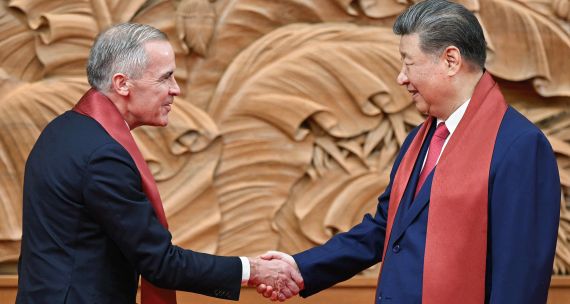
Canada’s partners in Southeast Asia will be monitoring the evolution of Canada–China ties. Prime Minister Carney and Chinese President Xi Jinping agreed ahead of the APEC Summit to extend and expand an arrangement improving market access for Canadian farmers and seafood harvesters. While Canada’s total exports to China have risen 40 per cent since January, Carney has maintained the need for “clear guardrails” on the relationship, effectively placing sensitive sectors such as critical minerals and artificial intelligence off the table. Meanwhile, ASEAN members, who are trying to manage their own balance between Washington and Beijing, have just upgraded their trade pact with China.
- A delicate balance
Prime Minister Carney’s participation in the Francophonie, ASEAN, and APEC summits allowed him to project an image of Canada as a reliable, long-term partner, while reaffirming Ottawa’s commitment to diversifying Canada’s bilateral and multilateral relations. This approach is particularly significant as Southeast Asia has become a central arena of strategic rivalry between the U.S. and China, where diplomatic and economic rapprochements can be interpreted as taking sides.
• Edited by Ted Fraser, Managing Editor, APF Canada