On November 15 and 16, Phnom Penh, Cambodia, will host the 20th Francophonie Summit, which will bring together more than 3,000 entrepreneurs, heads of state and investors to strengthen diplomatic, economic, and cultural ties among more than 90 member states of the International Organisation of la Francophonie (OIF). This is the second time the gathering is being held in Asia, nearly 30 years after Hanoi, Vietnam, in 1997.
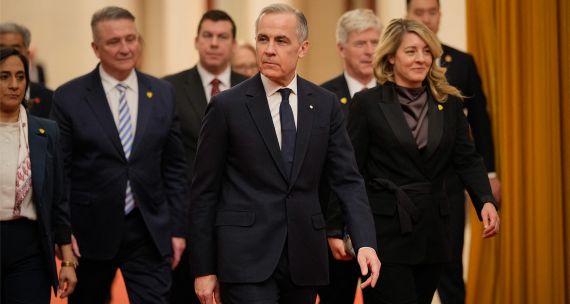
The Summit is part of a busy week in the region: the ASEAN summit will be held in Manila from November 16 to 18, followed by the APEC summit in Shenzhen on November 18 and 19. This sequence gives Prime Minister Mark Carney, who is travelling to the Philippines, Cambodia, and China this month, the opportunity to reaffirm Canada’s ambitions in the Indo-Pacific, as Ottawa continues its reflection on the next phase of its Indo-Pacific Strategy. For Canada, the Francophonie Summit goes well beyond language: it is a lever for influence, economic diversification, and closer ties between peoples.
Canada’s Weight in the OIF as a Vector of Diplomatic Influence
As a founding member and the second-largest funder of the OIF after France, Ottawa has significant capacity for influence within the organization. This influence also stems from the nature of the organization: born in the context of decolonization and the Cold War, the Francophonie was intended as a space for dialogue that preserved a degree of strategic autonomy vis-à-vis the great powers of the time. The former King of Cambodia, Norodom Sihanouk, is in fact considered one of the Founding Fathers of the Francophonie, where he championed the building of an international francophone space while maintaining a posture of neutrality toward the great powers as a tool of geopolitical non-alignment.
Canada occupies a leading role as a founding member, allowing it to position itself as an influential middle power committed to multilateralism. This posture is also in line with Prime Minister Carney’s vision that middle powers must assume greater responsibility for preserving an open, rules-based international order.
This influence takes on particular significance in the Asia Pacific, where Vietnam, Cambodia, Laos, and Vanuatu are members of the OIF, and where South Korea and Thailand hold observer status. Several Southeast Asian states are themselves seeking to preserve their autonomy in the face of U.S.-China rivalry by actively trying to diversify their strategic partners. Middle powers find themselves on the radar as partners that could strengthen these states’ economic and diplomatic resilience. Cambodia, for example, is rebalancing its policy toward China to avoid excessive dependence, which opens up space for Western states, including Canada, toward which Phnom Penh has shown greater openness since Hun Manet came to power.
The Francophonie offers Canada an additional lever: a space for dialogue and co-operation in which to deepen its relations with Southeast Asia, notably through diplomatic meetings on the margins of the Summit.
The Economic Francophonie as a Vector of Diversification
Canada has set itself the goal of doubling its exports outside the United States by 2035. This direction is part of the Carney government’s first National Security Strategy, unveiled on October 29, which places economic security, securing supply chains, and diversifying partnerships among its core priorities.
The Francophonie accounts for just over 16 per cent of global GDP and nearly one-fifth of international trade. Sharing the French language is also an important factor in facilitating trade, which is on average 1.6 times greater between francophone countries than between countries that do not share this common language. In an international context marked by the erosion of multilateralism and the weakening of several international co-operation forums, the OIF remains a growing economic network that fosters lasting partnerships well beyond the Summit. It offers not only privileged opportunities for business-to-business meetings, but also direct access to heads of state and decision-makers engaged in the francophone space. These exchanges are further elevated by support mechanisms that facilitate the development of new collaborations and business opportunities that endure well beyond the Summit.
Southeast Asia also offers significant business prospects, driven notably by the rapid growth of its middle class and the size of its consumer market. Despite this potential, the region remains largely untapped by Canadian businesses. Indeed, Canadian direct investment in Southeast Asia currently accounts for only about 5 per cent of all Canadian investment in the Indo-Pacific. Yet several institutional frameworks are already in place to support the development of these economic relations. This is notably the case of the Comprehensive and Progressive Agreement for Trans-Pacific Partnership (CPTPP), a trade agreement that eliminates about 99 per cent of tariffs and establishes common rules on investment, labour, and the environment among its 12 member states. In addition, the free trade agreement currently being negotiated between Canada and ASEAN would extend preferential access to Southeast Asian countries that are not parties to the CPTPP. In this context, the Francophonie is a strategic lever enabling Canada to strengthen its presence in Southeast Asia, particularly in Vietnam, Laos, and Cambodia, which share a colonial history under French Indochina, where Francophonie membership offers Canadian businesses an additional gateway to fast-growing markets.
French as a Vector for Bringing Peoples Together
Beyond economic issues, the Francophonie helps forge concrete people-to-people ties between Canada and Southeast Asia, notably through student mobility, university co-operation, and culture. With 396 million speakers, French is the 4th most widely spoken language in the world and the 3rd language of economy and business. Its weight remains limited in Asia: there are about 1.36 million francophones in Vietnam, Cambodia and Laos, or nearly 1.1 per cent of the combined population. This pool is modest, but its networks, such as the more than 80 member institutions of the Agence universitaire de la Francophonie (AUF) in the region, make French an anchor for lasting ties with Canada.
This is particularly relevant for the Canadian government, whose Indo-Pacific Strategy aims to support francophone immigration by diversifying its efforts in Cambodia, Laos, and Vietnam. For Ottawa, francophone immigration is both a tool for economic development and a lever for the vitality of francophone minority communities, hence the goal of increasing the share of francophone permanent resident admissions outside Quebec from nine per cent in 2026 to 10.5 per cent in 2028.
The Francophonie also offers Canada a unique diplomatic framework that allows for the direct involvement of subnational actors. Quebec and New Brunswick sit as full-fledged member governments, the OIF being the only international organization to grant them such status. This distinctive feature allows these provinces to develop their own international co-operation networks within their areas of jurisdiction, notably in education, culture, and economic development. This openness is particularly important for Quebec, whose Indo-Pacific Territorial Strategy relies on the Francophonie to increase the visibility of its culture in the region.
Horizon 2028: A Showcase for Canada
Beyond the protocol gathering, the Francophonie Summit serves Canada’s core interests on three levels. Diplomatically, it offers real influence within a multilateral body of about 90 states and governments. Economically, it opens up useful networks for diversifying Canadian exports beyond the U.S. market. And at the human level, it brings peoples together through immigration, education, and cultural outreach.
At the close of the Summit on November 16, Cambodia will pass the torch to Canada, which will host the next Summit in 2028 in the Ottawa-Gatineau region, giving Canada an exceptional showcase before the leaders and business communities of more than 90 states.