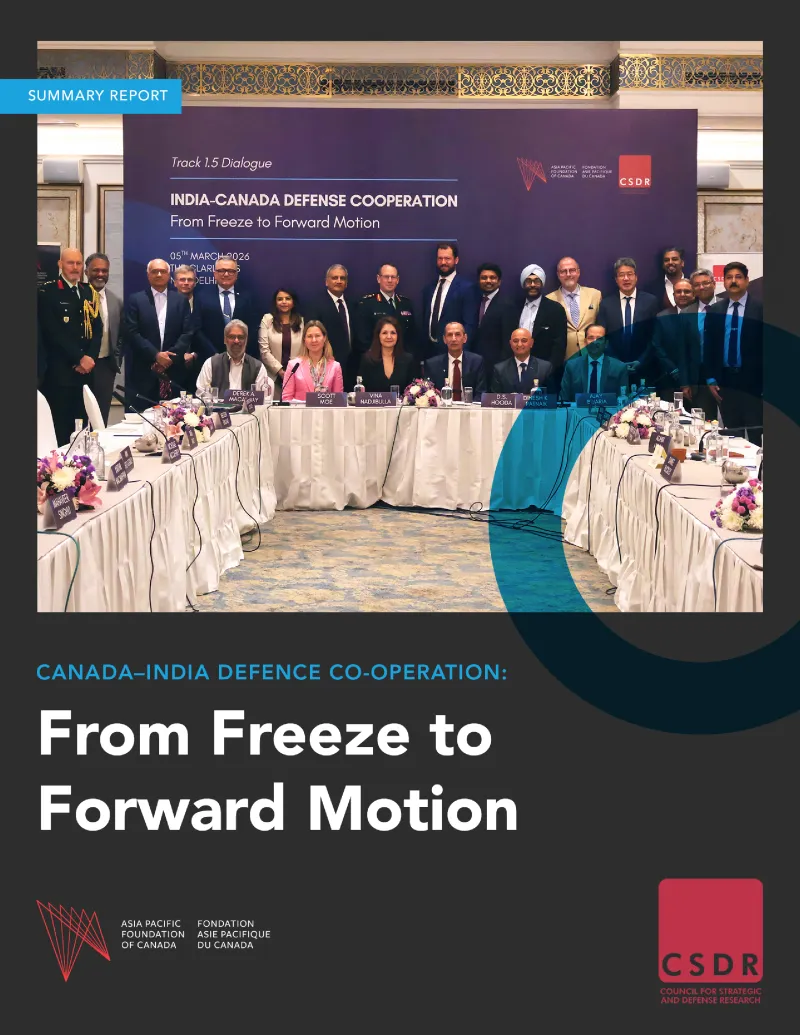
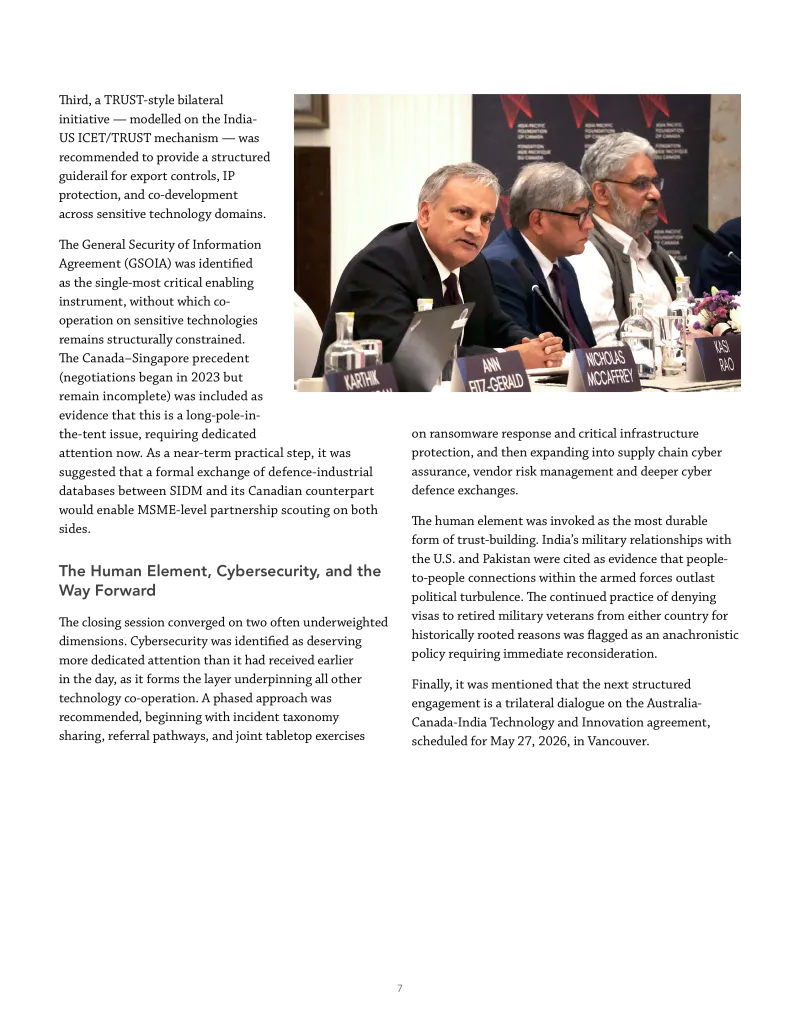
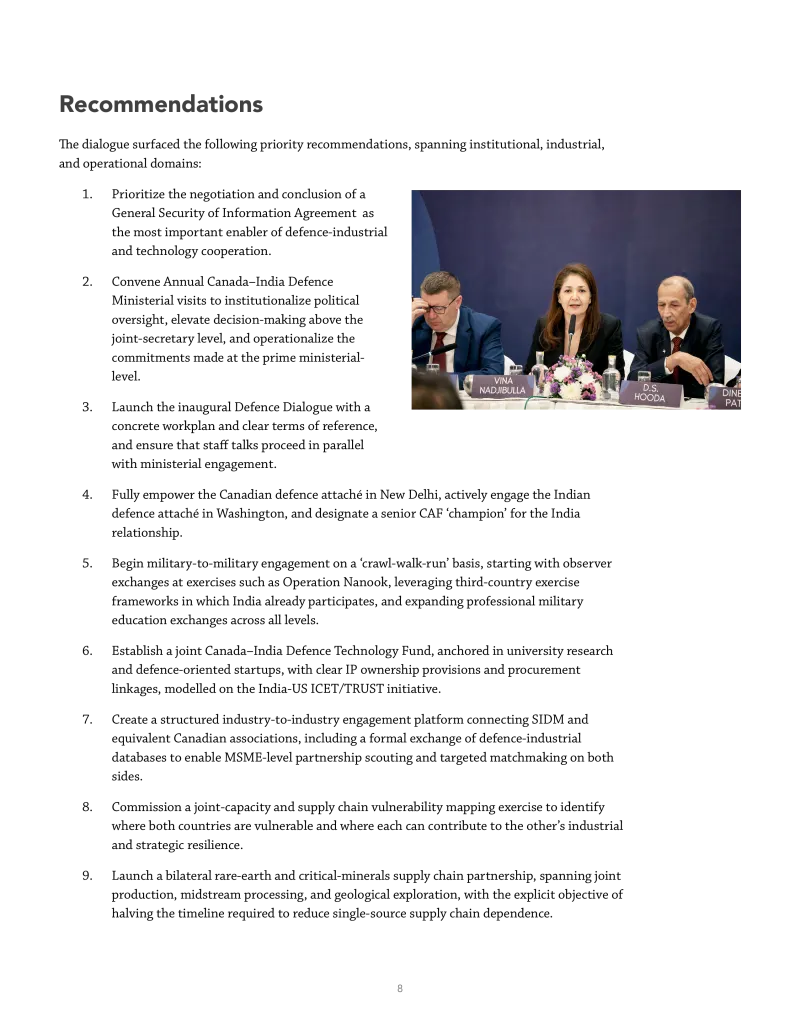
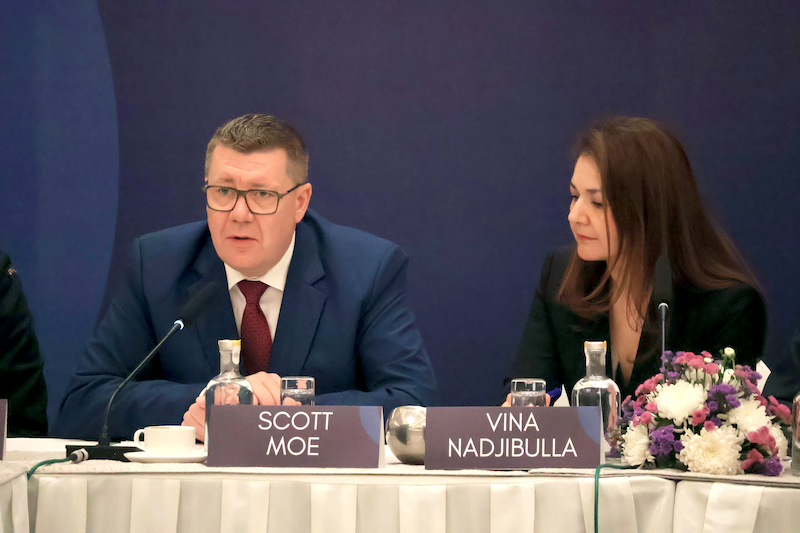
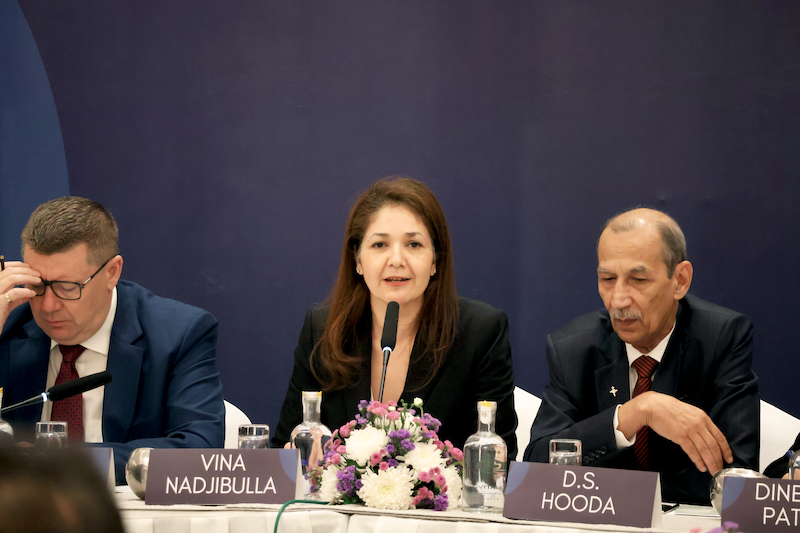
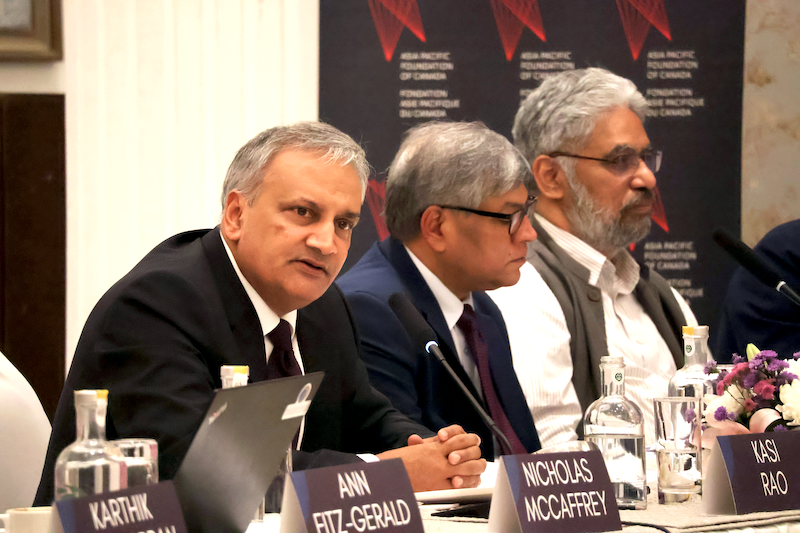
On March 5, 2026, APF Canada convened a Canada-India Track 1.5. Strategic Dialogue: Canada–India Defence Co-operation: From Freeze to Forward Motion in New Delhi, India. The Dialogue was a joint India-Canada Research Initiative from APF Canada in partnership with India’s Council for Strategic and Defense Research (CSDR).
This second ‘Track 1.5’ Dialogue (i.e. a semi-formal dialogue involving government representatives alongside participants from think-tanks and academia) on Canada–India Security and Defence Co-operation was convened at a moment of genuine strategic opportunity.
Bilateral ties, which had reached a historic nadir in 2023, have shifted decisively: the recent visit (27 February 2026 – 2 March 2026) by Canadian Prime Minister Mark Carney to India and joint statements committing both governments to a renewed Strategic Partnership, a formal Canada–India Defence Dialogue, and a Maritime Security Partnership represent the most substantive institutional progress in the relationship in a decade. As one participant observed, the 2015 Strategic Partnership Agreement now finally has the political alignment, sectoral ambition, and institutional scaffolding to live up to its name.
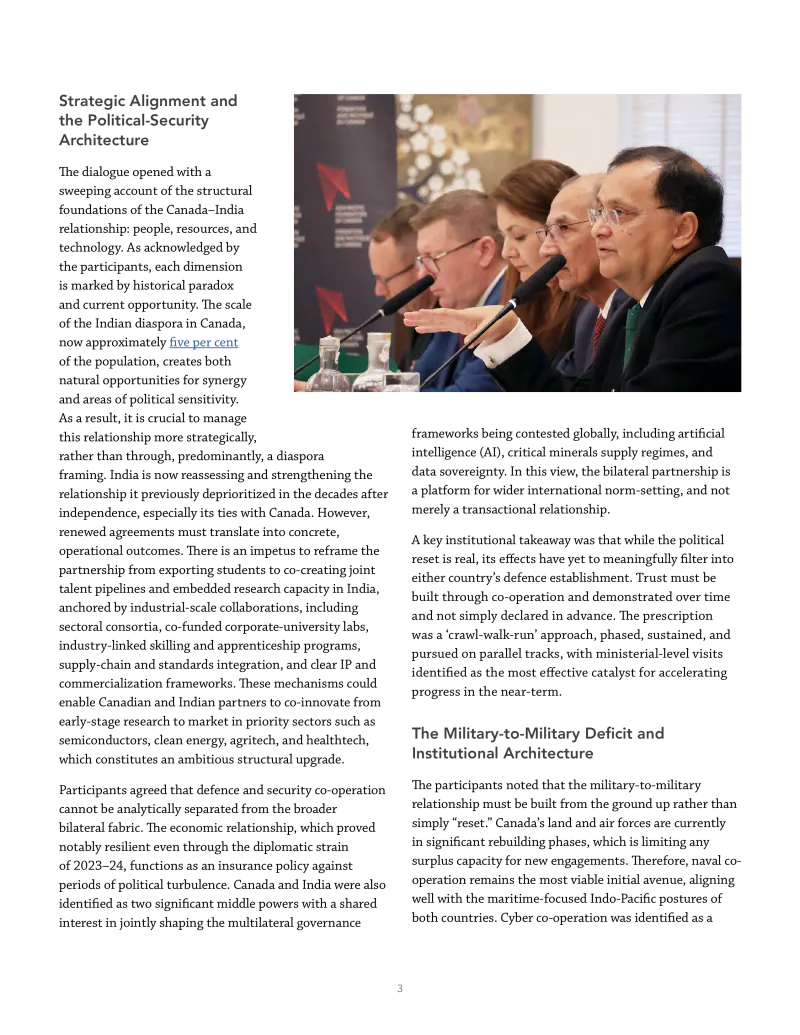
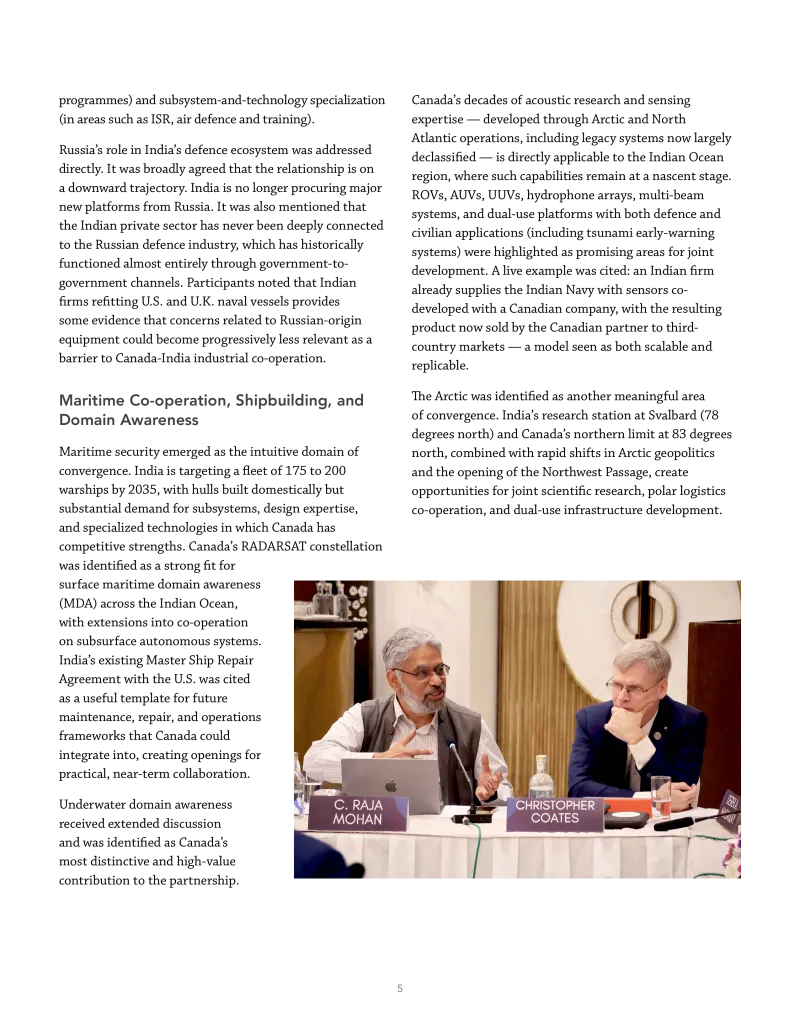
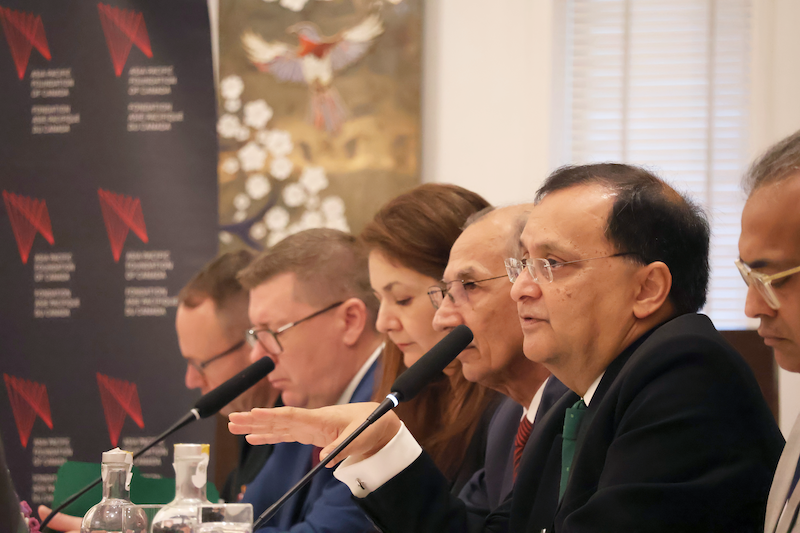
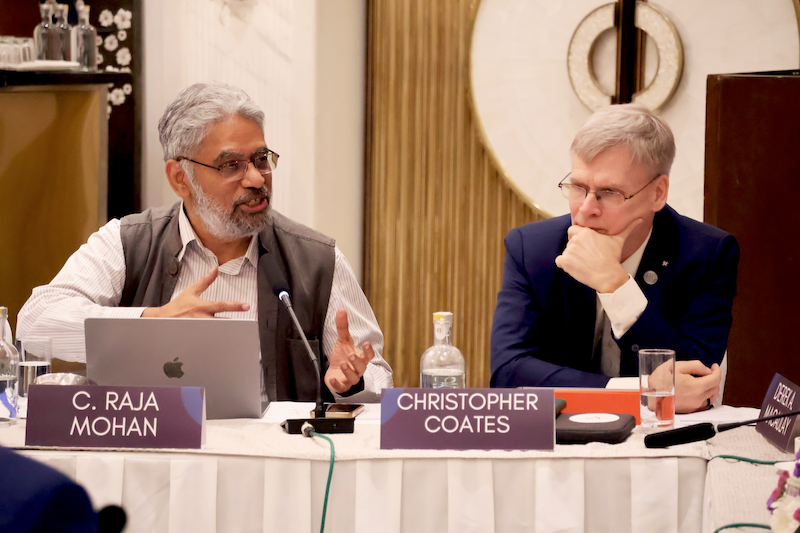
The dialogue brought together retired and serving military officers, senior diplomats, defence industry leaders, researchers, and policy practitioners from both countries across three sessions covering strategic framing, defence-industrial pathways, and the way forward. All sessions were conducted under Chatham House Rule.
The discussion was frank, technically substantive, and consistently anchored in the question of what is actually achievable, by whom, and over what timeline. Eight critical themes emerged, each with practical proposals and honest assessments of the constraints involved.
Strategic Alignment and the Political-Security Architecture
The dialogue opened with a sweeping account of the structural foundations of the Canada–India relationship: people, resources, and technology. As acknowledged by the participants, each dimension is marked by historical paradox and current opportunity. The scale of the Indian diaspora in Canada, now approximately five per cent of the population, creates both natural opportunities for synergy and areas of political sensitivity. As a result, it is crucial to manage this relationship more strategically, rather than through, predominantly, a diaspora framing. India is now reassessing and strengthening the relationship it previously deprioritized in the decades after independence, especially its ties with Canada. However, renewed agreements must translate into concrete, operational outcomes. There is an impetus to reframe the partnership from exporting students to co-creating joint talent pipelines and embedded research capacity in India, anchored by industrial-scale collaborations, including sectoral consortia, co-funded corporate-university labs, industry-linked skilling and apprenticeship programs, supply-chain and standards integration, and clear IP and commercialization frameworks. These mechanisms could enable Canadian and Indian partners to co-innovate from early-stage research to market in priority sectors such as semiconductors, clean energy, agritech, and healthtech, which constitutes an ambitious structural upgrade.
Participants agreed that defence and security co-operation cannot be analytically separated from the broader bilateral fabric. The economic relationship, which proved notably resilient even through the diplomatic strain of 2023–24, functions as an insurance policy against periods of political turbulence. Canada and India were also identified as two significant middle powers with a shared interest in jointly shaping the multilateral governance frameworks being contested globally, including artificial intelligence (AI), critical minerals supply regimes, and data sovereignty. In this view, the bilateral partnership is a platform for wider international norm-setting, and not merely a transactional relationship.
A key institutional takeaway was that while the political reset is real, its effects have yet to meaningfully filter into either country’s defence establishment. Trust must be built through co-operation and demonstrated over time and not simply declared in advance. The prescription was a ‘crawl-walk-run' approach, phased, sustained, and pursued on parallel tracks, with ministerial-level visits identified as the most effective catalyst for accelerating progress in the near-term.
The Military-to-Military Deficit and Institutional Architecture
The participants noted that the military-to-military relationship must be built from the ground up rather than simply “reset.” Canada’s land and air forces are currently in significant rebuilding phases, which is limiting any surplus capacity for new engagements. Therefore, naval co-operation remains the most viable initial avenue, aligning well with the maritime-focused Indo-Pacific postures of both countries. Cyber co-operation was identified as a second low-burden entry pathway with high potential for early progress. The recently appointed Canadian defence attaché in New Delhi was identified as a critical lever for advancing co-operation. It was noted that it is imperative to empower this role as an active driver and not merely as proof of diplomatic presence. It was also considered imperative to work closely with the Indian defence attaché in Washington, D.C., who is responsible for both Canada and the U.S. Similarly, the proposal to designate a senior Canadian Armed Forces (CAF) “champion” for the India relationship was viewed as a way to provide greater institutional focus, continuity and strategic ‘follow-through.’
Participants agreed that the Canada–India Joint Leaders' Statement offers a concrete and practical agenda — spanning defence materiel, supply chain resilience, training exercises, cybersecurity, AI, semiconductors, and trusted innovation ecosystems. That noted, there was consensus that such frameworks only become meaningful through operationalization.
 Both sides acknowledged that the trust deficit within security establishments remains unresolved. Canada’s 2024 CSIS report included a dedicated section on Indian foreign interference, while India continues to frame part of the bilateral tension through the lens of Sikh separatist extremism in Canada. Some participants noted that the way forward is to define these challenges as a shared security challenge that can be addressed through dedicated security and law enforcement mechanisms, with clear mandates for joint investigations, secure information-sharing, mutual legal assistance, time‑bound processes, and senior‑level oversight, while acknowledging that this ongoing issue contributes to a trust deficit that constrains broader co-operation.
INSTITUTIONAL PRIORITIES
Convene the first formal Defence Dialogue with a concrete work plan and staff talks.
Fully empower the Canadian defence attaché as an active driver of co-operation.
Designate a senior CAF ‘champion’ for the India relationship.
Pursue Annual Defence Ministerial visits to force the pace above the joint-secretary level.
Begin military-to-military engagement with observer exchanges (e.g. Operation Nanook) and Professional Military Education expansion.
Defence-Industrial Co-operation: The ‘Build-Partner-Buy' Framework
Canada’s newly released Defence Industrial Strategy (DIS), with its ‘Build-Partner-Buy' framework and 50 per cent defence export growth target, was examined in detail. Participants broadly welcomed its ambition while flagging the potential of a substantial gap between political intent and the institutional capacity required to deliver on it. Canada currently spends less than five per cent of its defence budget on R&D — compared to roughly 15 per cent in the United States — and lacks a procurement culture geared towards early-stage engagement with domestic industry, particularly on developmental programmes upstream. India’s own target of raising defence R&D investment to eight to 10 per cent creates a potential point of convergence, but both sides still need to close their respective innovation gaps before a robust co-development model can become fully operational.
Industry contributors from both sides identified a wide range of near-term partnership opportunities grounded in existing commercial linkages: CAE delivering training systems to the Indian Navy; Bombardier’s business aviation platforms adapted for ISR, signals intelligence, and maritime patrol roles within India’s Defence Research and Development Organisation pipeline; Indian firms such as Bharat Forge and Azad Engineering already integrated into Pratt & Whitney supply chains; and Tata Advanced Systems expressing readiness to invest in Canadian facilities provided there is sufficient demand signalling and regulatory clarity. France and Israel were cited as two distinct models that Canada could draw from: platform-centric co-production (e.g. the Rafale and Scorpène programmes) and subsystem-and-technology specialization (in areas such as ISR, air defence and training).
Russia’s role in India’s defence ecosystem was addressed directly. It was broadly agreed that the relationship is on a downward trajectory. India is no longer procuring major new platforms from Russia. It was also mentioned that the Indian private sector has never been deeply connected to the Russian defence industry, which has historically functioned almost entirely through government-to-government channels. Participants noted that Indian firms refitting U.S. and U.K. naval vessels provides some evidence that concerns related to Russian-origin equipment could become progressively less relevant as a barrier to Canada-India industrial co-operation.
Maritime Co-operation, Shipbuilding, and Domain Awareness
Maritime security emerged as the intuitive domain of convergence. India is targeting a fleet of 175 to 200 warships by 2035, with hulls built domestically but substantial demand for subsystems, design expertise, and specialized technologies in which Canada has competitive strengths. Canada’s RADARSAT constellation was identified as a strong fit for surface maritime domain awareness (MDA) across the Indian Ocean, with extensions into co-operation on subsurface autonomous systems. India’s existing Master Ship Repair Agreement with the U.S. was cited as a useful template for future maintenance, repair, and operations frameworks that Canada could integrate into, creating openings for practical, near-term collaboration.
 Underwater domain awareness received extended discussion and was identified as Canada’s most distinctive and high-value contribution to the partnership. Canada’s decades of acoustic research and sensing expertise — developed through Arctic and North Atlantic operations, including legacy systems now largely declassified — is directly applicable to the Indian Ocean region, where such capabilities remain at a nascent stage. ROVs, AUVs, UUVs, hydrophone arrays, multi-beam systems, and dual-use platforms with both defence and civilian applications (including tsunami early-warning systems) were highlighted as promising areas for joint development. A live example was cited: an Indian firm already supplies the Indian Navy with sensors co-developed with a Canadian company, with the resulting product now sold by the Canadian partner to third-country markets — a model seen as both scalable and replicable.
The Arctic was identified as another meaningful area of convergence. India’s research station at Svalbard (78 degrees north) and Canada’s northern limit at 83 degrees north, combined with rapid shifts in Arctic geopolitics and the opening of the Northwest Passage, create opportunities for joint scientific research, polar logistics co-operation, and dual-use infrastructure development.
Critical Minerals, Rare Earths, and Supply Chain Resilience
The rare earth dimension of the defence-industrial base was examined in detail. The Russia–Ukraine war has reshaped the strategic calculus: drones and autonomous systems are now consumable munitions, which is driving an order-of-magnitude increase in rare earth demand. With 95 per cent of global rare earth supply concentrated in a single jurisdiction, the participants concurred that this represents a single point of failure in the defence-industrial supply chain. Saskatchewan’s development of North America’s first fully vertically integrated minerals-to-rare-earth-metals facility, projected to produce 400–600 tons of defence-grade metals annually, was presented as a template for larger-scale production and a basis for significant Canada–India collaboration.
Operating independently, Canada and India would each require 10–15 years to make meaningful inroads into China’s market dominance. Operating together, this timeline could likely be cut in half. Canada brings midstream processing capabilities, exploration expertise, and proximity to the U.S. market. India brings manufacturing scale, growing downstream consumption, and an expanding semiconductor sector. Structuring this collaboration as an integrated supply chain was identified as the core opportunity. Participants recommended immediate vulnerability-mapping of the rare-earth supply chain.;
Uncrewed Systems, AI, and Emerging Technology Domains
Uncrewed systems emerged as the most urgent area for near-term industrial engagement. Canada’s half-billion-dollar investment in a drone Centre of Excellence at the National Research Council creates an immediate, credible demand signal. Indian manufacturers can supply motors, batteries, controllers, ruggedized assemblies, and other critical subsystems at scale, effectively displacing what one participant described as a “hostile supply chain” for these components. The energetics and munitions domain, while commercially sensitive given Canada’s restrictive munition supply programme, was raised as a potential bridging area. It was highlighted that India already exports munitions at scale, and Canada’s DIS calls for domestic nitrocellulose production, a capability that will take time to scale up.
On AI and network-centric warfare, participants aligned on a vision of next-generation systems built around data fusion, AI-driven command and control, and collaborative combat platforms operating as networked assets. Canada’s AI research ecosystem is globally competitive but commercially under‑leveraged, with a large proportion of intellectual property generated at leading institutes ultimately captured by U.S. firms. Joint R&D frameworks that enable retention of IP on both sides, combined with Canada’s urgent need for a national data strategy, were identified as foundational enablers. India’s data governance architecture and its uniquely large and diverse datasets were cited as valuable assets that could shape Canadian policymaking and technological development through structured research collaboration and mutual learning.
Institutionalizing the Partnership: Funds, Frameworks, and Industry-to-Industry Platforms
Three institutional tracks were proposed for operationalizing cooperation below the government-to-government level.
First, an industry-to-industry engagement platform connecting the Indian Society of Indian Defence Manufacturers (SIDM) and equivalent Canadian industry associations such as Canadian Association of Defence and Security Industries or Aerospace Industries Association of Canada, which would enable direct commercial connections without waiting for a fully formalized bilateral framework. Participants underscored that the Indian Information Technology and auto-components industries demonstrate their industry’s capacity to build globally competitive value chains when given the space to act autonomously.
Second, a joint Canada–India Defence Technology Fund anchored in university research and defence-oriented startups was proposed, with clear IP ownership provisions and procurement linkages on both sides.
Third, a TRUST-style bilateral initiative — modelled on the India-US ICET/TRUST mechanism — was recommended to provide a structured guiderail for export controls, IP protection, and co-development across sensitive technology domains.
The General Security of Information Agreement (GSOIA) was identified as the single-most critical enabling instrument, without which co-operation on sensitive technologies remains structurally constrained. The Canada–Singapore precedent (negotiations began in 2023 but remain incomplete) was included as evidence that this is a long-pole-in-the-tent issue, requiring dedicated attention now. As a near-term practical step, it was suggested that a formal exchange of defence-industrial databases between SIDM and its Canadian counterpart would enable MSME-level partnership scouting on both sides.
The Human Element, Cybersecurity, and the Way Forward
The closing session converged on two often underweighted dimensions. Cybersecurity was identified as deserving more dedicated attention than it had received earlier in the day, as it forms the layer underpinning all other technology co-operation. A phased approach was recommended, beginning with incident taxonomy sharing, referral pathways, and joint tabletop exercises on ransomware response and critical infrastructure protection, and then expanding into supply chain cyber assurance, vendor risk management and deeper cyber defence exchanges.
 The human element was invoked as the most durable form of trust-building. India’s military relationships with the U.S. and Pakistan were cited as evidence that people-to-people connections within the armed forces outlast political turbulence. The continued practice of denying visas to retired military veterans from either country for historically rooted reasons was flagged as an anachronistic policy requiring immediate reconsideration.
Finally, it was mentioned that the next structured engagement is a trilateral dialogue on the Australia-Canada-India Technology and Innovation agreement, scheduled for May 27, 2026, in Vancouver.
Recommendations
The dialogue surfaced the following priority recommendations, spanning institutional, industrial, and operational domains:
- Prioritize the negotiation and conclusion of a General Security of Information Agreement as the most important enabler of defence-industrial and technology cooperation.
- Convene Annual Canada–India Defence Ministerial visits to institutionalize political oversight, elevate decision-making above the joint-secretary level, and operationalize the commitments made at the prime ministerial-level.
- Launch the inaugural Defence Dialogue with a concrete workplan and clear terms of reference, and ensure that staff talks proceed in parallel with ministerial engagement.
- Fully empower the Canadian defence attaché in New Delhi, actively engage the Indian defence attaché in Washington, and designate a senior CAF ‘champion’ for the India relationship.
- Begin military-to-military engagement on a ‘crawl-walk-run' basis, starting with observer exchanges at exercises such as Operation Nanook, leveraging third-country exercise frameworks in which India already participates, and expanding professional military education exchanges across all levels.
- Establish a joint Canada–India Defence Technology Fund, anchored in university research and defence-oriented startups, with clear IP ownership provisions and procurement linkages, modelled on the India-US ICET/TRUST initiative.
- Create a structured industry-to-industry engagement platform connecting SIDM and equivalent Canadian associations, including a formal exchange of defence-industrial databases to enable MSME-level partnership scouting and targeted matchmaking on both sides.
- Commission a joint-capacity and supply chain vulnerability mapping exercise to identify where both countries are vulnerable and where each can contribute to the other’s industrial and strategic resilience.
- Launch a bilateral rare-earth and critical-minerals supply chain partnership, spanning joint production, midstream processing, and geological exploration, with the explicit objective of halving the timeline required to reduce single-source supply chain dependence.
- Initiate a dedicated Canada–India underwater domain awareness programme for the Indian Ocean, leveraging Canada’s acoustic, sensing, and subsurface-systems expertise across ROVs, AUVs, UUVs, hydrophone arrays, and dual-use platforms.
- Develop a joint AI and defence data-governance framework that ensures sovereign IP ownership for co-developed technologies, with structured research collaboration informing Canada’s national data strategy development.
- Establish a phased cybersecurity cooperation workstream as the foundational layer upon which all subsequent technology and defence co-operation rests.
- Clarify Canada’s export-permitting sandbox for India, reflecting the improved political environment and the declining relevance of Russian-origin content in the Indian defence sector, to provide regulatory certainty to industry.
- Advance the ACITI trilateral dialogue (Vancouver, May 27) as a broader strategic framework within which the bilateral defence co-operation agenda can be embedded and sustained.
- Review the practice of denying visas to retired military veterans from either country as an immediate goodwill measure that could strengthen people-to-people connectivity.
• Prepared by Shashank Tiwari, Research Assistant, Council for Strategic and Defense Research; edited by Aditi Malhotra, Program Manager, South Asia, Vina Nadjibulla, Vice-President Research & Strategy, and Ted Fraser, Senior Editor, APF Canada