By The Reach Alliance
The Reach Alliance, based at the Munk School of Global Affairs & Public Policy at the University of Toronto, is global consortium of cross-sector partners developing leaders to co-create climate, public health, and economic solutions with hard-to-reach communities. This year, a delegation of students from Reach attended the CanWIN Global Summit in Toronto on March 26-27, 2026. This is their summary report from the event.
The future of women’s entrepreneurship is already taking shape—and when women are supported, entire economies can shift.
The Reach Alliance sent a delegation of staff, researchers, and alumni to the CanWIN (Canadian Women’s International Network) Global Summit 2026 in Toronto March 26-27. The third installment of this annual gathering convened women leaders, entrepreneurs, and gender equality organizations to celebrate the network’s success and advance discussions on female leadership, inclusive trade, and expansion into Asia Pacific markets.
The gathering came after the Asia Pacific Foundation of Canada’s women-only business mission to the Philippines and Singapore in February 2026. Women business leaders from across Canada and Asia were well represented, spanning a diverse range of industries, including information and communications technology, sustainable energy, health technology, and consumer and retail markets.
Key takeaways from the Summit included:
Takeaway 1: Intentional, evidence-based policy and program design strengthens outcomes for women entrepreneurs
The Honourable Mary Ng, Canada’s former Minister of Export Promotion, International Trade and Economic Development, opened the Summit with a guiding question that framed the day's discussions: what does it take to design programs that genuinely reach the communities they are intended to serve?
She pointed to Canada’s Women Entrepreneurship Strategy (WES) as an example of intentional, evidence-informed policy design. Launched by the federal government in 2018 to increase the share of majority women-owned businesses in Canada (defined as firms with at least 51% women ownership), WES increased that share from 15.6% to 20% in 2025.
The effectiveness of the Strategy can be attributed to three mutually reinforcing principles. First, evidence: the Women Entrepreneurship Knowledge Hub (WEKH) filled critical data gaps and revealed issues like persistent barriers to capital access, which gave policymakers the foundation to intervene with precision. Second, participation: the Strategy was co-designed with women entrepreneurs, grounded in lived experience rather than assumptions. Third, systems alignment: it was reinforced by broader federal policies on pay equity, parental leave, and affordable childcare, recognizing that entrepreneurship support alone is insufficient when the structural conditions constraining women's economic participation remains unaddressed.
Takeaway 2: Strong peer networks drive success for women entrepreneurs
Beyond data and policy design, the Summit underscored another critical ingredient for women's success in international trade: strong networks, peer mentorship, and access to community. Meaningful progress happens when women share market intelligence, open doors for one another, and normalize the realities of building a business.
The Summit fostered this through a blend of structured and informal opportunities—mentorship over lunch, breakout discussions to exchange best practices, and platforms for emerging founders to share their stories with a broader audience.
The Honourable Rechie Valdez, Canada’s Minister of Women and Gender Equality and Secretary of State (Small Business and Tourism), and Ruth Vachon, CEO, Réseau des Femmes d'affaires du Québec, presented the Maïa Inclusive Growth Project, a platform that connects women-owned businesses with major buyers through AI-enabled matching and supply chain integration. What initiatives like Maïa make clear is that when women are given the room to connect and invest in one another, the impact reaches well beyond the businesses in that room.
Takeaway 3: Established trust and meaningful relationships underpin successful global market entry
Across women entrepreneurs and global markets alike, building strong partnerships rooted in community is essential to entering international markets. A panel of past trade mission delegates emphasized that international trade missions, especially those supported by the Government of Canada, give women entrepreneurs the opportunity to better understand local contexts, foster authentic relationships, and build momentum abroad. Intentional investment that centres empowerment, participation, and agency ensures these efforts are inclusive, impactful, and sustainable. This approach not only strengthens economic outcomes but also ensures women’s safety and support in the marketplace.
Takeaway 4: Women’s participation in capital allocation amplifies economic growth and strengthens inclusive, circular business ecosystems
Overall, increasing women’s participation in the economy is a powerful driver of shared prosperity across the full lifecycle of women-led businesses.
Alison Nankivell, President and CEO of Export Development Canada, noted that when women allocate capital, more women entrepreneurs gain access to funding. As women accumulate wealth, they reinvest it through philanthropy and community impact.
Women-led businesses generate a circular ecosystem with multiplier effects: they are more likely to source from, partner with, and sell to other women, champion pay equity, and build workplaces that support women’s participation and advancement.
The result: closing the gender gap could add up to $150 billion to Canada’s GDP, particularly in light of a significant wealth transfer expected by 2030.
Looking across these insights, the discussions at this year’s CanWIN Global Summit underscored a clear message: when policies are grounded in evidence, shaped by lived experience, and supported by aligned systems, they generate meaningful, measurable impact. When women entrepreneurs are empowered to participate fully, the result is stronger businesses, more inclusive growth, and a more resilient economy for all Canadians.
There was strong momentum in the room, alongside a shared recognition that important work remains. The Summit underscored the need to address domestic and structural barriers, particular for women and Indigenous entrepreneurs in Canada.
For Indigenous entrepreneurs, current financing models do not always reflect diverse realities, including on-reserve contexts. Anong Beam, Founder of Beam Paints, shared that as a First Nations woman living on reserve, accessing loans is particularly challenging, as on-reserve property cannot be used as collateral under traditional lending systems. And while Canadian businesses are highly innovative, greater alignment in regulations and procurement practices could help small- and medium-sized enterprises scale within Canada and bring their solutions to Canadians more readily.
The Reach Alliance’s model closely aligns with the Summit’s emphasis on evidence-based, co-designed, and community-informed approaches to policy, programming, and action. Building a more equitable ecosystem and addressing persistent structural barriers will be essential to translating progress into lasting, inclusive economic opportunity.
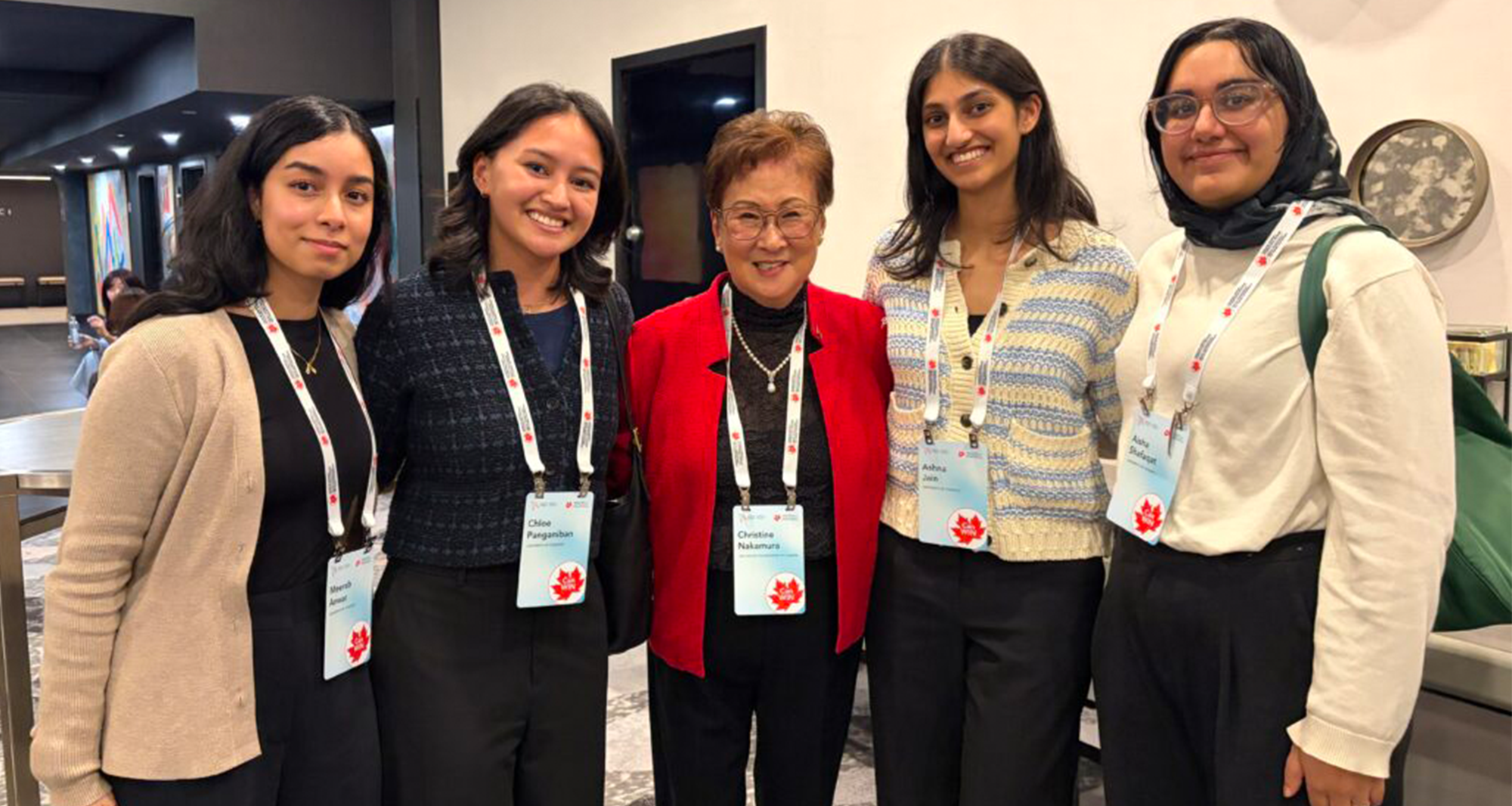
Thank you to APF Canada’s Christine Nakamura and the CanWIN team for hosting the Summit, as well as to delegation members Aisha Shafaqat, Ashna Jain, Chloe Panganiban, and Meerab Anwar for their valuable participation and insights.