Taiwan’s importance in the artificial intelligence (AI) era now extends beyond semiconductor fabrication. The island plays a central role in several parts of the physical infrastructure that AI depends on, including leading-edge semiconductor manufacturing, advanced chip packaging, AI server production, and the energy-efficient hardware systems needed to train and run advanced AI models.
Taiwan now explicitly links semiconductors, AI, security technologies, and next-generation communications under its Five Trusted Industry Sectors plan, with the goal of making Taiwan an “indispensable and trusted technological partner” for democracies. The island is no longer presenting itself merely as a chip manufacturer; it is positioning itself as a trusted AI hardware ecosystem.
For Canada, the opportunity is not to replicate Taiwan’s semiconductor model, but to build targeted partnerships around the adjacent capabilities that AI infrastructure increasingly needs, including AI-semiconductor research, photonics, compound semiconductors, critical minerals, and clean technology. This would move Canada–Taiwan co-operation beyond general supply-chain resilience toward a more focused agenda of technological complementarity.
Taiwan’s distinctive semiconductor model
Taiwan’s semiconductor industry did not rise by copying the vertically integrated American or Korean model, nor did it rely on a large domestic market. Its success, centred above all on Taiwan Semiconductor Manufacturing Company (TSMC), rested on a different industrial logic: the pure-play foundry model. Unlike the integrated manufacturing model, which combines chip design, manufacturing, and product sales within a single firm, TSMC specialized in manufacturing chips designed by others. This made TSMC the world’s first dedicated pure-play foundry and allowed Taiwan to position itself as the production platform for global chip designers rather than a direct competitor in branded semiconductor products.
The state played an important role, but not through conventional import substitution. Taiwan entered semiconductors early, under relatively open trade conditions, and used public research and development (R&D) support to discover a viable role in a rapidly changing industry. As a result, TSMC dominates the global semiconductor industry, producing roughly 90 per cent of the world’s most advanced chips required for cutting-edge technologies such as smartphones, AI servers, and high-performance computing. The enabling conditions were long-term investment in engineering talent, state-backed technology projects, and close alignment with the rise of "fabless" firms — companies that design and sell chips but outsource their fabrication.
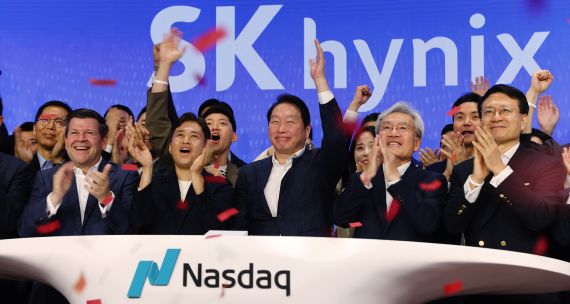
This is precisely why Taiwan’s semiconductor development path should not be read through the same lens as Japan’s. Japan’s semiconductor relevance today lies heavily in materials, equipment, and industrial depth, including high-purity chemicals, silicon wafers, testing equipment, and chipmaking tools. Taiwan’s relevance lies in platform manufacturing: the foundry model allowed global fabless firms to focus on design while relying on specialized manufacturers such as TSMC for production. At the same time, South Korea became especially dominant in memory chips through firms such as Samsung and SK Hynix — holding more than half of the global memory market — while Taiwan consolidated its position in foundry manufacturing. Taiwan’s strategic position therefore came not from self-sufficiency, but from a strategic division of labour between chip design and manufacturing.
The AI era extends this logic rather than overturning it. Taiwan remains the manufacturing partner for others’ innovation, but the scope of that role has changed. What was once primarily a foundry story is now becoming an AI infrastructure story. As advanced AI depends increasingly on leading-edge chips, advanced packaging, high-bandwidth memory integration, AI servers, and energy-efficient hardware systems, Taiwan’s platform role is expanding from semiconductor manufacturing to the broader physical infrastructure that makes AI possible.
From foundry powerhouse to AI infrastructure platform
AI is reshaping the global chip industry. With AI expected to help push global semiconductor output toward US$1.5 trillion, Taiwan is positioning itself not only as a producer of advanced chips but as a trusted platform for AI hardware.
Its AI-chip strategy is therefore both an industrial-upgrading strategy and a geopolitical-positioning strategy. Taiwan’s advantage lies not only in TSMC’s fabrication capacity, but also in the broader ecosystem that connects chipmaking, packaging, design support, server manufacturing, and trusted global partnerships.
This direction is reflected in Taiwan’s Five Trusted Industry Sectors plan, which links semiconductor, AI, security technologies, defence-related industries, and next-generation communications. The plan positions Taiwan as more than a manufacturing hub; it frames the island as a trusted technology partner for democratic economies. The government is prioritizing advanced semiconductor R&D, trial production, advanced manufacturing processes, packaging technologies, AI applications, greater computing capacity, international co-operation, and low-energy solutions. This is a broader agenda than simply supporting TSMC. It signals an attempt to consolidate a full AI hardware ecosystem in which AI chips are designed, packaged, integrated, and deployed through trusted networks.
Advanced packaging is central to this shift. For policymakers, the issue is no longer only whether firms can manufacture smaller and faster chips. It is also whether they can integrate processors, memory, and other components in ways that deliver the speed, bandwidth, and energy efficiency required by advanced AI systems. TSMC’s CoWoS packaging technology is already widely used for AI chips, including Nvidia-designed processors, while Taiwanese firms such as MediaTek are moving into custom AI chips. These developments suggest that Taiwan’s role is expanding from wafer fabrication to the broader architecture of AI hardware.
This matters because AI performance increasingly depends on integration rather than fabrication alone. Advanced AI systems require close co-ordination among computing power, high-bandwidth memory, chiplets, cooling, and power management. Taiwan’s strengths in advanced packaging, chip manufacturing, and supplier co-ordination therefore give it a platform role that extends beyond TSMC’s foundry capacity. The same logic is extending into AI servers and data-centre-related hardware, as Foxconn’s partnerships with Schneider Electric and OpenAI point to a broader move from electronics manufacturing toward servers, power systems, cooling, and energy-management technologies. Taiwan does not control the global data-centre industry, which remains heavily shaped by U.S. cloud and AI firms, but its companies are becoming more important in producing the hardware systems that allow AI models to be trained and deployed at scale.
The AI-energy-chip nexus
Taiwan’s AI-chip nexus is also an AI-energy-security nexus. The sustainability of Taiwan’s semiconductor leadership will depend not only on fabrication and packaging capacity but also on whether Taiwan can secure reliable, affordable, and increasingly low-carbon power. Advanced fabs, packaging facilities, AI servers, and data centres are all highly power-intensive, making energy capacity and grid resilience integral to Taiwan’s technology strategy.
TSMC is already treating this as an engineering constraint. In May 2026, a senior TSMC executive said that surging AI electricity demand is making energy efficiency — not raw computing power — the main constraint shaping future chip development. He pointed directly to advanced packaging, 3D chip stacking, and photonics as increasingly important ways to improve performance without driving up power use. This is highly significant. It suggests that the frontier of AI competition is shifting toward performance per watt, thermal management, and system-level efficiency.
For Taiwan, this becomes a national resilience issue because the island is heavily dependent on imported energy. In April 2026, Taiwan had to seek renewed assurances over LNG supply as Middle East conflict-related disruptions raised concerns over energy security. Its own nuclear-free homeland policy, which shut down all nuclear power plants on the island, undercuts its energy security. The same report described Taiwan as heavily reliant on imported energy, underscoring the vulnerability of an economy whose most strategic industries require exceptionally reliable power. As more AI data centres and packaging capacity are added, energy security and grid resilience become industrial-policy issues as well.
That creates a more specific opportunity for Canada–Taiwan co-operation at the intersection of AI hardware and energy resilience. As Taiwan’s AI-hardware ambitions become more closely tied to energy efficiency and infrastructure resilience, Canada’s relevance lies not only in semiconductor-related capabilities, but also in the complementary technologies and resources needed to support that expansion. The next step is to translate this complementarity into a focused bilateral co-operation strategy.
Canada–Taiwan co-operation
For Canada, Taiwan’s AI-chip nexus creates an opportunity to move beyond a conventional supply-chain resilience agenda toward a more targeted strategy of technological complementarity. Taiwan’s strength lies in a historically accumulated platform role that connects advanced fabrication, packaging, design support, server manufacturing, and trusted global partnerships. Canada’s opportunity lies in building capabilities in the adjacent inputs that AI infrastructure increasingly requires, including AI research, energy-efficient computing, photonics, critical minerals, clean energy, cybersecurity, and talent circulation.
The institutional basis for such co-operation is stronger than is often recognized. Ottawa already identifies information and communications technology, clean technologies, and energy as priority sectors in Taiwan, while recent bilateral frameworks — including the 2023 Foreign Investment Promotion and Protection Arrangement, the 2023 Collaborative Framework on Supply Chains Resilience, and the 2024 Science, Technology, and Innovation Arrangement — provide practical channels for turning Canada–Taiwan technology ties into a more strategic AI-infrastructure partnership.
The most concrete foundation for deeper co-operation is research collaboration at the AI-semiconductor interface. In 2026, NSERC and Taiwan’s NSTC launched a joint call on semiconductors and AI, with each side committing up to C$1 million and up to C$225,000 per three-year project. The call is notable for how it frames the relationship: Canada’s AI strengths and Taiwan’s semiconductor expertise are to be brought together to co-develop AI-driven semiconductor solutions. The research areas go well beyond generic co-operation and include AI-assisted design automation, advanced manufacturing and packaging, high-performance AI chips, interconnects, quantum photonics, compound semiconductors, Micro-Electro-Mechanical Systems, and shared AI/high-performance computing testbeds. The next step should be to build on this initial funding round through stronger industry participation, shared research, and testing infrastructure that can move projects from laboratory research toward prototyping and commercialization.
Another promising area is photonics and compound semiconductors. Canada’s own critical-minerals and semiconductor strategy highlights domestic strengths in R&D, design, specialized manufacturing, and advanced packaging, and notes that the Canadian Photonics Fabrication Centre is North America’s only end-to-end pure-play compound semiconductor foundry. Canada also has capabilities in indium phosphide, gallium arsenide, and gallium nitride. These areas are becoming more strategically relevant as photonics and high-speed optical interconnects become central to AI data-centre efficiency. The next agenda is to identify where Canadian photonic and compound-semiconductor components can meet specific needs in Taiwan’s AI server, packaging, and data-centre supply chains.
Critical minerals should also be reframed as part of AI infrastructure. Ottawa explicitly identifies semiconductors as a priority value chain within the Critical Minerals Strategy and emphasizes the importance of gallium, germanium, indium, and other inputs for compound semiconductors. These materials support not only chip production but also the advanced electronics, communications, and power systems on which AI infrastructure depends. Canada–Taiwan co-operation should therefore focus on identifying mineral inputs needed by Taiwan’s semiconductor and AI-hardware industries and developing reliable pathways for their processing, qualification, and supply. This would connect Canada’s upstream resources and processing ambitions more directly to Taiwan’s downstream manufacturing capabilities.
Clean energy can become the final pillar of a Canada–Taiwan AI-infrastructure agenda. Taiwan’s semiconductor and AI ambitions will require reliable, affordable, and increasingly low-carbon electricity, while AI systems are creating new pressures around power consumption, cooling, and grid stability. Canada can contribute expertise in grid modernization, energy storage, demand management, industrial energy efficiency, and low-carbon power integration. Bilateral co-operation could focus on applying these capabilities to semiconductor facilities, AI data centres, and other power-intensive technology infrastructure, linking clean-energy co-operation directly to Taiwan’s industrial resilience.
Canada and Taiwan now have an opportunity to turn their complementary strengths into a more focused AI-chip infrastructure partnership. The bilateral arrangements established in 2023 and 2024 provide a foundation for deeper co-operation in research, investment, supply-chain resilience, critical minerals, and clean technology. The priority should be to use these frameworks to connect Canadian capabilities in AI research, specialized technologies, materials, and energy systems with Taiwan’s strengths in semiconductor manufacturing and hardware integration. Such co-operation would help Canada deepen its role in strategic technology supply chains while supporting Taiwan’s efforts to build more efficient and resilient AI infrastructure.
• Edited by: Vina Nadjibulla, Vice-President Research & Strategy, and Ted Fraser, Senior Editor, APF Canada