The Takeaway
Ottawa’s decision to select Germany’s TKMS over South Korea’s Hanwha Ocean as the preferred supplier for the Canadian Patrol Submarine Project (CPSP) is best understood as not just a decision about procurement but as part of a longer-term strategic play. In choosing TKMS, Canada has leaned into tighter integration with a European and NATO-centred submarine ecosystem over a South Korean offer that leaned more heavily on Indo-Pacific diversification, speed of delivery, and a broad industrial package.
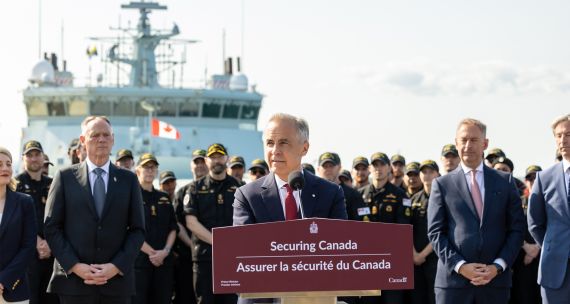
Because the July 6 announcement came on the eve of the NATO Summit in Ankara, Türkiye, and was explicitly framed around sovereignty, interoperability, and allied security, the signal is clear: Ottawa judged alliance alignment and lifecycle risk reduction as outweighing Hanwha’s wider industrial pitch and an opportunity for long-term strategic involvement in the Asia Pacific theatre.
In Brief
- Canada’s effort to replace its aging Victoria-class fleet began in 2021. The federal government later narrowed the competition to Germany’s TKMS and South Korea’s Hanwha Ocean.
- On July 6, Canadian Prime Minister Mark Carney announced TKMS as the preferred supplier of up to 12 new submarines, marking a major step in what will be Canada’s largest-ever military procurement. Contract negotiations are expected to continue through 2027, meaning the decision identifies a preferred path but does not yet finalize the acquisition.
- Hanwha Ocean’s loss is being interpreted by Korean media partly through the “NATO preference” lens; these media outlets have noted that Carney’s statement mentioned that Hanwha could still be approached if negotiations with TKMS fail, leaving open a fallback option rather than closing the door entirely.
Table 1: Comparison of the TKMS and Hanwha Bids
| Key attribute | TKMS offer | Hanwha offer |
|---|---|---|
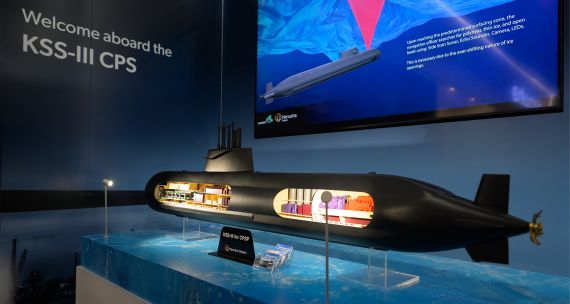
| Delivery timeline | TKMS says the first vessel could be delivered by 2033; Reuters and AP reported the first four by 2034 through production-slot reallocation. | Hanwha said it could deliver four KSS-III submarines before 2035 if contracted in 2026, and all 12 by 2043. |
| Industrial commitments | TKMS pitched a trilateral Canada–Germany–Norway framework, a sovereign Canadian sustainment enterprise, and large economic-impact projections. | Hanwha signed MOUs in steel, satellite communications, AI, space, and EO/IR, framing the bid as a broader industrial partnership. |
| IP and sustainment | TKMS emphasized sovereign Canadian training, maintenance, sustainment, and long-term participation in the 212CD ecosystem. | Hanwha emphasized use of Canadian steel, MRO infrastructure, technological collaboration, and technology-transfer commitments. |
| Geopolitical signal | Stronger transatlantic and NATO integration; Germany explicitly framed the deal as bringing Canada closer to Europe. | Stronger Indo-Pacific diversification and a deeper Canada–South Korea defence-industrial partnership. |
Implications
Strategically, Canada’s decision suggests that alliance integration carried more weight than supplier diversification. Canada’s August 2025 shortlist announcement described the submarine project as an opportunity to “diversify Canada’s defence partnerships,” and both TKMS and Hanwha offered credible pathways toward that objective. Ottawa’s selection of TKMS indicates that the government placed particular value on NATO interoperability and participation in a shared submarine program with Norway. The decision does not reflect a diminished commitment to Canada’s 2022 Indo-Pacific strategy, but rather that, at least on this file, transatlantic integration was a more compelling strategic argument.
Industrially, the decision reflects a trade-off between two different models of long-term value. Canada’s priority is not just to acquire submarines, but to establish sovereign sustainment capacity rooted in its own domestic industrial base. TKMS offered access to a common 212CD ecosystem with Germany and Norway, including shared logistics, training, maintenance, and sustainment. Hanwha offered an active Korean production line, a proposed four-vessel delivery commitment before 2035, and a broad industrial network spanning Canadian steel, satellite communications, AI, space, and sensors. Ottawa appears to have judged the German–Norwegian model as better aligned with its lifecycle and interoperability priorities, while Hanwha’s bid represented a broader bilateral industrial partnership. Ottawa also appears to have prioritized the Arctic capabilities of the TKMS fleet — a specialized feature that Hanwha was competing against.
Diplomatically, the decision comes as a big disappointment but does not indicate a major rupture in the bilateral relationship. Hanwha had linked its bid to the Canada–Korea Free Trade Agreement, the Comprehensive Strategic Partnership, the Security and Defence Cooperation Partnership, and Canada’s Indo-Pacific Strategy — all of which remain vital nodes in the relationship. In general, local South Korean outlets have described the result as evidence that NATO interoperability and the German–Norwegian 212CD framework carried greater weight in Ottawa’s final assessment. Canada–South Korea co-operation can still advance in other critically important areas such as shipbuilding, energy, critical minerals, and advanced technology.
What’s Next
- Final contract remains open
Canada has selected a preferred supplier, but it hasn’t signed a final contract. Ottawa still needs to turn the TKMS decision into a binding agreement with enforceable milestones on cost, delivery schedule, domestic industrial participation, and fleet sustainment. The key test is whether the German–Norwegian 212CD framework can meet Canada’s 2035 no-gap requirement while providing credible transition planning from the Victoria class.
- The Canada–South Korea relationship needs follow-through
Ottawa will need to demonstrate that it remains committed to advancing the Canada–South Korea relationship beyond the submarine file. A durable agenda lies in other areas of bilateral co-operation, such as shipbuilding, energy, critical minerals, AI, space, and advanced manufacturing — all sectors where both governments and South Korean firms have already signalled interest. In particular, as South Korea has been named (along with Japan) a key partner in the North Pacific region on Arctic issues, co-operation on Arctic security remains a priority for both countries.
- Technical sovereignty still needs definition
Canada will need to clarify what “sovereign sustainment” means in operational terms. The decisive questions are when and whether Canada will have sufficient access to technical data, software, upgrade pathways, spare parts, training, and workforce transfer. Without these details, domestic sustainment could still leave Canada dependent on foreign-controlled systems over the fleet’s life cycle.
• Edited by: Jeehye Kim, Senior Program Manager, Northeast Asia, and Ted Fraser, Senior Editor, APF Canada