The Asia Pacific Foundation of Canada and the Consulate General of the Republic of Korea in Vancouver co-hosted a roundtable discussion in Vancouver, Canada, on November 18, 2026, on Canada-South Korea Critical Mineral Supply Chain Co-operation.
Panel discussants included: Dr. Yonggi Kim, Associate Research Fellow, Directorate for Global Strategy at the Science and Technology Policy Institute, South Korea; Mr. Sam Lee, President and CEO of Northisle Copper and Gold, Inc.; Colonel Jin Ki Lee, Republic of Korea Military Liaison Officer, U.S. Strategic Command; Dr. Soo Hyun Oh, Research Fellow at the Korea Institute for International Economic Policy, South Korea; Mr. Garth Thomson, Executive Director, Policy and Competitiveness, BC Ministry of Mining and Critical Minerals; and Mr. Mark Tory, President and CEO of Defense Metals Corp.
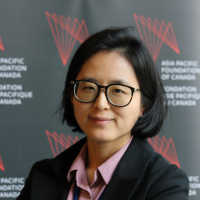
Opening remarks were provided by Ms. Erin Williams, Acting Vice-President, Research and Director, Programs, APF Canada; Mr. Kwangsuk Lee, Consul General of the Republic of Korea in Vancouver. APF Canada’s Sun Ryung Park (Senior Research Specialist) and Jeehye Kim (Senior Program Manager) moderated the panel discussions, followed by a Q&A with the audience.
As South Korea celebrated a historic milestone of its exports surpassing US$1 trillion for the first time this month – the fourth country to do so, following the U.S., China and Germany – the country faces the stark reality that much of this achievement stems from its semiconductor industry riding the AI chip boom. With semiconductors accounting for over 40 per cent of its total exports, South Korea’s economy is now more dependent than ever on critical minerals including gallium, germanium, silicone, tungsten, and rare earths. However, Korea’s access to critical minerals has become extraordinarily vulnerable as it is still heavily dependent on countries like China that dominate the production and processing of these resources and issue export controls.
Canada, on the other hand, is just as exposed to critical mineral supply-chain vulnerabilities as South Korea, despite its much larger domestic resource base. While Korea is heavily dependent on imported raw materials, Canada is dependent on foreign suppliers for the refined materials and components as it lacks sufficient domestic refining and high-purity processing capacity.
Against this backdrop, the roundtable focused on how Canada could further collaborate with South Korea given the complementarities of the two countries’ needs and strengths, upgrading from simple raw materials trade to a strategic partnership that enables joint investment, long-term offtake agreements, and co-ordinated stockpiling. Panellists addressed the core question of how Canada could move from a supplier of resources to a reliable producer, and where South Korea fits in.
A new direction for supply chain resilience: earlier investment means lower risk
The first panel addressed how critical minerals have become tools of geopolitical leverage, and whether Canada can offer a credible alternative to South Korea’s most at-risk supply chains. Consul General Kwangsuk Lee’s opening remarks provided a reminder that the current geopolitics of natural resources unite Canada and South Korea as like-minded democracies whose survival depends on secure access to critical minerals to fuel their strategic industries ranging from autonomous weapons to clean energy transition. With its top-notch downstream processing capacities as a global leader in refining and non-ferrous metal smelting, Korea stands out as a natural partner to Canada in the latter’s efforts to increase domestic production capacity through resource development support and foreign investment.
Panellists agreed, pointing to the changes in South Korea’s critical minerals strategy announced in September in the First Critical Minerals Stockpiling Plan (2026–2035). Not only has Korea expanded its list of designated critical minerals from 38 to 51 and emphasized stockpiling by introducing the concept of a “National Total Available Stock” but the document also mentioned increased support for overseas resource development projects and strategic investments. The last point is especially applicable for Korean companies and financial institutions looking to establish a full-cycle of co-operation with a Tier 1 partner like Canada.
Panellists suggested that under this new plan, South Korean firms can jointly invest and establish long-term offtake agreements in promising Canadian mining projects, as seen in Frontier Lithium and Defense Metals. To do this, the two countries would need to first develop a concrete implementation plan for joint stockpiling of strategic minerals such as nickel, graphite, cobalt, and rare earths. In addition, roundtable panellists pointed out that now is the time for Canada and South Korea to also consider upgrading their existing MOU to have stronger binding force similar to the US-Japan Critical Minerals Agreement (2023) and introduce measures such as prohibiting export duties and export quotas, mutual tax credits, and shared emergency release mechanisms. Other recommendations included: 1) a joint R&D program built around by-product recovery, high-purity refining, and recycling technologies, run by research institutes and companies from both countries, and, 2) prioritizing AI semiconductor materials such as gallium, germanium, and indium in a joint stockpiling plan, and integrating this plan with a shared early warning system of supply chain risks and technology trends that would translate into a full-stack bilateral AI co-operation. These measures could effectively link Canada’s AI research capabilities and South Korea’s semiconductor manufacturing capabilities all the way down the value chain to the mineral components.
Panellists also addressed core challenges that these collaboration efforts would face – namely, risk. This includes risk in equity capital that is crucial in the earlier stages of exploration, risk in obtaining social licensing and permits, and risk in labour shortage at the later production stages. Mining is inherently a risky industry – only a fraction of discoveries is economically viable, and even fewer receive the necessary financing, permits, and construction approval. Less than one in 1,000 ultimately becoming producing mines, and the entire process from discovery to production often takes at least a decade, if not longer. Despite this high failure rate, panellists stressed the importance of capital investment at the early stages to get past a basic feasibility study, as it is this incubating stage that partners can build trust from the ground up at a comparatively small cost compared to the larger expenditures involved in the later stages of mine development.
Even after final investment decision (FID), a larger risk still lies in the cost of processing: strategic minerals may not be commercially attractive enough to sustain the operation of physical facilities needed to produce them. Germanium is one such example – the quantity produced by Teck’s operations in Trail, British Columbia, is not big enough to meaningfully impact global prices, making it difficult to justify investing in expensive processing infrastructure when the germanium commodity itself may never generate sufficient commercial returns. This is where partnership with South Korean industries could be crucial, with the latter guaranteeing demand for Canadian minerals at a commercially viable price through long-term offtake agreements. In turn, the Canadian government could help offset risk that Korean industries face by providing business-friendly tax incentives. Here, Korea could be effective in leveraging its proven processing capacity. Instead of subsidizing domestic smelters that may still struggle to compete commercially, Canada could leverage the existing advanced smelters of trusted partners such as South Korea.
During the Q&A session, several observations were made about what makes the current environment a unique moment for South Korea to deepen co-operation with Canada on critical minerals. The first is the comeback of nation-building not seen since the 1960s and 70s, with the Canadian government prioritizing infrastructure projects that can unlock an entire province's mineral potential. The second is the relative predictability of Canada’s regulatory system and stable political environment. Where mining investment once migrated from Canada to Latin America because companies could develop projects more quickly and obtain permits there more easily, today environmental scrutiny and political uncertainty have become significant risks in those countries, creating a renewed opportunity for Canada, whose institutional stability now serves as a comparative advantage.
A Canada-Korea defence supply chain requires investment in processing capacity
The second session of the roundtable focused on how Canada and South Korea could strengthen supply chain resilience, especially for those critical minerals essential for the defence industry. Panellists began by recognizing the historically important role Canada has played for allied countries going back to the Second World War and the Cold War, with its secure supply of uranium, an essential element for the development of nuclear power and weapons. South Korea’s fast-growing defence industry export market, which spans aerospace, ocean, and land weapons systems, needs Canada’s resources, and co-operation in the defence industry cannot occur without co-operation on the materials that enable that industry, as seen by MOUs signed between South Korea’s Hanwha Ocean with Frontier Lithium and with Defense Metals as part of Hanwha’s bid for Canada’s Canadian Patrol Submarine Project. Panellists acknowledged that while Canada chose Germany’s TKMS over Korea’s Hanwha, in no way did the decision undercut South Korea’s willingness to pursue multifaceted co-operation with Canada in other areas of defence industry, such as showcasing its KF-21 Boramae series as Canada considered alternatives to the U.S.’s F-35s earlier this year.
While panellists and the audience generally agreed to the notion that Canada and South Korea should continue to pursue a full-spectrum security partnership encompassing maritime strategy via Arctic shipping routes, integrated missile defence, and aerospace/space strategy, there was a wide range of opinions on how to effectively build supply chain resilience on key minerals crucial for defence purposes. On the one hand, the timing is ripe in Canada, and in British Columbia in particular, as it became the first province to introduce fixed permitting timelines for Mineral Exploration Notices of Work, greatly reducing the waiting time to obtain permits. With a dedicated Critical Minerals Office at the provincial level, B.C. has expedited the formal processes, such as environment assessments, to become more efficient, and offers valuable geoscience data through the British Columbia Geological Survey to support exploration.
Meanwhile, panellists pointed out that Canada’s critical minerals essential for defence applications – rare earths in particular – still struggle to raise enough capital for initial feasibility studies, and even more challenges when trying to finance large-scale hydrometallurgical (hydromet) plants that would turn rare earth oxides into usable forms. Hydromet plants are expensive to begin with (at least C$1 billion), and the fact that each type of rare earth deposit requires a different processing technology, compounds the cost. With no guarantee that commodity prices will remain sufficiently high to justify the investment in these highly specialized downstream processing infrastructures, Canada’s rare earths production first needs government financial backing. Subsidies at the federal level represent more than money; they would be a clear signal that a particular project has potential and support from its own government, which could then motivate foreign investors and buyers from South Korea to invest further.
Speaking to the roundtable’s earlier comments on the usefulness of stockpiling to build supply chain resilience, panellists argued that even if Canada successfully develops a rare earth mine like Wicheeda, its end product is not equivalent to the metals and permanent magnets that South Korea’s advanced defence manufacturers need. Stockpiling, therefore, requires investments in hydrometallurgical processing, separation, and downstream manufacturing to establish commercially viable rare-earth supply chains connecting Canadian mining with South Korean defence manufacturing.
Conclusion
The roundtable concluded with panellists agreeing on the importance of frequent in-person contact that underpins mutual understanding, whether it be increased visibility of Korea Mine Rehabilitation and Mineral Resources Corporation’s (KOMIR) presence in Canada, or more Canadian participation in South Korea’s defence-related events such as the annual Seoul Defense Dialogue. While some of the panellists argued for a laissez-faire approach by limiting Canadian government involvement to tax breaks, other panellists pointed to an urgent need for direct government funding, especially at the federal level, as a first step in attracting larger foreign investment to Canadian processing infrastructure.
Overall, the panellists and audience agreed that Canada–South Korea co-operation should evolve beyond a simple relationship in which Canada supplies raw materials and Korea imports them, and instead be developed into an integrated supply chain partnership in which both countries share investment risks, pool their production and processing capabilities, and establish stronger linkages to downstream markets.
The biggest takeaway for South Korean partners was that the partnership needs to start building trust at the initial stage where risk is relatively small, and to be prepared to ramp up investment in downstream processing infrastructure if joint stockpiling is a serious goal. Canada must also do its part by creating ideal business conditions that make private investment commercially attractive, be it through tax incentives or infrastructure projects that facilitate the transport of resources. By identifying and acting on these real gaps in their critical mineral supply chains, Canada and South Korea could establish a more enduring partnership that would greatly enhance their economic security and defence-industrial capabilities.