Dans l'actualité
Réactions médiatiques de la FAP Canada aux derniers enjeux et événements en Asie

Richmond News
Who was Tomekichi Homma? Graphic novel tells story of Japanese pioneer's fight to vote in Canada
Richmond News, October 16, 2025
Featuring: Vice-President, Research & Strategy, APF Canada, Vina Nadjibulla
Excerpt: Tomey: The Unyielding Spirit of Tomekichi Homma, written by Jeff Chiba Sterns and illustrated by Ally Adachi, sheds light on the biographical details of Japanese pioneer Tomekichi Homma who fought for the right to vote in Canada.
The graphic novel was published by the National Coalition of Canadians Against Anti-Asian Racism (NCCAAR) and the Asia Pacific Foundation of Canada.
Chiba Sterns says that Tomey is a story of “perseverance, resilience and fighting for what’s right... he fought with his words, and his words had power."
Download a free pdf version of the book here.

The Hill Times
Handling Canada-China relations in an age of weaponized supply chains
The Hill Times, October 16, 2025
Featuring: Vice-President, Research & Strategy, APF Canada, Vina Nadjibulla
Excerpt: In a new opinion piece published by The Hill Times, Nadjibulla warns of Canada's over-reliance on China and emphasizes the need to foster new economic partnerships.
"Last week, China’s ambassador to Canada bluntly declared that Beijing would lift its tariffs on Canadian canola if Ottawa removed tariffs on Chinese electric vehicles. What was once coercion by stealth is now coercion in plain sight. The message was no surprise—everyone understood that canola tariffs were leverage to pressure Ottawa on EVs—but the timing was telling.
"We have entered a new era where trade, technology, and security are fused—and leverage is the currency of power... (o)ver-reliance on a single buyer or market is no longer just an economic risk; it is a strategic vulnerability."
The Hill Times - Politics This Morning
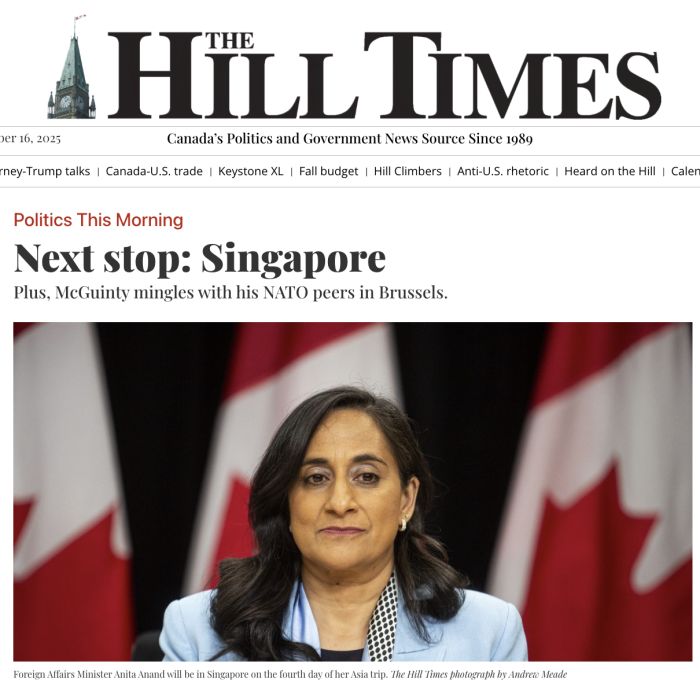
Next stop: Singapore
The Hill Times - Politics This Morning, October 15, 2025
Featuring: Vice-President, Research & Strategy, APF Canada, Vina Nadjibulla
Excerpt: The Asia Pacific Foundation of Canada marked the official opening of its Asia Regional Office in Singapore this week during Foreign Affairs Minister Anita Anand's visit to the region.
Nadjibulla tells The Hill Times that "one of the reasons why APF Canada was given funding [by the federal government] is recognizing that civil society plays an important role in implementation of that [Indo-Pacific] strategy and that we need people-to-people connectivity... We need exchange of researchers and ideas. We need businesses to come together…So, it’s essentially a space for Canada to engage with the region.”
The Hill Times
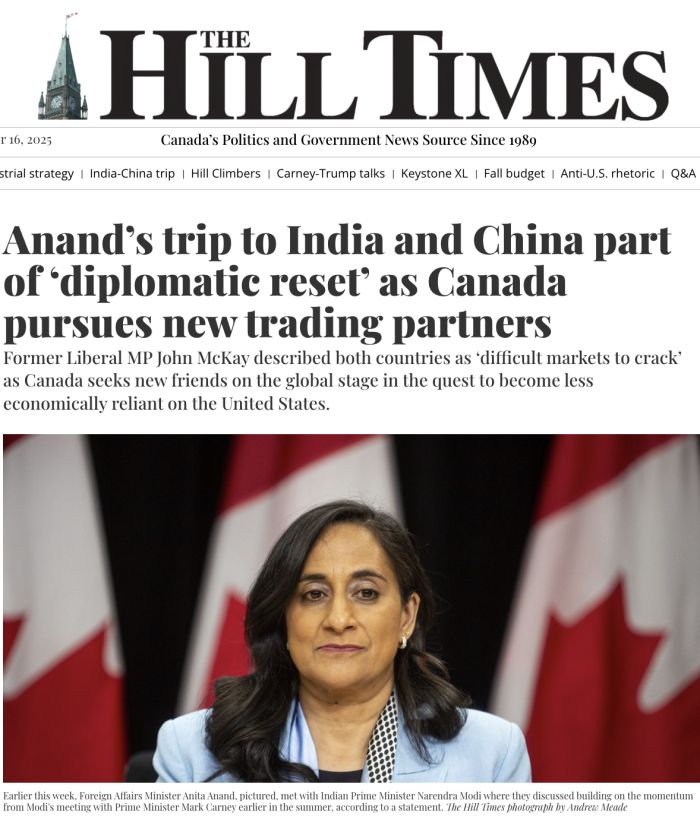
Anand’s trip to India and China part of ‘diplomatic reset’ as Canada pursues new trading partners
The Hill Times, October 15, 2025
Featuring: Vice-President, Research & Strategy, APF Canada, Vina Nadjibulla
Excerpt: Nadjibulla tells The Hill Times that it is “absolutely critical” for Canada to diversify its trade partnerships amid an unpredictable economic upheaval from the U.S. Administration.
“The big change since the Trudeau era is that we’re seeing India collaborate and engage constructively."
Nadjibulla also noted that the joint Canada-India statement following Anand's visit was “a big step forward” in the bilateral relationship as it was “ambitious, comprehensive, and also focuses on specific issues Canada and India can work on together."
CBC News
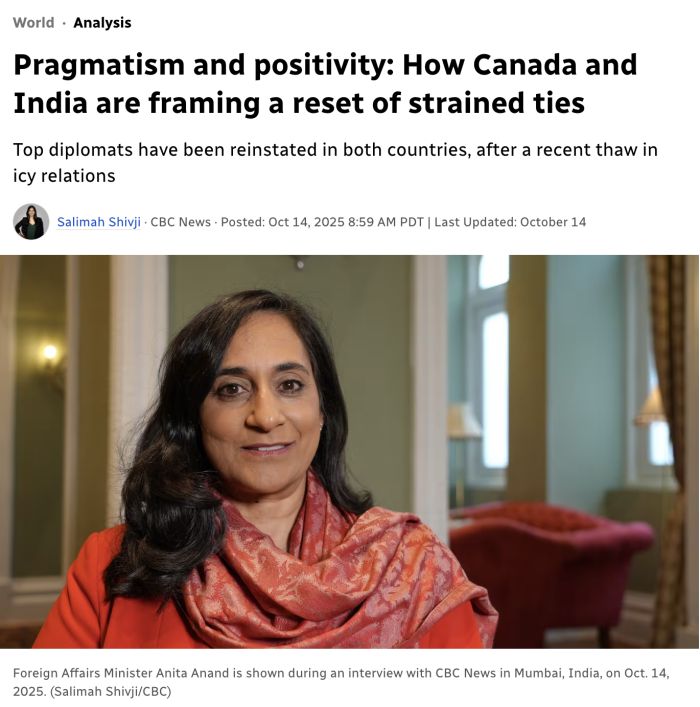
Pragmatism and positivity: How Canada and India are framing a reset of strained ties
CBC News, October 14, 2025
Featuring: Vice-President, Research & Strategy, APF Canada, Vina Nadjibulla
Excerpt: On the Canada-India thaw Nadjibulla says recent diplomatic moves are "positive step[s] towards rebuilding trust and r-engaging more fully."
"We've seen the political reset in June. I think it's an important time because for both Canada and India we find ourselves in a situation where we have have to diversify our economic and security partnerships... [we find ourselves] in a world that is changing and for which we need new partnerships."
The Globe and Mail
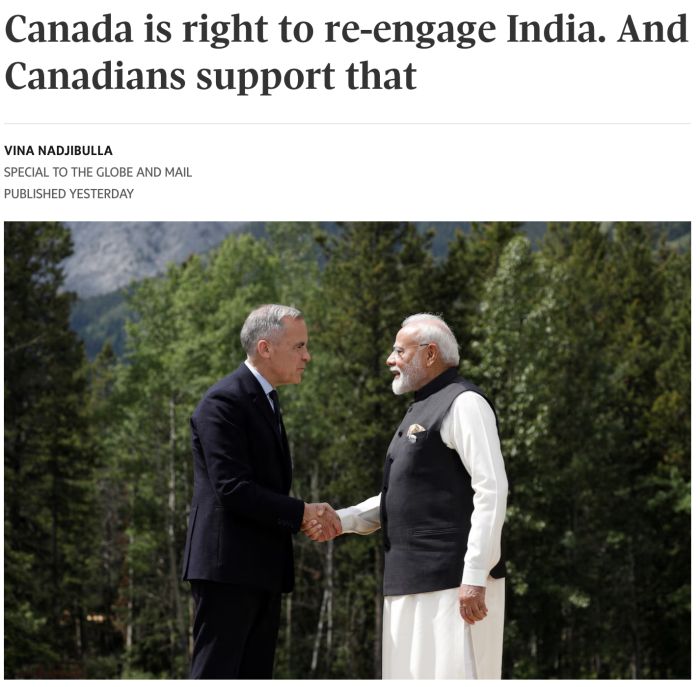
Canada is right to re-engage India. And Canadians support that
The Globe and Mail, October 14, 2025
Featuring: Vice-President, Research & Strategy, APF Canada, Vina Nadjibulla
Excerpt: Nadjibulla writes in a new op-ed published by The Globe and Mail that "new polling by the Angus Reid Institute and the Asia Pacific Foundation of Canada finds that more than half of Canadians believe rapprochement with India was the right decision, while just one in five disagrees – a notable shift from the negativism of recent years. At the same time, a majority of Canadians also urge caution, and only about one-third say they know 'at least something' about India – well below their self-reported knowledge of the United States, Japan or China. In short, Canadians support re-engagement but aren’t yet sure of the 'why.'
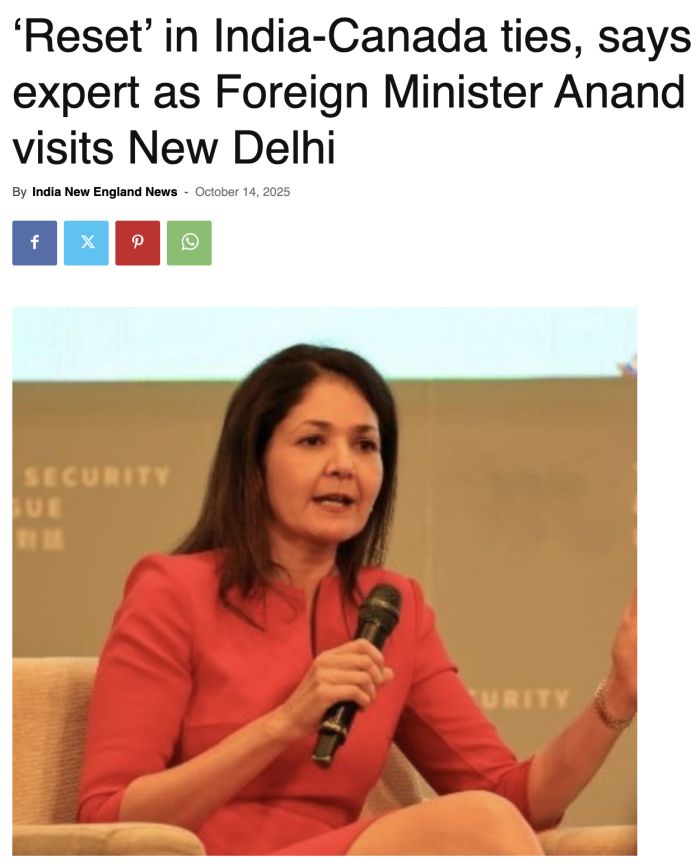
India New England News
‘Reset’ in India-Canada ties, says expert as Foreign Minister Anand visits New Delhi
India New England News, October 14, 2025
Featuring: Vice-President, Research & Strategy, APF Canada, Vina Nadjibulla
Excerpt: Nadjibulla calls the Canada-India bilateral meetings during Foreign Minister Anita Anand's first trip to India, and Canada's first ministerial visit to the state since 2023, a "big development in Canada-India relations, which have come a long way since the low in the relationship a year ago.
She calls the posting meeting joint statement an "ambitious roadmap“ to re-sparking Canada-India co-operation.
"We are now seeing…quite a lot of momentum and energy behind restarting this relationship, but also building a much more resilient relationship. At the end of the day, this relationship has to work and be in the national interests of both countries and deliver jobs and investments and economic opportunities for both. There’s a lot of potential in there."
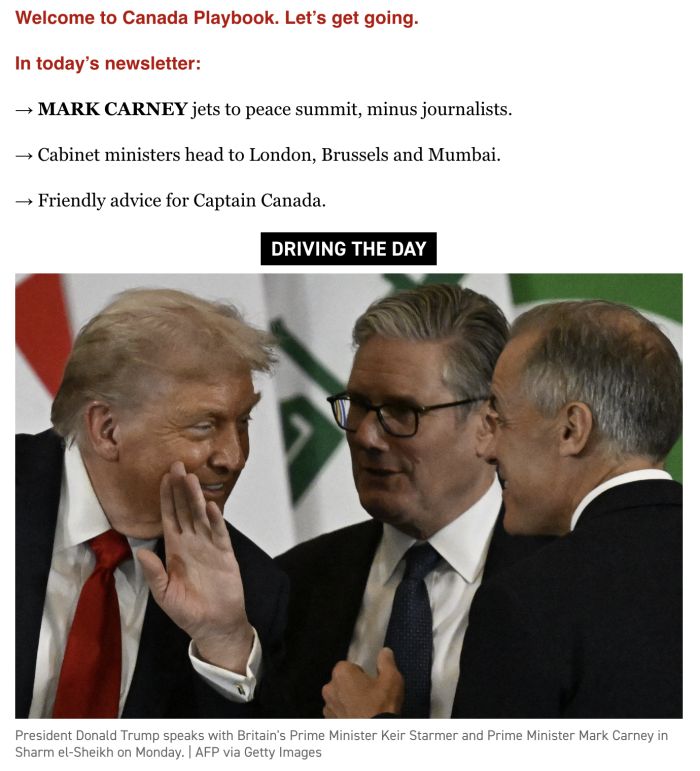
Politico - Canada Playbook
Flooding the zone
Politico - Canada Playbook, October 14, 2025
Featuring: Vice-President, Research & Strategy, APF Canada, Vina Nadjibulla
Excerpt: Nadjibulla tells Politico's Playbook that 54 per cent of Canadians have “unfavourable views of India and 59 per cent believe Canada should approach relations with caution." This new data comes from a joint survey recently released by the Angus Reid Institute and APF Canada.
“[But] more than half of Canadians believe restoring diplomatic ties with India was the right decision while only about one in five disagree . . . but the rebuilding of relations with India needs to include a broader public conversation and buy-in than we’ve had so far.”
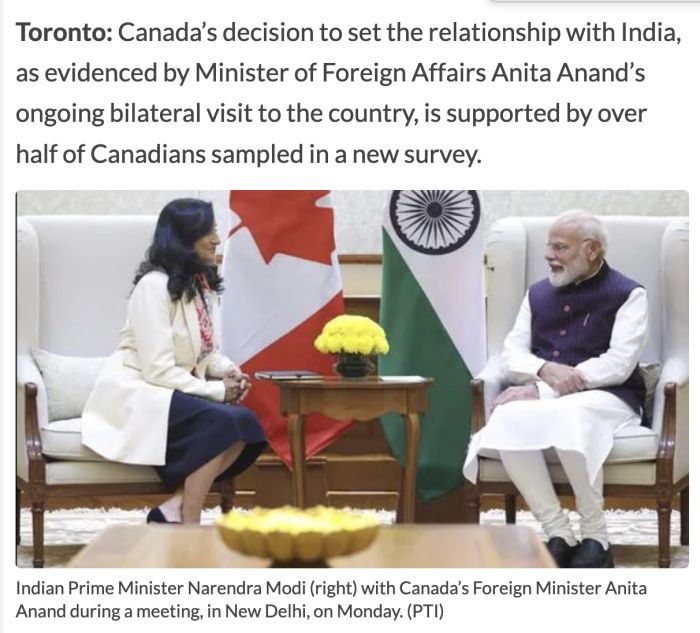
Hindustan Times
Majority of Canadians support Ottawa’s decision to reset ties with New Delhi: Poll
Hindustan Times, October 14, 2025
Featuring: Vice-President, Research & Strategy, APF Canada, Vina Nadjibulla
Excerpt: APF Canada's latest survey with the Angus Reid Institute shows that Canadians support renewed ties with India but a majority still believe caution should be exercised.
Vina Nadjibulla says the support for reconnection is "good news," but stakeholders need to be mindful of Canadians hesitancy.
She notes that there is a lack of "knowledge about what opportunities exist in India for Canada.. [and] a lot more public diplomacy and outreach” will be required to shift the current narrative.
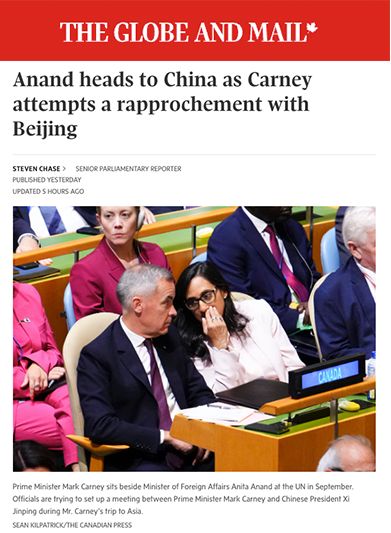
Sean Kilpatrick/The Canadian Press via Globe and Mail
Anand heads to China as Carney attempts a rapprochement with Beijing
The Globe and Mail, October 13, 2025
Featuring: Vina Nadjibulla, Vice-President Research & Strategy, APF Canada
Excerpt: Vina Nadjibulla, vice-president of research and strategy at the Asia Pacific Foundation, a Canadian think tank, said she will be looking for any sign that India and Canada are resuming negotiations on a trade deal that was shelved in 2023.
On China, she cautioned that Beijing doesn’t compartmentalize trade and diplomatic relations, which would mean that the Chinese expect changes to Canada’s support for Taiwan or its position on the South China Sea.
Ms. Nadjibulla said selling more agricultural products and energy to China makes sense, but she said Ottawa can’t make any concessions that are counter to Canadian national security or economic interests.
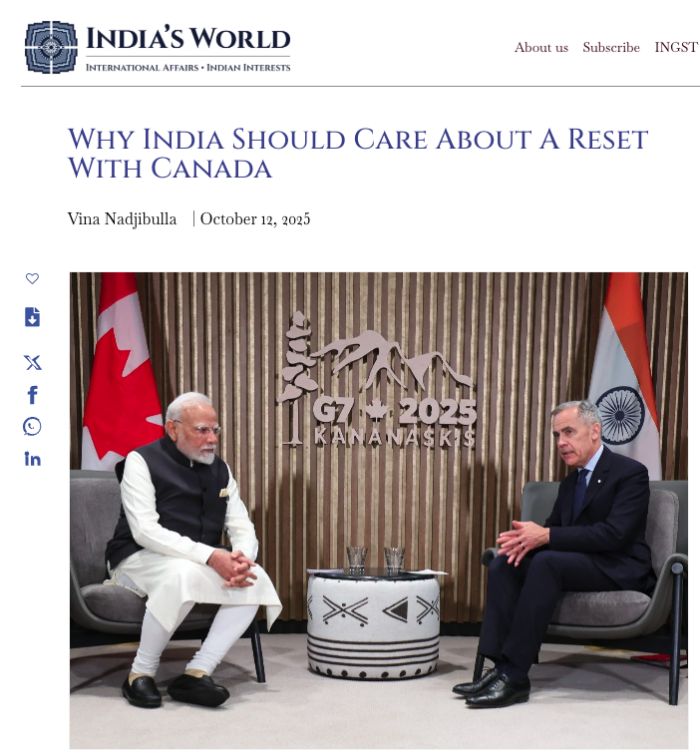
India's World
Why India Should Care About a Reset with Canada
India's World, October 12, 2025
Featuring: Vice-President, Research & Strategy, APF Canada, Vina Nadjibulla
Excerpt: Since Prime Ministers Narendra Modi and Mark Carney met in June, and high commissioners were reinstated in September, the relationship has shifted from crisis management to step-by-step re-engagement. New polling by the Angus Reid Institute, in partnership with the Asia Pacific Foundation of Canada (APF Canada), finds that a majority of Canadians support restoring diplomatic ties with India, although perceptions remain more negative than positive, and self-reported knowledge of India lags far behind the U.S., Japan, and China. In other words, the political space to rebuild exists, but the public case still needs to be made. Read more . . .
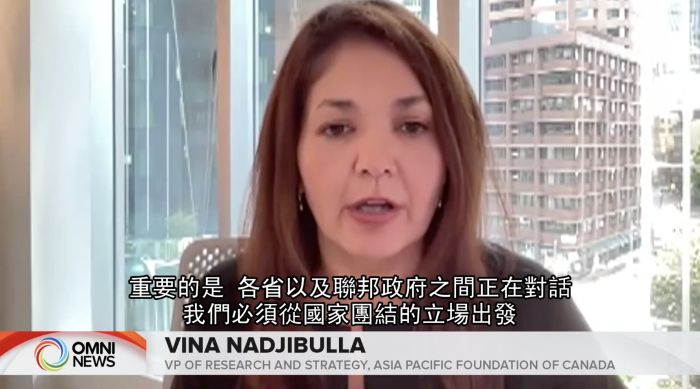
OMNI News
China's Canola Tariffs on Canada
OMNI News, October 9, 2025
Featuring: Vice-President, Research & Strategy, APF Canada, Vina Nadjibulla
Excerpt: Looking at China's tariffs on Canadian canola exports, Nadjibulla notes that it is critical for Canada to "move from a position of national unity... [to] protect our canola farmers and our canola industry."
She adds that "immediate support measures have to be in place from the federal and provincial governments" to support canola farmers at this time as Canada looks to remedy the economic obstacle."
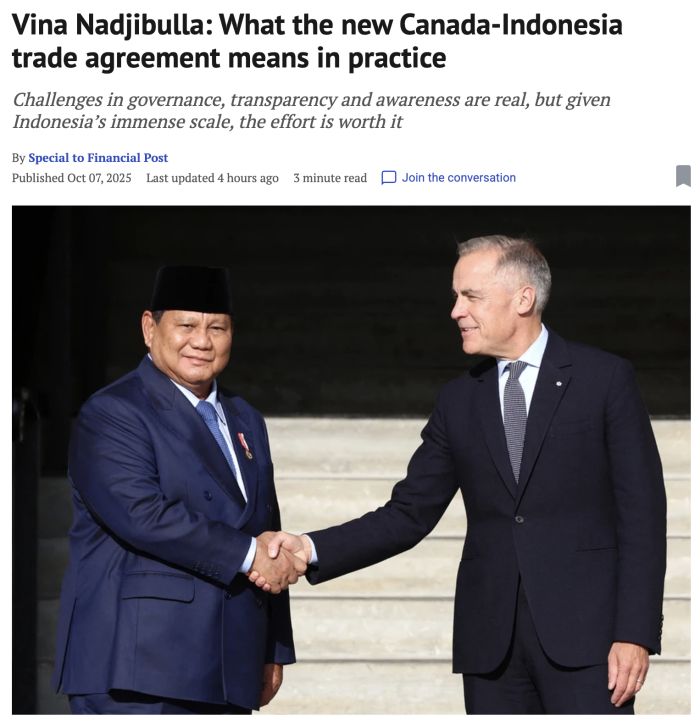
Financial Post
Vina Nadjibulla: What the new Canada-Indonesia trade agreement means in practice
Financial Post, October 7, 2025
Featuring: Vice-President, Research & Strategy, APF Canada, Vina Nadjibulla
Excerpt: "The signing of the Canada-Indonesia Comprehensive Economic Partnership Agreement (CEPA) last week is a significant boost to Canada’s economic diversification agenda..."
"What makes CEPA especially significant is that it delivers more than market access; it establishes working institutions — joint committees on SPS, critical minerals co-operation and regulatory best practices — that can turn potential into proof."
However, Nadjibulla notes that "none of this is risk-free. Indonesia’s regulatory environment remains complex. Inconsistent enforcement, bureaucratic delays and governance challenges can raise the cost of market entry. Transparency concerns are real."
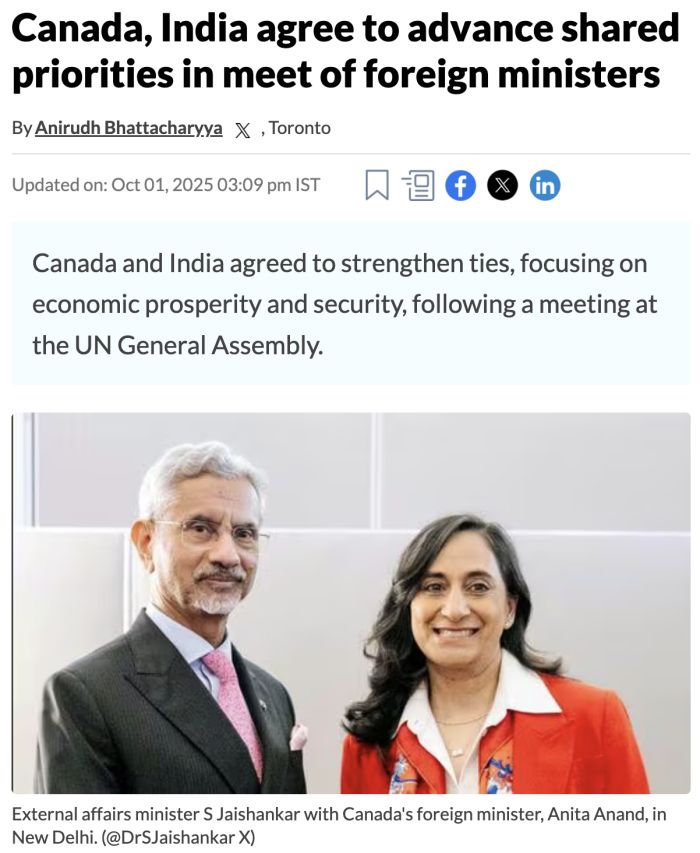
Hindustan Times
Canada, India agree to advance shared priorities in meet of foreign ministers
Hindustan Times , October 1, 2025
Featuring: Vice-President, Research & Strategy, APF Canada, Vina Nadjibulla
Excerpt: While Nadjibulla notes that there has been progress between Canada and India on law enforcement and security tracks, there is still room to make "tangible progress on the economic and commercial track."
“These are all steps that we were hoping would be taken as part of the reset and they are materializing. Obviously, there’s still a lot of work to be done on rebuilding and mutual trust." She adds that Trump's tariffs offer “an opportunity to build something better that is more beneficial to both countries and that also meet the requirements for economic diversification requirements for reliable partners in the current geopolitical moment.”
The Hill Times
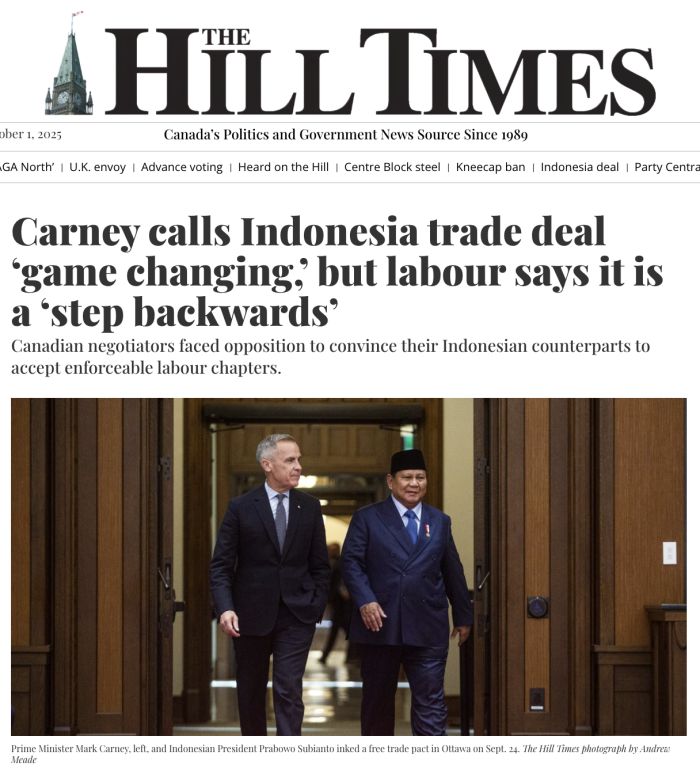
Carney calls Indonesia trade deal ‘game changing,’ but labour says it is a ‘step backwards’
The Hill Times , October 1, 2025
Featuring: Vice-President, Research & Strategy, APF Canada, Vina Nadjibulla
Excerpt: “It’s important to show that we’re keeping the momentum and moving forward on the deals that we are making and ratifying them as quickly as possible,” Nadjibulla said on the new Canada-Indonesia trade deal, noting that it is a “significant boost” to Canada’s diversification agenda.
“While we’ve always talked about diversification, now there is a real imperative to do that" she says amidst supply chain uncertainty and U.S. tariffs. "But we still need to be clear-eyed that doing business in Indonesia is not going to be easy—there are many issues still around corruption...It will still require quite a bit of work."
Bernama (Malaysian National News Agency)
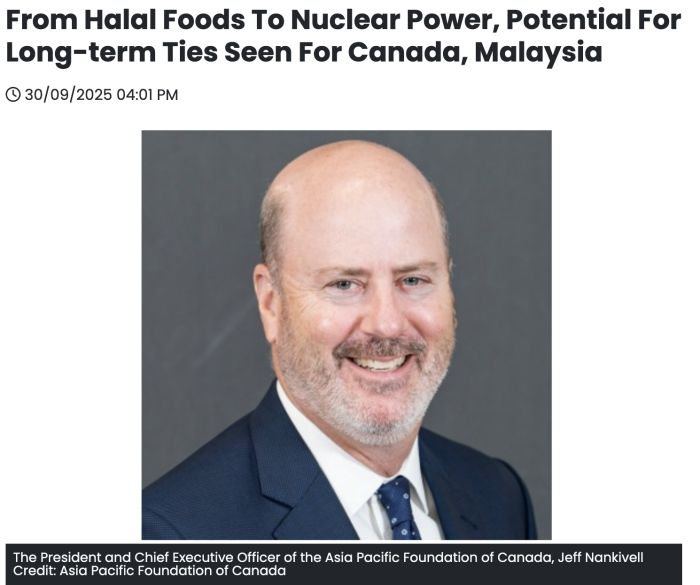
From Halal Foods to Nuclear Power, Potential For Long-term Ties Seen for Canada, Malaysia
Bernama (Malaysian National News Agency), September 30, 2025
Featuring: President & CEO, APF Canada, Jeff Nankivell
Excerpt: When it comes to deepening Canada's trade relations with ASEAN nations like Malaysia, Nankivell tells Bernama that there is a "huge opportunity in poultry. Canadian suppliers are willing to invest in physical plant requirements and services essential to obtaining halal certification."
"There's a window of opportunity for both sides to establish long-term trading relationships."
Hindustan Times
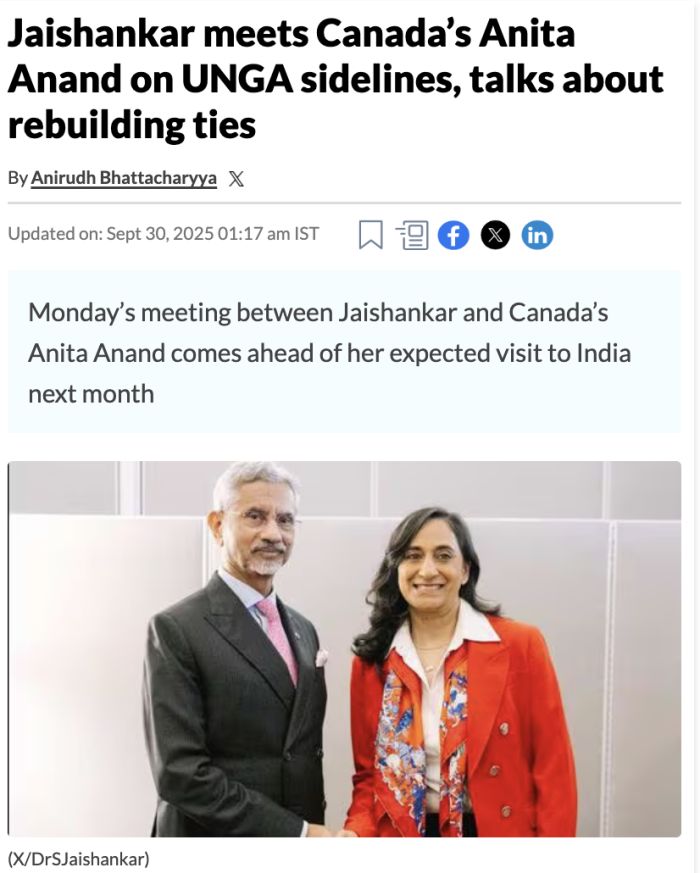
Jaishankar meets Canada’s Anita Anand on UNGA sidelines, talks about rebuilding ties
Hindustan Times , September 30, 2025
Featuring: Vice-President, Research & Strategy, APF Canada, Vina Nadjibulla
Excerpt: India's External Affairs Minister S Jaishankar officaly met Canada’s foreign affairs minister Anita Anand in their first bilateral engagement.
Nadjibulla says of the meeting that "this showed there appeared to be 'genuine momentum' towards rebuilding trust between the two countries." Anand’s visit to India next month, Nadjibulla argues, will hopefully continue that progress on areas of diplomatic and trade cooperation."
Astro AWANI
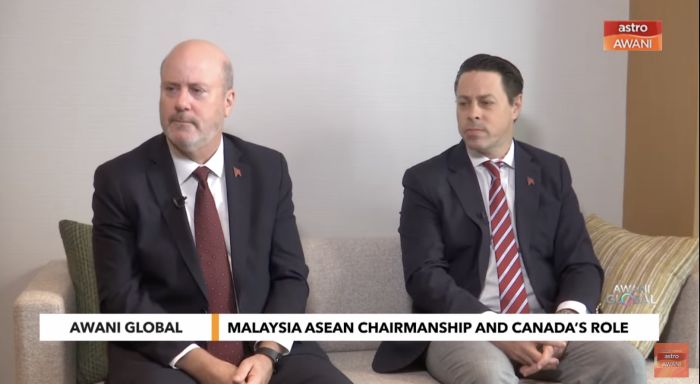
AWANI Global: ASEAN-Canada | Forging A Resilient Trade and Strategy
Astro AWANI, September 28, 2025
Featuring: President & CEO, APF Canada, Jeff Nankivell, and Asia Regional Director, APF Canada, Barett Bingley
Excerpt: Nankivell and Bingley discuss the role of ASEAN in the Indo-Pacific region, Malaysia's leadership as ASEAN Chair for 2025, and Canada's engagement in the region.
"We find ourselves in Canada at a crossroads where we have an urgent need to diversify our trading relationships... and we see a similar appetite coming from ASEAN...its a perfect window for us to work together." - Jeff Nankivell.
"You have to find areas where ASEAN and Canada want to work together, whether that's digital trade, or e-commerce, or green transition regulations.... implementation of agreements and usage of agreements can be just as useful as getting them signed. So first create the structures, but then you have to make sure you use them and measure their success" - Barrett Bingley
Policy Magazine
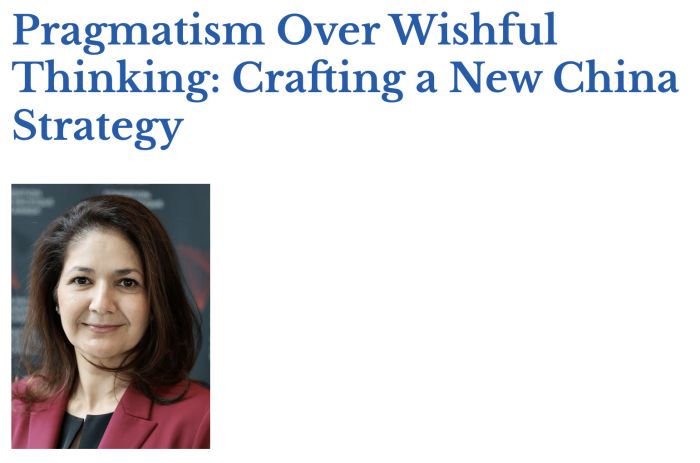
Pragmatism Over Wishful Thinking: Crafting a New China Strategy
Policy Magazine, September 28, 2025
Featuring: Vice-President, Research & Strategy, APF Canada, Vina Nadjibulla
Excerpt: Nadjibulla writes for Policy Magazine on the future of Canada's engagement with China, noting that the creation of a 'New China Strategy' will come with challenges as "Beijing rarely compartmentalizes. Rather, it links issues, redraws red lines, and often conditions cooperation on acceptance of its preferred narratives on Taiwan, the South China Sea, and human rights."
A such, she argues a "full decoupling from the world’s second-largest economy is neither feasible nor desirable. However, a full embrace would be naïve, as the deepening of economic ties with Beijing carries real risks. What is needed is a disciplined middle path: a made-in-Canada China strategy grounded in several core imperatives."
"A clear, made-in-Canada China strategy," Nadjibulla argues, would seek to "protect what matters [ to Canadians], engage where our interests truly align, and be on guard against coercive conditionality and issue-linkages imposed by Beijing."
Canadian Press
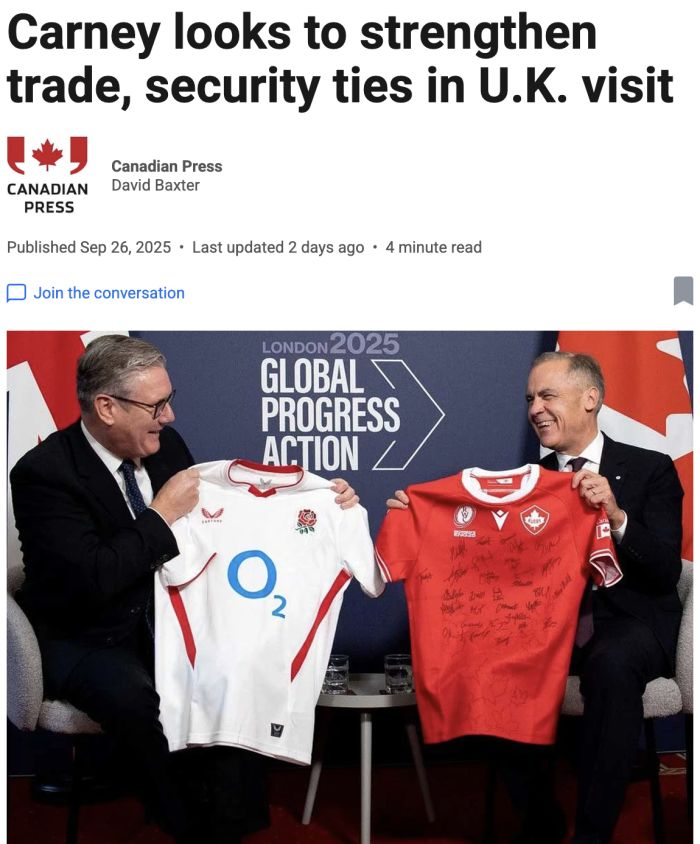
Carney looks to strengthen trade, security ties in U.K. visit
Toronto Sun, September 26, 2025
Featuring: Vice-President, Research & Strategy, APF Canada, Vina Nadjibulla
Excerpt: On the prospect of the U.K. and the EU joining the CPTPP, Nadjibulla tells the Canadian Press that these discussions are promising and show the potential leadership role for Canada in bringing "together our Indo-Pacific and Euro-Atlantic partners."
“Canada," she argues "has this unique geography, sitting in the middle of these two theatres, and we can be that bridge between democracies and allies and partners in the Indo-Pacific and in the Euro-Atlantic, both on the security and defence side (and) also on the economic side."