Dans l'actualité
Réactions médiatiques de la FAP Canada aux derniers enjeux et événements en Asie
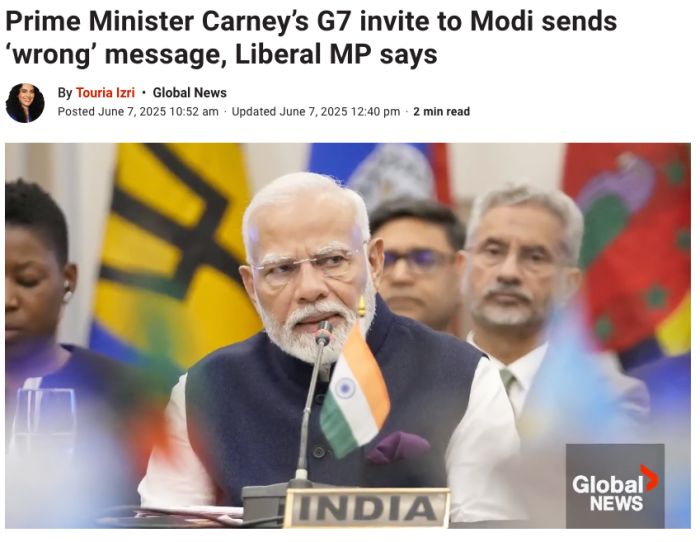
L’invitation du premier ministre Carney à Modi envoie le mauvais message, affirme un député libéral (s’ouvre dans un nouvel onglet)
Global News, 7 juin 2025
En vedette : Vina Nadjibulla, vice-présidente de la FAP Canada, et chargée de la recherche et de la stratégie
Extrait : Nadjibulla note que le Canada se trouve « à un moment différent quand il s’agit de relations internationales » avec l’Inde, par rapport aux autres nations du G7.
« Allant des tarifs jusqu’au dossier sur le commerce et au réalignement des puissances que nous constatons autour du monde, je pense qu’il serait important pour le Canada d’aborder la question diplomatique autrement. »
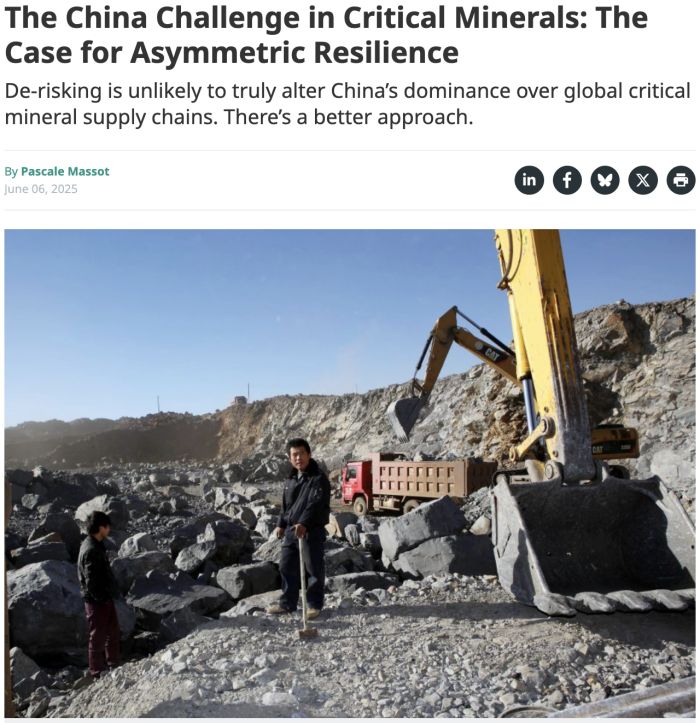
L’enjeu de la Chine dans les minéraux critiques : Modèle d’une résilience asymétrique (s’ouvre dans un nouvel onglet)
The Diplomat, 6 juin 2025
En vedette : Pascale Massot, agrégée supérieure de recherches à la FAP Canada
Extrait : « La Chine est l’acteur dominant des chaînes d’approvisionnement mondiales en matière de minéraux critiques, particulièrement au niveau du maillon intermédiaire.
« Alors que la compétition stratégique avec la Chine s’intensifie, et après avoir compris que ce paradigme ne les aiderait pas à progresser en sécurité économique, les gouvernements occidentaux s’activent pour mettre en place des mesures de riposte conformes aux agendas d’atténuation des risques. »
Massot suggère un modèle de « résilience asymétrique » quant aux chaînes d’approvisionnement en minéraux critiques qui « recalibrerait l’équilibre de force et vulnérabilité entre la Chine et l’Occident en remodulant l’exposition aux risques de chaque volet et en développant des zones ciblées de dominance auprès des chaînes d’approvisionnement mondiales ».
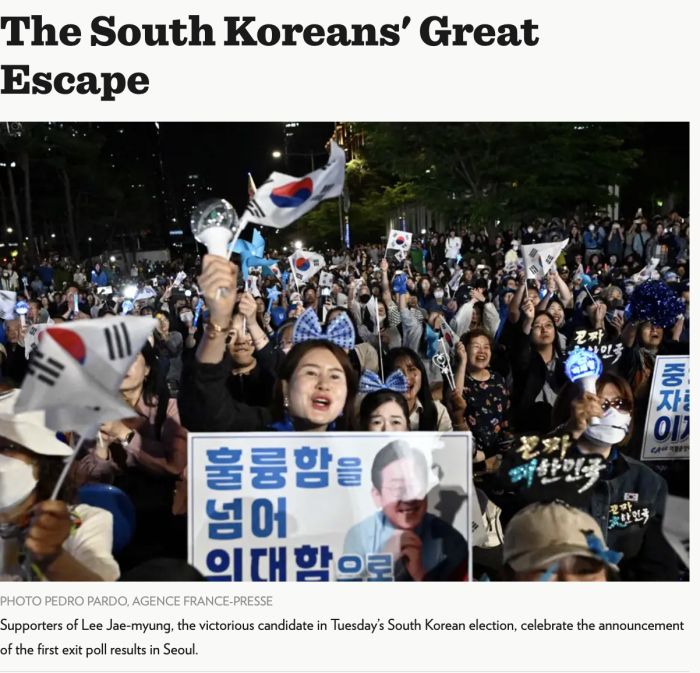
La grande fuite sud-coréenne (s’ouvre dans un nouvel onglet)
La Presse, 5 juin 2025
En vedette : Yves Tiberghien, agrégé supérieur de recherches à la FAP Canada
Extrait : « S’attardant sur les résultats des récentes élections présidentielles en Corée du Sud, Yves note que « bien que l’électorat ait rejeté la loi martiale, la Corée demeure divisée en deux.
Les divergences sont prioritairement régionales. Le Sud-Est du pays est fortement conservateur. Le Sud-Est a soutenu Lee à 80 %. Il existe aussi des divisions basées sur le genre et l’âge.
« Après les élections, ces divisions persistent, tout comme les discours qui les accompagnent. Chacune considère l’autre comme une menace existentielle. »
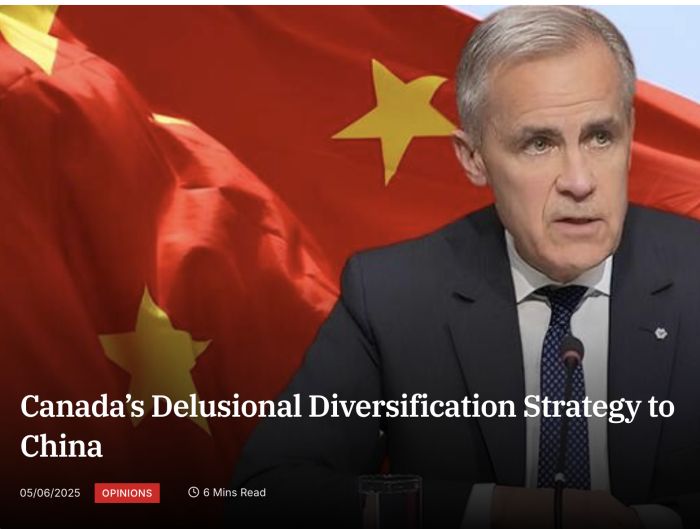
La stratégie commerciale désillusionnée du Canada pour la Chine (s’ouvre dans un nouvel onglet)
WGI World, 5 juin 2025
En vedette : Stephen Nagy, agrégé supérieur de recherches à la FAP Canada
Extrait : « Il est crucial de reconnaître que les politiques commerciales de Trump, aussi erratiques qu’elles puissent paraître parfois, ne représentent pas une rupture mais plutôt une continuité d’une réorientation économique américaine commencée sous la présidence de George W. Bush et accélérée par les administrations qui ont suivi.
« Chaque administration s’est éloignée de plus en plus du libre-échange inconditionnel, reconnaissant que les États-Unis ont besoin de rebâtir leur base industrielle pour concurrencer la Chine. Le deuxième mandat Trump n’est donc pas une rupture du consensus bipartisan, mais une manifestation agressive. »
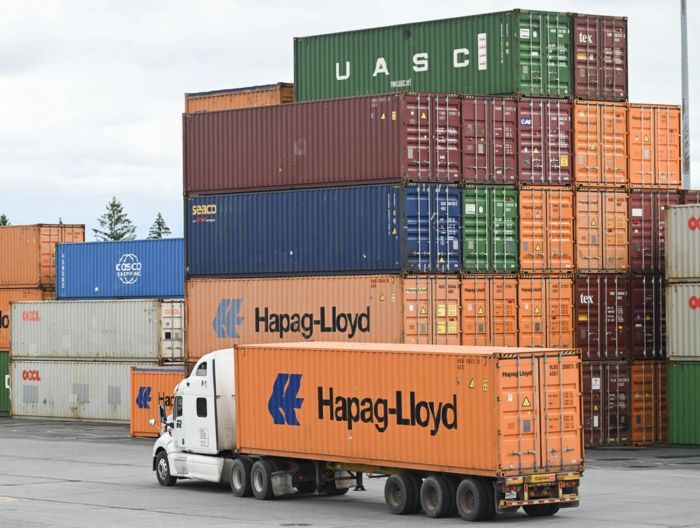
Entreprises et gouvernements ont besoin de meilleures données sur le commerce pour lutter contre une frontière plus « épaisse » (s’ouvre dans un nouvel onglet)
Foreign Policy, 5 juin 2025
En vedette : Danielle Goldfarb, agrégée supérieure de recherches à la FAP Canada
Extrait : Dans une édition spéciale de Foreign Policy, Goldfarb note que le Canada doit améliorer sa visibilité dans les chaînes d’approvisionnement, particulièrement alors que le pays cherche à approfondir ses liens commerciaux avec l’Europe et à réduire son exposition relative au marché américain.
Dans une édition spéciale de Foreign Policy, Goldfarb note que le Canada doit améliorer sa visibilité dans les chaînes d’approvisionnement, particulièrement alors que le pays cherche à approfondir ses liens commerciaux avec l’Europe et à réduire son exposition relative au marché américain.
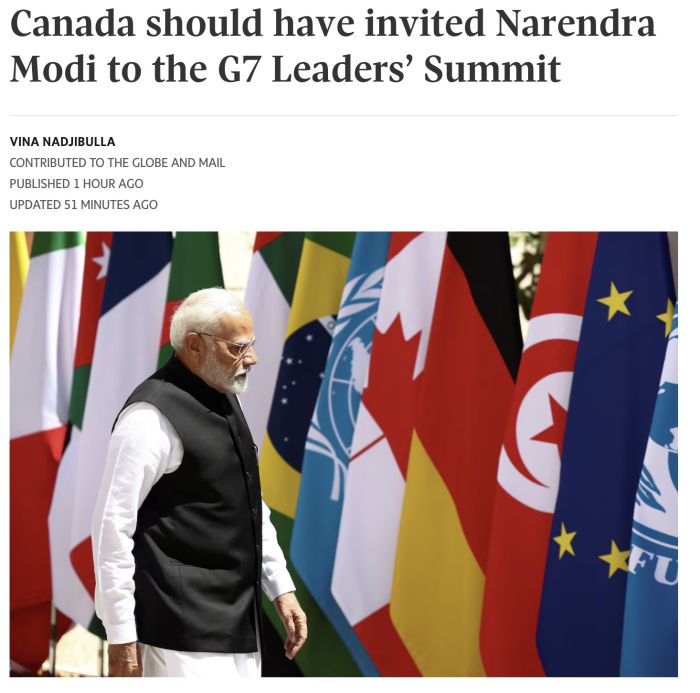
M. Modi mérite un siège à la table du sommet des leaders du G7 (s’ouvre dans un nouvel onglet)
The Globe and Mail, 5 juin 2025
Auteure : Vina Nadjibulla, vice-présidente de la FAP Canada et chargée de la recherche et de la stratégie
N.B. Cet article d’opinion a été publié après l’annonce de la première liste des invités jeudi et avant la décision du premier ministre du Canada d’inclure M. Modi dans les invitations du vendredi.
Extrait : « Alors que le Canada accueille le sommet des leaders du G7 en Alberta ce mois-ci, le premier ministre Mark Carney a passé sa première épreuve en politique étrangère : inviter, ou ne pas inviter, le premier ministre Modi. »
Dans un article d’opinion publié dans The Globe and Mail, Mme. Nadjibulla souligne que, tandis que « des voix s’élèvent au Canada pour que New Delhi soit tenue à distance jusqu’à ce que l’enquête sur le meurtre de Hardeep Singh Nijjar en 2023 soit résolue », cette position impulsive sous-estime ce qui est en jeu pour les intérêts propres du Canada, pour la crédibilité du G7 et pour un ordre fondé sur des règles.
« Inviter M. Modi n’est pas un compromis, mais une nécessité stratégique. »
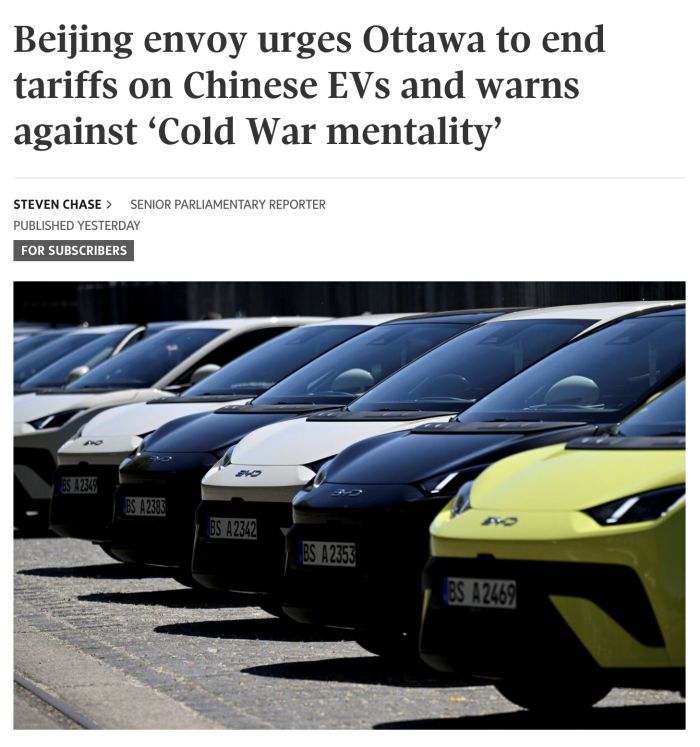
Envoyé de Pékin appelle Ottawa à mettre fin aux tarifs sur les véhicules électriques chinois et alerte contre une « mentalité de guerre froide » (s’ouvre dans un nouvel onglet)
The Globe and Mail June 4, 2025
En vedette : Vina Nadjibulla, vice-présidente de la FAP Canada et chargée de la recherche et de la stratégie
Extrait : Bien que la Chine demeure un partenaire commercial important dans des secteurs tels que l’agriculture et l’énergie, Mme Nadjibulla note que les « inquiétudes qui existaient par rapport à la Chine il y a quelques mois existent toujours.
« Juste parce que notre relation avec les États-Unis est aujourd’hui difficile, cela ne signifie pas que ces inquiétudes concernant la sécurité nationale et celles relatives à la sécurité économique ont disparu. »

Les tarifs douaniers sur l’acier et l’aluminium canadien ont doublé à 50 % (s’ouvre dans un nouvel onglet)
The Early Edition with Stephen Quinn (CBC Radio), 4 juin 2025
En vedette : Yves Tiberghien, agrégé supérieur de recherches à la FAP Canada
Extrait : Yves note que les exportations d’acier et d’aluminium du Canada représentent « jusqu’à 1 % du PIB canadien, et 3 à 4 % des exportations, » avec les tarifs impactant les emplois à travers les provinces majeures de l’Ontario, du Québec et de la Colombie-Britannique.
Il note également que « nous ne devons pas paniquer encore, car [ces mesures] ne sont probablement pas durables pour les États-Unis. Il s’agit d’une position de négociation et le Canada pourrait facilement riposter » lorsqu’il s’agit d’importations d’acier.
Il ajoute que le Canada « n’a pas encore atteint le bout avec les États-Unis », mais que nous devons continuer à ouvrir de nouveaux marchés.
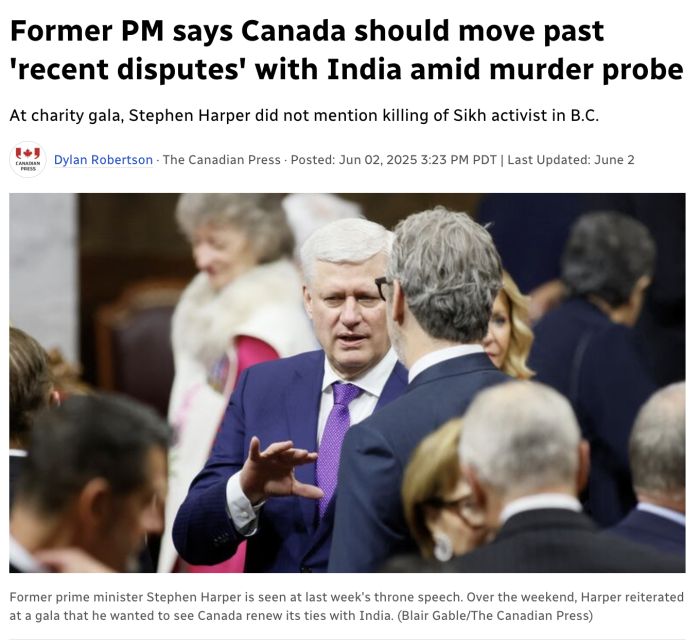
Ancien premier ministre déclare que le Canada devrait aller au-delà des « disputes passées » récents avec l’Inde durant les investigations sur le meurtre (s’ouvre dans un nouvel onglet)
CBC News, 2 juin 2025
En vedette : Vina Nadjibulla, vice-présidente de la FAP Canada et chargée de la recherche et de la stratégie
Extrait : Quant aux inquiétudes sécuritaires et diplomatiques entre le Canada et l’Inde, Mme Nadjibulla note qu’il « faudrait traiter la problématique sur sa propre piste », comme dans un mécanisme conçu pour « traiter cette question immédiate, mais aussi pour bâtir la confiance et créer une plateforme pour le dialogue ».
« Nous devons procéder étape par étape et confronter les problématiques difficiles. Là où il existe des questions relatives à la sécurité nationale, des deux côtés. »
Allant de l’avant du sommet du G7 en juin, elle souligne que « depuis 2019, l’Inde a été invitée à tous les sommets du G7 en reconnaissance de son importance croissante, étant la quatrième grande économie au monde, mais aussi une voix influente dans l’hémisphère sud. Le nouveau gouvernement canadien a donc une opportunité claire pour commencer à reconstruire les relations avec l’Inde. »
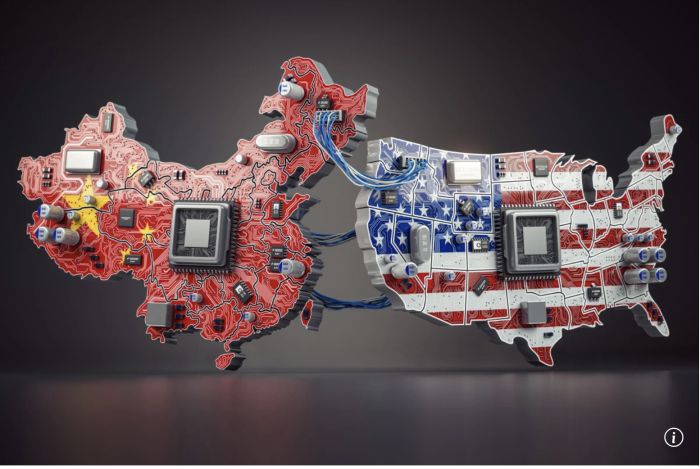
Opinion | As Malaysia’s Huawei chip storm shows, sovereign AI is a fraught pursuit (s’ouvre dans un nouvel onglet)
South China Morning Post, June 1, 2025
Featuring: APF Canada Distinguished Fellow, Elina Noor
Excerpt: "Is a national AI architecture run on Chinese integrated circuits... materially distinguishable from an AI stack underlaid by Meta or Google subsea data cables?
... In other words, what is there to differentiate a Chinese AI stack from an US AI stack in the eyes of third countries when both lock in external reliance for the longer term?
For many non-superpower countries aspiring to autonomy, sovereign AI looks realistically more like tweaking AI models or architecture for local use and governance, rather than constructing the stack from scratch."
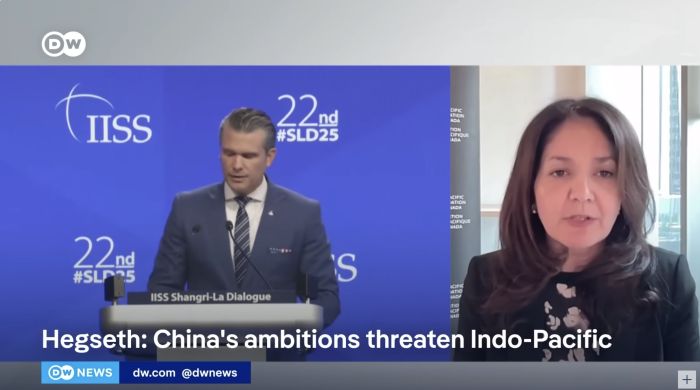
US Defense Secretary Pete Hegseth warns about China's ambitions in Asia | DW News (s’ouvre dans un nouvel onglet)
DW News, May 31, 2025
Featuring: APF Canada Vice-President Research & Strategy Vina Nadjibulla
Excerpt: Nadjibulla responds to US Defense Secretary Pete Hegseth's address at the Shangri La Dialogue hosted in Singapore, noting that the U.S. seems "committed to deterring China's actions of coercion and aggression in the [Indo-Pacific] region."
"the message to China was much... the U.S. cannot be pushed back from the region and the U.S. will stand up for it's allies. It was the most comprehensive articulation of the depart of Defence's vision for the the Indo-Pacific
"There is some continuity here from with what the Biden administration... and under the first Trump administration... what's different this time around is that the defence strategy is completely contradictory with the economic strategy and the economic approach to the region."
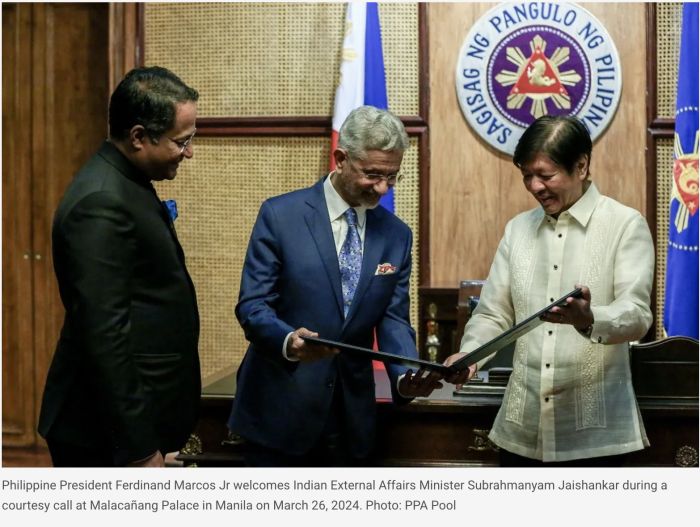
India-Philippines reaching for new strategic horizons (s’ouvre dans un nouvel onglet)
Asia Times, May 29, 2025
Featuring: APF Canada Indo Pacific Research Fellow, Don McClain Gill
Excerpt: "The Philippines and India have witnessed an upward trajectory in their bilateral partnership amid growing uncertainty over Indo-Pacific security architecture brought by China’s expansionism.
"... The Philippines’ growing strategic cooperation with India demonstrates this multi-alignment, and more robust bilateral ties would complement US interests in preserving the regional rules-based order."
*first appeared on Pacific Forum
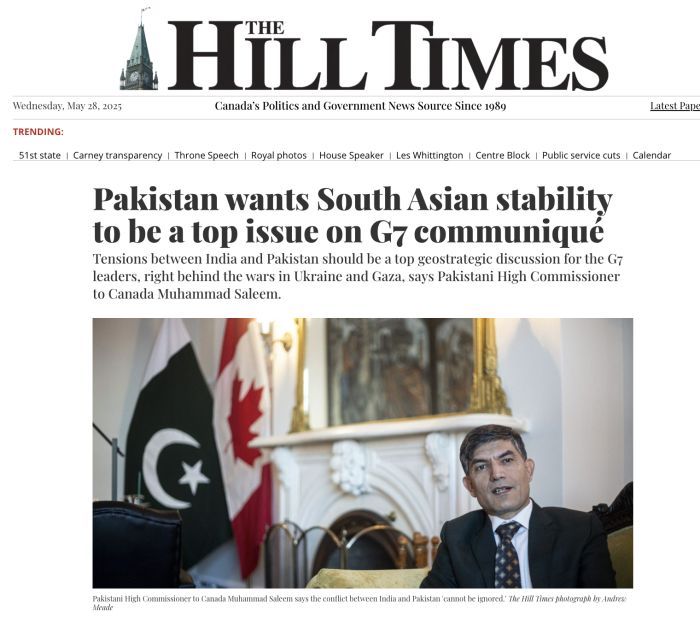
Pakistan wants South Asian stability to be a top issue on G7 communiqué (s’ouvre dans un nouvel onglet)
The Hill Times, May 28, 2025
Featuring: APF Canada Vice-President Research & Strategy Vina Nadjibulla
Excerpt: When it comes to the upcoming G7 meeting, Nadjibulla notes that for the group "to play a role in mediating the [India-Pakistan] issue would be really difficult."
Intermediary measures by the G7, she notes, are unlikely to go beyond the May 9th communiqué. "If anything is to be said it would be along the lines of ensuring that there is stability in South Asia and de-escalation, but I don’t think that we’ll see further calls for mediation.”
"The G7 could reiterate the language of the statement that it issues, but I don’tPakistan wants South Asian stability to be a top issue on G7 communiqué... There’s a very big difference between India and Pakistan in how the issue of Kashmir should be dealt with.”
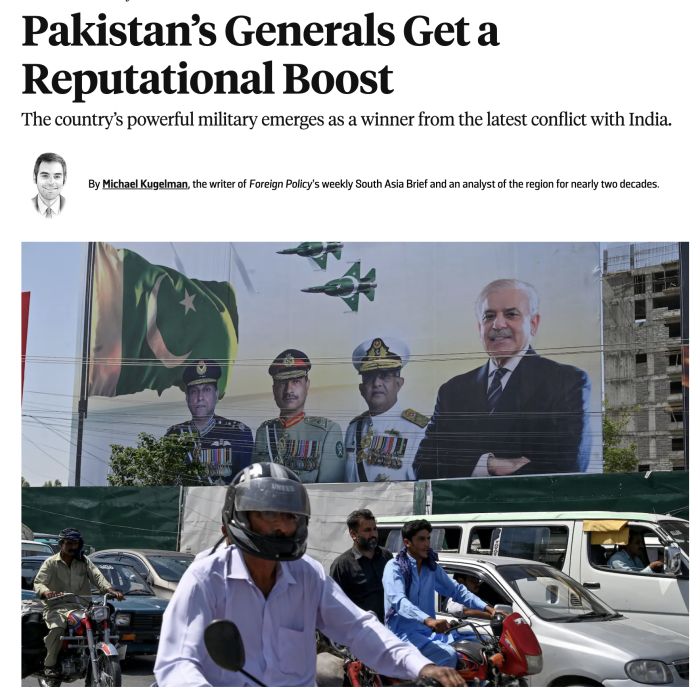
Pakistan’s Generals Get a Reputational Boost (s’ouvre dans un nouvel onglet)
Foreign Policy - South Asia Brief, May 21, 2025
Featuring: Michael Kugelman, the writer of Foreign Policy’s weekly South Asia Brief and APF Canada Senior Fellow
Excerpt: "The highlights this week: Pakistan’s military sees its political fortunes improve after the recent conflict with India, U.S.-India trade talks keep moving with the Indian commerce minister in Washington, and India announces import restrictions on goods from Bangladesh.
"...India-Pakistan narrative battle. In the wake of their latest conflict, India and Pakistan have each announced that a group of prominent individuals, mainly senior politicians and former top diplomats, will travel the world in the coming days to get international buy-in for their governments’ positions on the crisis."
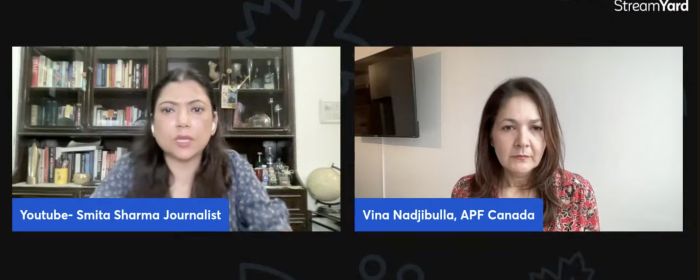
After Trudeau-Will New Canada PM Reset Ties with India? (s’ouvre dans un nouvel onglet)
Smita Sharma Journalist, May 19, 2025
Featuring: APF Canada Vice-President Research & Strategy Vina Nadjibulla
Excerpt: Reflecting on Canada's recent political shifts, Nadjibulla notes that "now with the election behind us, with a new Prime Minister, a new cabinet, the meeting in Washington that was seen, from Canada's perspective at least, to have gone relatively well, this is seen as a challenging time but that Canada has a plan and people are solidly behind the new government."
But she notes that Canada will need a "new relationship" with the U.S. given the new "moment" both nations are now in. "Everyone else is also in that same position of finding a new normal with the U.S."
When it comes to rekindling ties with India, Nadjibulla highlights that the new government has a desire to deepen relations with like-minded partners. She notes Canada should be focused on watching India's signals around key issues such as investigations into crimes against Khalistan activists on Canadian soil.

Eight good ideas to rediscover our 'panache' (s’ouvre dans un nouvel onglet)
La Presse, May 19, 2025
Featuring: APF Canada Vice-President Research & Strategy Vina Nadjibulla
Excerpt: Nadjibulla contributes to a curated list of suggestions for the new Canadian Foreign Minister that envisions a more confident Canadian foreign policy agenda.
"The country must take full advantage of its [G7] presidency, including opening the doors of the G7 to other allied countries, such as Australia and South Korea," Nadjibulla commented. She emphasized the importance of multilateral organizations like the Five-Eyes and NATO, noting that Canada “need[s] to be at as many tables as possible. That’s where we can work with others to promote a rules-based world."
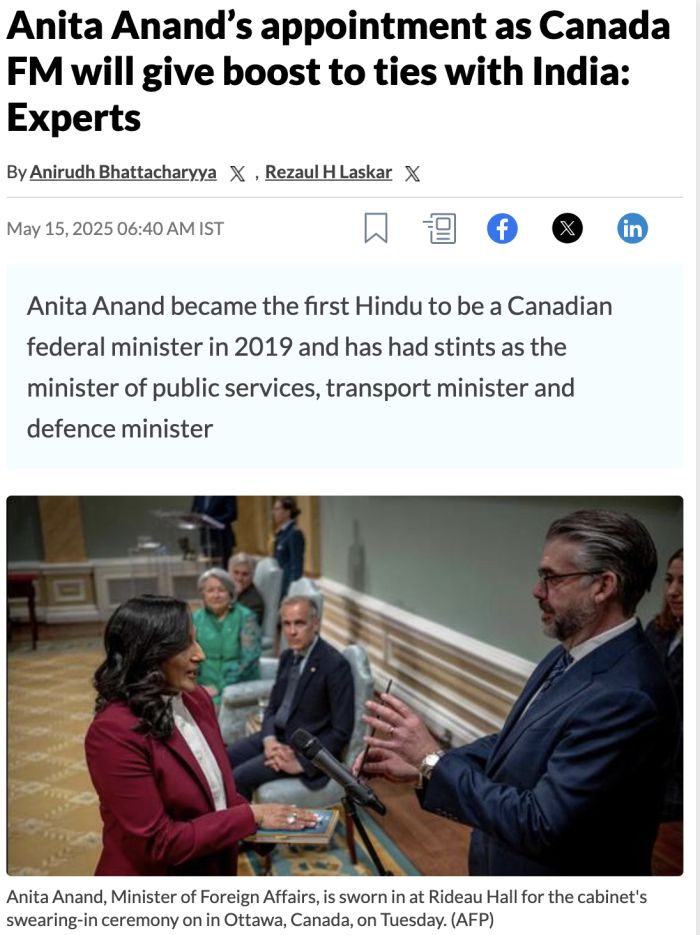
Anita Anand’s appointment as Canada FM will give boost to ties with India: Experts (s’ouvre dans un nouvel onglet)
Hindustan Times, May 15, 2025
Featuring: APF Canada Vice-President Research & Strategy Vina Nadjibulla
Excerpt: Nadjibulla highlights that Anand's appoint may present a “political opening for a reset” when it comes to diplomatic relations with Canada and India.
While it is ultimately at Carney's discretion, Nadjibulla see's Modi's online congratulatory messages to the new Canadian Prime Minister as a “good sign...[while] one of the most important signals” about the future of Canada's relationship with India continues to be the question of Modi's attendance to the G7 Summit, hosted under Canada's presidency in Alberta in this June.
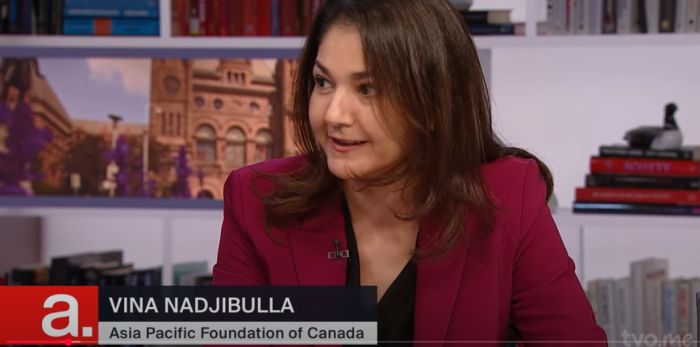
Should Canada Reset Relations with India and China? (s’ouvre dans un nouvel onglet)
TVO Today's The Agenda with host Steve Paikin, May 13, 2025
Featuring: APF Canada Vice-President Research & Strategy Vina Nadjibulla with The Agenda host Steve Paikin and special guests Rohinton Medhora, Professor of Practice at McGill University and Jeff Mahon, Director of Geopolitical & International Business Advisory at StrategyCorp.
Excerpt:
(India segment)
“There are serious issues that need to be addressed in the relationship, and the road to rebuilding the relationship is going to be a long one and will take a lot of political leadership on both sides and confidence.
“I think there are a few things that could be done right away to signal political readiness on our side. The G7 is coming up, Canada has the presidency, we are in charge of who gets to be invited in addition to the G7 members. I think sending an invitation to Prime Minister Modi, who has been attending all of the G7 meetings since 2019, would be a clear messaging from our side.
“There’s a lot that can be built on, the opportunities are endless, but we need to start
with some political signalling.”
(China segment)
“Canada was actually quite slow in coming to the realization that China under Xi Jinping had really changed. Australia, Japan, the U.S., other allies got there much faster in recognizing the China threat to national security and economic security.
“I think we are at a moment where we need a new conversation, public discussion about what would a made-in-Canada China strategy look like? We can’t reduce the relationship with China strictly to economic terms, in fact that is what China would like us to do, it would like to say our economies are complementary – which is true, we sell a lot of things that China wants - but there is a lot more to this relationship including China’s positioning on issues that we care about . . . and we need to make sure we are able to advance our interests and protect our values.”

CBC News
CBC Francophone Radio Circuit: Philippines Elections
CBC Radio-Canada, May 13, 2025
Featuring: Alexandre Veilleux, Advisor, Research & Communications (Quebec), APF Canada.
Excerpt: Alex Veilleux participated in a circuit of interviews for Radio-Canada's French-language programs across Canada to discuss the results of the mid-term elections in the Philippines and its global impact.
Veilleux spoke with local stations in cities such as Vancouver, Edmonton, Ottawa, Windsor, Regina, and Winnipeg.
A Look into the Relations of India and Pakistan (s’ouvre dans un nouvel onglet)
Canadian Global Affairs Institute Podcast, May 12, 2025
Featuring: Vice-President Research & Strategy Vina Nadjibulla with host Colin Robertson and guests Dr. Mariam Mufti and Randolph Mank.
Excerpt: "It's important to put on the table that this is the most serious escalation in tensions and violence that we've seen between India and Pakistan in decades . . . I think de-escalation would only happen if both sides can satisfy that they have met their objectives that they can essentially walk away with honour intact.
"And a lot of the kind of the messaging on the ground at the moment is actually quite nationalistic and doesn't leave so much space for that. But of course that can change."