Le 15 avril 2026, la Fondation Asie Pacifique du Canada a organisé une table ronde d’experts intitulée « L’Australie, le Canada et l’Indo-Pacifique », en présence du Dr James Curran, professeur d’histoire moderne et expert en politique et affaires étrangères australiennes à l’Université de Sydney, chroniqueur au The Australian Financial Review, et auteur du livre Australia’s China Odyssey: From Euphoria to Fear (2022). La rencontre s’est tenue à la fin de la visite du Dr Curran au Canada, qui a duré deux semaines, soutenue par le gouvernement canadien, et durant laquelle il s’est entretenu avec des membres de la communauté politique au sujet de la manière dont le Canada pourrait naviguer dans un environnement mondial caractérisé par une concurrence de plus en plus intense entre les grandes puissances.
Jeff Nankivell, président et chef de la direction de la FAP Canada, a inauguré l’événement, rappelant dans son allocution que le premier ministre du Canada a visité l’Australie en mars et a prononcé un discours devant le Parlement australien.
Comme pour les autres pays de l’Indo-Pacifique, les relations qu’entretient le Canada avec l’Australie entrent dans une nouvelle phase, a-t-il ajouté. De son côté, Vina Nadjibulla, vice-présidente, Recherche et stratégie à la FAP Canada, qui a animé la session d’échange avec le Dr Curran, a souligné que les Canadiens présents dans l’auditoire bénéficieraient d’entendre l’invité parler de la manière dont l’Australie cherche aussi à accroître son autonomie stratégique, son indépendance et sa capacité d’action dans le monde.
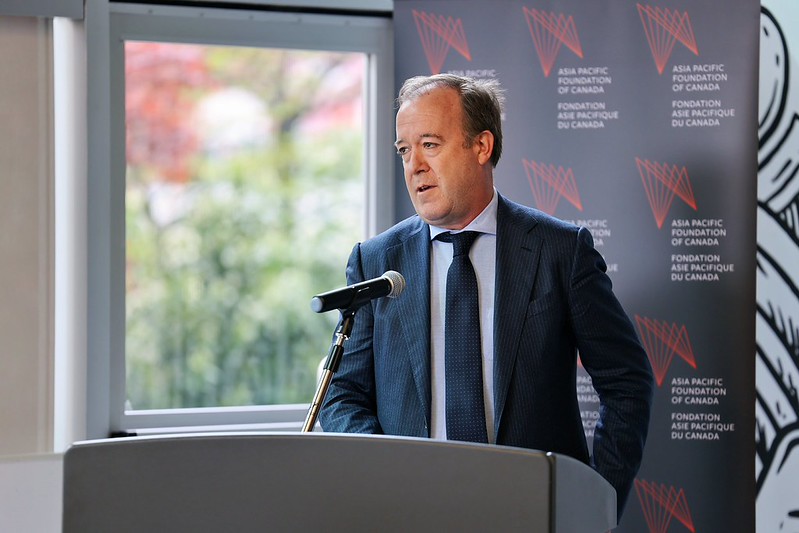
Le Dr Curran a commencé son exposé en partageant quelques réflexions sur ce qui serait le plus raisonnable en ce moment pour les décideurs politiques du monde entier. Quand les nouvelles occurrences ne correspondent pas à la manière dont nous voyons le monde, a-t-il soutenu, nous devons essentiellement réévaluer les présuppositions sur lesquelles ces notions sont basées. Le « phénomène Trump » serait possiblement un exemple.
Toutefois, en dépit des grands changements mondiaux en cours, notamment les turbulences déclenchées par le deuxième mandat de Trump, il estime que les élites de la politique étrangère de son pays sont restées largement silencieuses. Pour quelles raisons? Il a noté que l’Australie a été épargnée par Trump comparativement aux autres, y compris le Canada. À titre d’exemple, l’Australie a obtenu un tarif de base de 10% sur ses exportations et reçu des assurances concernant le statut de l’AUKUS, l’accord trilatéral de sécurité entre l’Australie, le Royaume-Uni et les États-Unis. L’Australie est également plus confiante, car elle estime être plus indispensable pour les États-Unis, compte tenu de l’accent que ces derniers mettent sur l’importance des chaînes d’îles pour contrer la Chine.
Dans ce contexte, Canberra éprouve peu d’enclin à parler ouvertement d’un « Plan B », une alternative à l’alliance américaine, dans le même esprit que le discours prononcé par M. Carney à Davos.
Cependant, les relations qu’entretient Canberra avec Washington pourraient se compliquer par les efforts de ce dernier pour améliorer ses relations avec Beijing. Washington, en plus de mettre de la pression sur les alliés pour accroître leurs dépenses en matière de défense, les incite également à limiter leur commerce avec la Chine. Mais la valeur des échanges commerciaux de l’Australie avec la Chine dépasse de dix fois ceux avec les États-Unis. Sur cet argument, l’Australie a résisté fermement, signalant qu’elle cherchera à maintenir des liens avec Beijing pour ses propres intérêts nationaux, un langage ferme, selon le Dr Curran, à l’égard d’un allié et principal protecteur.

De plus, la politique australienne de « stabilisation » des relations avec la Chine fait l’objet d’un débat dynamique : certains affirment qu’il s’agit d’une forme de temporisation, tandis que d’autres la qualifient de carcan relationnel. Toutefois, d’autres soutiennent que les liens bilatéraux sont désormais comme toute autre relation bilatérale, avec des hauts et des bas. Au fil du temps, a-t-il ajouté, il sera plus évident si la stabilisation fournit une bretelle de sortie pour éviter un conflit militaire ou un simple hiatus provisoire dans un schéma général de fragilité stratégique et de contestation.
Passant à la réflexion actuelle au Canada, le Dr Curran affirme qu’en sa qualité d’historien, il est naturellement méfiant envers les points culminants, mais il soupçonne que cela sera un point de tournant pour le Canada. Il décrit un sentiment de « vitalité » qu’il a détecté dans les secteurs de la sécurité nationale canadienne, des affaires étrangères, de la défense et du renseignement, ajoutant le bémol que la communauté des affaires au Canada semble moins certaine de la « rupture » avec l’ordre mondial dominé par les États-Unis. Le plus grand défi auquel le Canada fait face serait la mise en œuvre de la vision annoncée dans le discours de Davos : par exemple, sur quelles questions se baseront ces nouvelles formes de coalition, et qui en fera partie ? Au sujet de la Chine, si le Canada décide de se réengager, où tracera-t-il les lignes limites, et comment le Canada composera-t-il avec la Chine publiquement et sur quels sujets négociera-t-il en privé ?
Mme Nadjibulla a ajouté qu’il reste incertain si les coalitions basées sur les intérêts, qui font partie de la « géométrie variable » de Carney, opéreront largement à l’intérieur ou à l’extérieur de la structure de l’alliance américaine. Elle a demandé au Dr Curran s’il pensait que cela serait une question de séquençage ; en d’autres termes, qu’il y aurait peut-être initialement une voie à double voie dans laquelle les États-Unis seraient maintenus dans le jeu autant que possible, tandis que les puissances intermédiaires renforceraient simultanément leur autonomie et leur capacité d’action. La question désormais est la suivante : à quel degré les puissances intermédiaires peuvent-elles envisager un « Plan B » ?
Le Dr Curran répond que, pour l’instant, les États-Unis maintiendront leur position dominante dans le système mondial. Mais il estime aussi que les multilatéraux créés précédemment par les administrations américaines survivraient même sans le soutien actif de Trump. Le défi avec ce type de diplomatie des puissances intermédiaires est qu’elle nécessite que plusieurs d’entre elles travaillent ensemble pour commencer à approcher collectivement la capacité d’action équivalente à celle des grandes puissances.
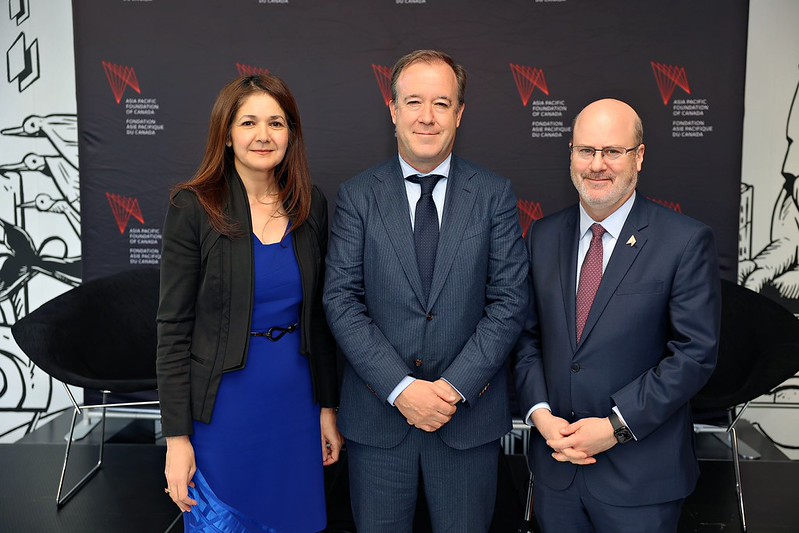
Après la question sur la manière dont la quête de stabilisation de l’Australie avec la Chine pourrait évoluer en un engagement sélectif, le Dr Curran a ajouté que Canberra semble résoudre la question de savoir où tracer les limites et quand tenir un discours ferme. Il a noté que l’opinion publique en Australie à l’égard des relations sino-australiennes a été endommagée par les épisodes passés de coercition économique et la diplomatie du « loup guerrier ». Parallèlement, le sondage mené par le Lowy Institute démontre que la majorité des Australiens considèrent désormais la Chine comme une menace militaire.
Mme Nadjibulla ajoute que le Canada se tourne vers les autres pour tirer des leçons sur la manière de gérer les questions relatives à la Chine tout en approfondissant les liens commerciaux et économiques. Cela comprend essayer de comprendre ce que signifie mettre en place des mécanismes de défense dans cette nouvelle phase des relations bilatérales. Après sa visite en Chine en janvier, M. Carney a donné des indications que le Canada s’engagera dans des secteurs spécifiques, mais que certains domaines tels que la défense, l’IA, les composantes du paysage énergétique et les minéraux critiques resteront intouchables.
Elle a clôturé l’événement en remerciant le Dr Curran et en notant que nous aurons davantage de discussions honnêtes et intellectuellement rigoureuses sur le monde tel qu’il est, compte tenu que les deux pays font face aux mêmes questions pertinentes relatives à la gestion des alliances, au renforcement de la résilience, à la navigation entre les États-Unis et la Chine, et à la création des conditions permettant aux deux pays d’explorer à quoi ressemblerait un « Plan B ».
• Révisé par Ted Fraser, rédacteur en chef à la FAP Canada.