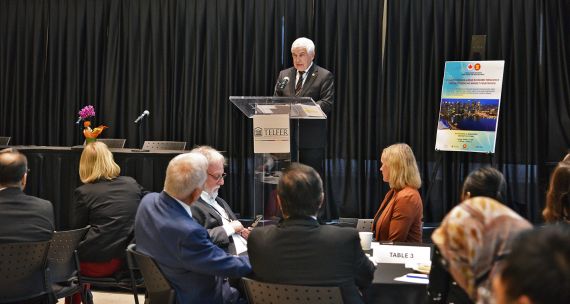
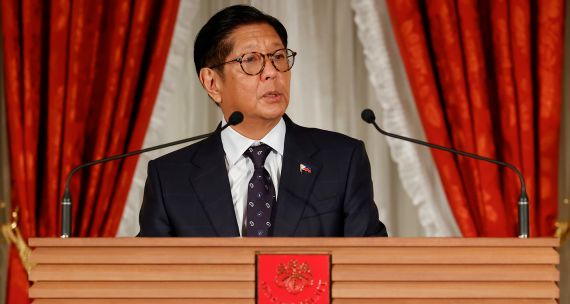
On November 14, on the margins of the Association of Southeast Asian Nations (ASEAN) Summit in Manila, Canadian Prime Minister Mark Carney announced the conclusion of negotiations for an ASEAN–Canada free trade agreement (ACAFTA) and the conclusion of negotiations for a Canada–Philippines free trade agreement.
Home to nearly 700 million people and a growing middle class, Southeast Asia is one of the world's fastest-growing regions. The region’s 11 diverse countries represent a significant opportunity for Canada to diversify trade beyond the U.S. and contribute to regional stability. Carney’s November 14 announcement builds on a significant push into the region, as Southeast Asia and ASEAN are priorities under Canada’s 2022 Indo-Pacific Strategy.
But a trade agreement, once ratified and in force, only delivers when Canadian businesses and investors choose to act on it, and that is not a given. A new poll conducted by APF Canada and Angus Reid suggests that getting them to do so could be an uphill battle.
While Canadians hold favourable views towards Southeast Asia, the region is not on their mental map. The challenge for Canada is therefore no longer simply to negotiate better access to Southeast Asian markets, but to generate the knowledge, familiarity, and business connections needed to turn that access into concrete results.
Warmth but unfamiliarity: What Canadians think of Southeast Asia
This year’s polling results show that seven in 10 Canadians (71%) view Southeast Asia favourably, far warmer than their views of China (38%) or India (36%), though still behind Japan (88%) and South Korea (76%), the most favourably viewed Indo-Pacific economies in the poll.
That positive view of Southeast Asia, however, does not translate into a strong desire for a closer economic relationship or familiarity.
Only one in 10 Canadians (10%) believe Canada should try to develop closer trade ties to Southeast Asia, well behind Europe (58%) and trailing China (14%), the U.S. (20%), the U.K. (22%), and Mexico (24%).
As Canada looks to reduce its dependence on the U.S., Canadians are more likely to say it is “extremely important” to build relationships with Japan (36%), South Korea (24%), China (24%) or Taiwan (21%). In comparison, Southeast Asia’s countries are perceived as less important, with Singapore (18%), Indonesia (13%), and Vietnam (12%) at the bottom of the list. Similarly, previous polls have also shown that Canadians do not see Southeast Asian countries as important for Canada’s future.
Goodwill is also not matched by familiarity. In APF Canada’s 2024 National Opinion Poll, fewer than one in five Canadians described themselves as knowledgeable about Singapore (17%), the Philippines (16%), Vietnam (14%), Indonesia (11%) and Malaysia (10%), the lowest of any region or country surveyed.
A 2025 APF Canada-Angus Reid survey found a similar gap: no more than 22 per cent said they knew a fair amount or more about any of the Southeast Asian countries covered (Vietnam 22%, Thailand 20%, Singapore 18%), compared with 45 per cent for China and 40 per cent for Japan. A lower percentage of Canadians also report planning to visit, study, or work in Southeast Asia over the next decade: Singapore (29%), Vietnam (25%), the Philippines (23%), Indonesia (21%) or Malaysia (20%), lagging behind Japan (48%), Australia (63%), the U.K. (62%) and the E.U. (67%).
The view from the region is similar. In the ISEAS–Yusof Ishak Institute’s 2026 survey finds that Canada ranked 10th out of 11 dialogue partners in strategic relevance to ASEAN, behind China, the U.S., Japan, and the EU, which took the first four spots in the rankings.
Taken together with APF Canada’s polling, the finding suggests that unfamiliarity runs both ways, as Canada has not yet developed close connections with the region.
Why Southeast Asia matters for Canada’s diversification push
Southeast Asia is a growing economic hub with a rapidly growing population and domestic market. In 2025, ASEAN’s economy ranked as the fifth largest in the world (about C$6 trillion), with a GDP growth of five per cent.
The Asian Development Bank forecasts that the region’s GDP will continue to grow by 5.1 per cent in 2027. The region, especially Vietnam, is becoming an important manufacturing hub as companies are shifting their operations to the region as part of the China+1 strategy.
Southeast Asia is an increasingly important part of Canada’s trade diversification. ASEAN was Canada’s fifth-largest merchandise partner in 2025, with two-way trade more than doubling in a decade, from C$21.6 billion in 2016 to C$52.5 billion in 2025, a trend accelerated by the entry into force of the CPTPP at the end of 2018.
The growth in bilateral trade was driven by a rapid increase in Canada’s imports from the region, which grew from C$16 billion in 2016 to C$41 billion in 2025, with exports growing at a slower rate, but still doubling from C$5.6 billion in 2016 to C$11.6 billion in 2025.
Despite this increase, total exports to Southeast Asia account for about 1.5 per cent of Canada’s total exports, equivalent to a third of what Canada exports to China, suggesting that Canadian businesses have yet to fully capitalize on the region’s potential.
Investment tells a similar story: Canada’s stock of foreign direct investment (FDI) in Southeast Asia has grown significantly to more than C$51 billion, yet that is only two per cent of Canada’s total outward FDI. However, investment activity has been uneven, with APF Canada’s Investment Monitor data indicating that two-way investment has been driven in part by a handful of large transactions, resulting in significant spikes in 2018 and 2023.
Southeast Asia also matters beyond the numbers. Some of the world’s busiest shipping lanes go through the region; ASEAN anchors the Indo-Pacific’s diplomatic architecture; and as manufacturers shift their production, the region is playing a growing role in global supply chains.
As Canada tries to reduce its economic reliance on the U.S. and diversify its export markets, Southeast Asia offers an opportunity to spread that risk. The opportunity is real, and some of Canada’s largest firms are already acting on it. The challenge is now getting more Canadian companies, especially small and medium enterprises (SMEs), to follow through.
Agreements don’t use themselves
Canadian companies have growing support to enter the region. Beyond diplomatic missions in 10 of the 11 countries in the region, Export Development Canada (EDC) has opened offices in Jakarta, Ho Chi Minh City, Manila, and Bangkok, and the Trade Commissioner Service has led missions across Southeast Asia. The new agreements, once in force, will lower tariffs and make Canadian businesses more competitive in these markets.
But free trade agreements do not use themselves; companies do. The latest EDC Trade Confidence Index shows that only 35 per cent of exporters use the CPTPP, compared with 50 per cent for the Canada-European Union Comprehensive Economic and Trade Agreement (CETA) and 69 per cent for the Canada-United States-Mexico Agreement (CUSMA), and that Europe remains a bigger target than the Asia Pacific for companies growing beyond the U.S.
EDC’s index also notes that proximity and familiarity influence where exporters invest. Companies are unlikely to use the tools and resources at their disposal if the region is not on their radar, and that is where public and business perspectives meet. Leading Canadian financial companies such as Sun Life and Manulife have in recent years expanded their footprint in the region, but the broader shift in trade will require more than a few early movers. The challenge now is getting more companies and Canadians decide that Southeast Asia is worth their attention.
Canada is not alone in facing this challenge. Australia, an ASEAN ‘neighbour’ with longstanding ties with Southeast Asia, has seen its economic engagement with the region stagnates and fall short of expectations .
Canberra’s 2023 Southeast Asia Economic Strategy to 2040 lists raising awareness as its first category of action and recommends a whole-of-country plan to strengthen Southeast Asia literacy across Australian businesses, government, the education and training systems, and the broader community. Australia’s experience demonstrates that even countries with longstanding relationships and considerable economic exposure to Southeast Asia cannot take business engagement for granted and that bridging the gap between goodwill and knowledge is not a side issue but a precondition for turning free trade agreements into higher exports.
Conclusion
Canada has made considerable progress in strengthening its economic architecture with Southeast Asia. But negotiating trade agreements and establishing diplomatic and commercial ties is only one part of the equation.
Turning these opportunities into meaningful economic gains will also depend on whether Canadian businesses and the broader public develop a better understanding of the region and its economic potential. This means investing in Southeast Asia literacy, strengthening educational and business networks, and providing Canadian companies, particularly SMEs, with the knowledge and connections they need to navigate unfamiliar markets.
For many smaller businesses, entering new markets begins with a personal connection or interest, an understanding of the local business environment, or a pre-existing partnership. Making those connections happen must come first, and it should be a core part of Canada’s trade diversification efforts. The success of Canada’s new agreements in Southeast Asia will ultimately depend not only on market access, but more importantly on whether Canadian businesses are prepared for the opportunity. Canada’s own Indo-Pacific Strategy already says that investing in ties between Canadians and people from the region “lies at the heart” of its approach. Doubling down on that pillar would be one of the best ways to contribute to closing the gap between awareness and action.
• Edited by Ted Fraser, Managing Editor, APF Canada