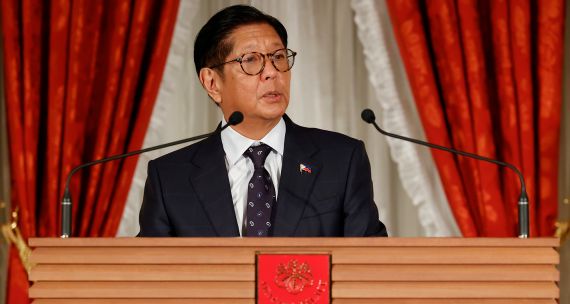
On March 12-13, 2026, APF Canada and the Stratbase Institute for Strategic and International Studies co-hosted a Track 1.5 Strategic Dialogue and Public Forum on Canada–Philippines Economic Security Co-operation in Manila, Philippines. The discussions, covering trade, digital technology, critical minerals, energy, and security, took place over one and a half days and brought together government officials, industry representatives, academics, and policy practitioners.
The Canada-Philippines Track 1.5 Strategic Dialogue and Public Forum on Economic Security Co-operation took place at a time when economic security has become a central policy priority for both Canada and the Philippines. Amid ongoing geopolitical shocks, supply-chain disruptions, rapid digital transformation, and rising strategic competition, supply chains, digital systems, and access to critical resources are no longer treated as purely economic concerns. Instead, they are increasingly assessed through the lens of resilience, sovereignty, and exposure to external shocks and coercion.
The discussion also took place in a moment of growing bilateral and regional opportunity. The Canada–Philippines relationship is underpinned by decades of diplomatic engagement, growing security co-operation, strong people-to-people ties, and expanding economic relations. The launch of negotiations toward a bilateral Canada–Philippines free trade agreement has added further momentum to the relationship at a time when both countries are seeking to strengthen economic resilience and diversify partnerships. With Canada–ASEAN relations now elevated to a Strategic Partnership and the Philippines serving as ASEAN Chair in 2026, bilateral co-operation also carries a broader regional dimension.
Participants from both countries converged on the view that the Canada-Philippines relationship has strong foundations. Trust is high, interests are broadly aligned, and both countries bring clear strengths to the partnership. Speakers also highlighted deep people-to-people ties, including a large Filipino Canadian community, alongside expanding defence co-operation and ongoing free trade negotiations. Yet despite these foundations, the level of trade and investment between the two countries remains below potential. A central question therefore ran through the discussions: if strategic alignment and trust already exist, why has that not translated into stronger economic outcomes?
Economic Security in a Shifting Strategic Context
A consistent theme in the dialogue was that decisions about infrastructure, data, and supply chains are now increasingly judged not only on the basis of cost or efficiency, but also on resilience, redundancy, and strategic exposure. This is particularly true in the Indo-Pacific, where economic and security risks are now more deeply intertwined than at any point in recent decades. Participants stressed that economic security today includes digital systems, infrastructure, energy, industrial capabilities, and access to strategic materials.
For the Philippines, geography is a structural advantage. The country sits along major shipping routes and hosts undersea cable systems that support regional connectivity, positioning it within both physical and digital flows. Participants noted that this geography gives the Philippines considerable relevance in an era increasingly shaped by supply-chain resilience and secure digital infrastructure. The core challenge is the absence, or weakness, of mechanisms that can translate geographic and strategic relevance into concrete projects, sustained investment, and long-term industrial partnerships.
Canadian participants framed their own position as a reassessment rather than a pivot. The emphasis on diversification reflects a response to concentrated market exposure and a broader effort to build trusted partnerships and standards-based co-operation under Canada’s Indo-Pacific Strategy. In this sense, deeper engagement with Southeast Asia, including the Philippines, is not a short-term tactical shift, but part of a wider adjustment in Canadian economic and strategic policy.
Across both sides, there was convergence on one important point: governments alone are not equipped to address these challenges. Closer co-ordination with industry and research institutions is necessary, although the operational implications of such co-ordination remain unevenly defined. Participants repeatedly returned to the need to mobilize not only governments, but also academic institutions, financiers, technology actors, and industrial partners if economic security co-operation is to move beyond broad alignment into practical delivery.
The Gap Between Alignment and Action
The most consistent conclusion emerging from the discussions was that the main obstacles to deeper bilateral co-operation are not political, but operational. The issue is less one of intent or strategic divergence than of how policies are implemented in practice. Participants were clear that strong political alignment has not consistently translated into commercial outcomes.
On the Philippine side, constraints are most visible in regulatory processes. In sectors such as mining, infrastructure, and digital services, approvals remain fragmented across agencies and timelines are often unpredictable. While reforms are underway and the direction of travel is broadly positive, implementation remains uneven. Participants stressed that the gap between policy announcements and on-the-ground outcomes continues to shape investor perceptions. The problem is not that reforms are absent, but that execution often lacks consistency, speed, and co-ordination.
On the Canadian side, the constraints are different. Canadian firms have had limited exposure to Southeast Asia, and investment decisions tend to follow established familiarity rather than prospective opportunity. While interest in diversification is increasing, it does not consistently translate into sustained market engagement. Several participants noted that Canadian companies continue to assess the region cautiously, often preferring established markets and clearer operating environments to opportunities that may be promising but require greater time, local knowledge, or risk tolerance.
There is also a difference in expectations. Philippine participants tended to speak in terms of near-term improvements and reform trajectories, whereas Canadian participants emphasized that investment decisions are based on current conditions rather than anticipated improvements. This divergence matters. It shapes how each side evaluates timing, risk, and readiness for co-operation. In that sense, the gap between alignment and action is not only institutional, but perceptual.
This was perhaps the central analytical insight of the dialogue: Canada and the Philippines align on many priorities, but alignment on priorities is not enough. What matters now is the ability to translate that alignment into a more predictable investment environment, a clearer pipeline of opportunities, and a set of practical initiatives that can create confidence and momentum.
Priority Sectors and Their Interdependencies
Discussion converged around three areas — digital and artificial intelligence, critical minerals, and energy — alongside growing interest in defence-related industrial co-operation. While these sectors were examined separately in parts of the dialogue, their interdependence emerged as one of the most important findings.
Digital infrastructure and AI were identified as areas where near-term progress is most plausible. Philippine initiatives, including the E-Governance Act, connectivity expansion, and an AI roadmap, provide an initial policy base. Participants noted that the Philippines is seeking to strengthen digital infrastructure and trusted digital systems at a time when digital resilience is becoming a core dimension of economic security. Canada, for its part, brings strengths in AI research, AI governance, ICT, and the development of trusted regulatory approaches. This creates a practical basis for co-operation, particularly in areas where Canadian expertise can be applied to Philippine priorities in public-sector digital transformation, cybersecurity, and trusted digital governance.
Critical minerals were discussed in more strategic terms. The Philippines holds significant reserves of nickel, copper, and other inputs relevant to emerging technologies and the energy transition. Participants noted that Manila has actively sought to position itself as a destination for global investment in critical minerals. At the same time, most value remains concentrated in processing and downstream activities located outside the country. Moving up the value chain will require not only capital, but also technology, reliable energy supply, supporting infrastructure, and clearer regulatory conditions. For Canada, which is seeking more resilient supply chains and trusted mineral partnerships as part of its broader diversification agenda, this creates an obvious area of complementarity.
Energy emerged as a binding constraint across sectors. Mineral processing and digital infrastructure both depend on reliable power supply, and current limitations affect the feasibility of industrial expansion. Options discussed, including liquefied natural gas, nuclear energy, and renewables, were framed as components of a broader energy mix rather than as competing alternatives. This framing is important. The dialogue did not treat energy as a standalone sector, but as an enabling condition for broader economic security co-operation.
Taken together, these sectors are not parallel tracks. Progress in one depends on conditions in the others, and treating them independently risks misaligning investment and planning. This has implications for sequencing. Without alignment across sectors, investments that appear viable in isolation may remain difficult to implement in practice. Investments in minerals processing will struggle to scale without adequate energy. Digital infrastructure and AI adoption will likewise depend on energy reliability, secure digital systems, and technical skills. The dialogue therefore pointed not simply to sectoral opportunities, but to the need for a more integrated economic security strategy.
Participants also noted growing interest in defence-related industrial co-operation and dual-use technologies. This reflected a broader recognition that economic security and hard security are increasingly linked, particularly in areas such as secure supply chains, maritime infrastructure, advanced materials, and digital systems.
Favourable Conditions, but a Narrowing Window for Action
Several factors make the current period more conducive to advancing co-operation. The ongoing Canada–Philippines FTA negotiations provide a structured channel for engagement and a mechanism for addressing regulatory issues, while also embedding economic security considerations into the bilateral agenda and signalling political commitment to business.
The Philippines’ ASEAN chairmanship also creates an opportunity to position bilateral initiatives within a regional framework, particularly in areas such as supply-chain resilience, digital integration, and infrastructure connectivity. This creates scope for bilateral co-operation to support broader regional priorities rather than stand apart from them.
More broadly, both countries are in phases of policy adjustment. This creates institutional space for new initiatives, but also introduces uncertainty. Participants repeatedly stressed that the conditions currently favouring deeper engagement are unlikely to persist indefinitely. Delays risk eroding momentum, reinforcing investor caution, and widening the gap between strategic alignment and actual delivery.
Pathways Forward
The discussion on next steps was grounded and focused on near-term delivery, with clear implications for Canada’s broader economic engagement in Southeast Asia. Participants emphasized the importance of identifying a small number of flagship projects, with both governments playing a role in supporting their delivery. These were discussed as practical initiatives that could demonstrate progress and help shape investor perceptions of the operating environment. Demonstrating execution was seen as important in building credibility. Early progress on a small number of projects could influence how Canadian firms assess risk and entry conditions. These projects could focus on areas such as AI deployment, mineral processing, or cybersecurity.
For Canada, such projects were seen as practical entry points to establish a sustained commercial and strategic presence. The specific sector mattered less than the ability to deliver tangible outcomes within a defined timeframe. This places significant weight on implementation. In the Philippine context, reforms need to translate into predictable timelines and clearer co-ordination across agencies. The gap between policy announcements and on-the-ground outcomes remains a central concern for investors. Improving consistency in execution, including through clearer points of co-ordination within government, is therefore essential to strengthening confidence.
Canada was seen not only as an enabling partner, but as a potential co-developer of projects in areas where it has established strengths, particularly in AI applications, critical minerals, energy systems, and digital governance. This could extend to dual-use and defence-related industrial applications. Such collaboration could help reduce risk, lower entry barriers for Canadian firms, and accelerate implementation in newer or more complex sectors.
Capacity development was identified as a supporting factor. This includes partnerships between universities, research institutions, and training programs, particularly in AI, cybersecurity, and energy systems. Linking training to ongoing projects allows skills to develop through practical application rather than in isolation. Participants suggested that this would also create a more durable basis for bilateral co-operation by ensuring that human capital development keeps pace with commercial and technological ambitions.
There is also a need for a more integrated and sequenced approach across priority sectors. Energy constraints affect both mineral processing and digital infrastructure, with direct implications for how Canadian investments are sequenced, particularly where energy availability will shape the viability of downstream projects. Participants stressed that without a clearer understanding of these interdependencies, both governments risk promoting opportunities that appear attractive on paper but remain difficult to implement in practice.
Conclusion
The Canada–Philippines relationship is widely recognized as having strong foundations, and that view was consistently reflected throughout the dialogue. The Philippines offers a strategic location and growing opportunities in sectors central to economic security, while Canada brings complementary capabilities in advanced technologies, resource governance, energy, and trusted partnerships. Participants were clear, however, that this alignment has yet to translate into a level of economic engagement commensurate with the potential of the relationship. The challenge is not a lack of intent, but the need to convert intent into sustained action.
For Canada, this gap is not simply a bilateral issue. It goes to the heart of its broader objective of deepening its economic presence in Southeast Asia, diversifying beyond concentrated market exposure, and building more resilient supply chains. For the Philippines, the challenge is to translate strong strategic relevance and policy ambition into an operating environment that inspires sustained confidence among trusted partners and investors.
The discussions in Manila made clear that the opportunity is real, but it is also time-bound. The task ahead is not to rethink the relationship, but to follow through on the alignment that already exists. Even a small number of concrete outcomes could help shift perceptions, demonstrate credibility, and build momentum for deeper co-operation. More than anything, the dialogue underscored that the next phase of Canada–Philippines relations will depend less on identifying new areas of alignment than on showing that existing alignment can be delivered in practice.
In that spirit, several practical priorities emerged from the dialogue. These include identifying and jointly supporting a small number of flagship projects in areas such as AI deployment, mineral processing, cybersecurity, and energy systems to demonstrate execution, build investor confidence, and generate early momentum. Participants also emphasized the importance of using ongoing Canada–Philippines free trade negotiations to address operational barriers, improve regulatory predictability, and strengthen investment conditions in priority sectors.
There was also broad support for establishing clearer bilateral and domestic co-ordination mechanisms to reduce approval delays, improve implementation, and address regulatory bottlenecks more effectively. Canada was seen not only as an enabling partner, but as a potential co-developer of projects in areas where it has established strengths, including AI applications, critical minerals, energy systems, and digital governance. At the same time, participants stressed the need for a more integrated and sequenced approach across priority sectors, recognizing that energy, minerals, and digital infrastructure are deeply interconnected.
Finally, the dialogue pointed to the importance of expanding partnerships among universities, research institutions, industry, and government to build practical capacity in areas such as AI, cybersecurity, energy systems, and advanced manufacturing, while also exploring opportunities for greater collaboration in dual-use and defence-related industries where economic security and hard security increasingly overlap.
• Edited by Ted Fraser, Senior Editor, APF Canada