With a view to encouraging safer, more economically and environmentally sustainable approaches to protecting low Earth orbit (LEO) from the risks of satellite mega-constellations (i.e. thousands or even tens of thousands of satellites), the Asia Pacific Foundation of Canada (APF Canada) and the Outer Space Institute (OSI) co-organized a workshop in Singapore on July 28–29, 2026, the second in a series.
The first workshop, held in February 2025, focused on lunar co-ordination. Like the first workshop, this second event brought together experts in space law and policy from Canada, China, Japan, Singapore, Italy, and the Netherlands to discuss safety, sustainability, and governance challenges arising from the rapid growth of satellite mega-constellations in LEO.
Holding the workshop in Asia, and in partnership with Asian experts, reflected the growing number of Asian governments and companies now developing or hosting mega-constellation projects, and the need for their perspectives to help shape emerging governance norms.
Key Takeaways
- The number and scale of mega-constellations is expanding faster than existing governance mechanisms can keep up.
- Domestic licensing decisions can support or hinder progress, depending on whether they undermine international efforts or contribute to raised expectations.
- The effects of re-entries are an emerging governance gap, with serious potential implications for casualty risks and atmospheric chemistry, including the ozone layer.
Satellite mega-constellations are expanding, and raising risks
Satellite mega-constellations, which are composed of thousands or even tens of thousands of satellites, can deliver many benefits to communities and economies, including expanded access to broadband in rural and remote areas — a benefit of particular significance across the Indo-Pacific, where archipelagic and geographically dispersed states have long faced high costs and technical barriers to extending terrestrial connectivity to outlying islands and rural communities.
But these mega-constellations also pose risks. These include risks to orbital safety, that is, the ability of active satellites to avoid colliding with each other or with debris; the chemistry of the upper atmosphere, as rocket exhaust and the debris from re-entering satellites alter the composition of the stratosphere, where the protective ozone layer sits; and to our ability to study the night sky, since satellite trails and radio-frequency interference can compromise the ground- and space-based astronomy that underpins navigation, timekeeping, and scientific and cultural heritage.
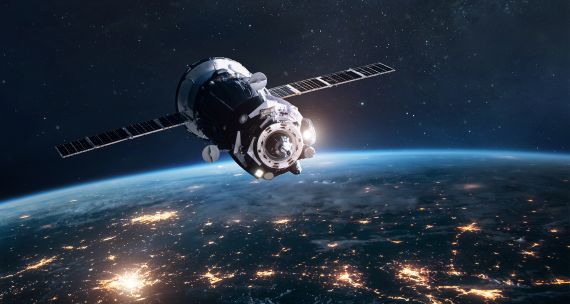
The orbital landscape is diversifying rapidly. While U.S.-based Starlink currently has the only fully operational mega-constellation, with close to 11,000 satellites in orbit and tens of thousands more planned, there are many other mega-constellations under development. These include Amazon Leo (U.S.), Qianfan/SpaceSail and Guowang (China), Eutelsat OneWeb (Europe), Telesat Lightspeed (Canada), and the European Commission’s IRIS. A further expansion into space-based AI infrastructure could add many more satellites to LEO, with one proposal involving an additional one million satellites.
Some of the impacts examined during the workshop included:
Growing risks to safety and sustainability in orbit
The amount and type of space debris is increasing; there are an estimated 1.2 million debris objects in LEO larger than 1 cm in cross-sectional area. At orbital speeds, even fragments this size can disable or destroy an operational satellite on impact, and each collision generates further debris — raising the risk of a self-sustaining cascade of collisions known as the Kessler Syndrome, which could eventually render parts of LEO unusable for generations.
There are many factors that contribute to risk, including wide variations in domestic and international policies. For example, the U.S. requires that satellites be deorbited within five years at the end of their operational lives, as compared to a 25-year timeline recommended by the Inter-Agency Space Debris Coordination Committee, a voluntary technical guideline that most space-faring states have historically treated as the baseline.
The European Space Agency and Canada have since adopted a similar five-year standard, positioning the U.S. approach as an emerging rather than isolated best practice, but global adherence to even the 25-year guideline remains inconsistent.
With regards to on-orbit safety — that is, the ability of operators to detect, track, and manoeuvre around potential collisions — problems arise when different operators have different collision avoidance capabilities, with non-manoeuvrable satellites or abandoned spacecraft being especially vulnerable to the growing debris environment. Operator-led norms are, however, emerging, including a joint safety framework co-published by several major satellite operators; rocket and satellite designs that enable controlled re-entries are likewise emerging and should be encouraged by government policy.
Impacts on air travel and the environment
There is also an increasing frequency of satellite debris reaching Earth’s surface, including recent incidents in Canada, India, and Côte d'Ivoire. OSI research has shown that disproportionate re-entry risk is borne by equatorial Global South cities located beneath the flight paths used for geostationary-transfer-orbit launches, that airplanes in flight are also at risk, and that airspace closures ahead of anticipated re-entries can be very costly to airlines and their passengers.
The atmospheric effects of launches and re-entries are another emerging concern. As they ascend, rockets deposit exhaust into every layer of the atmosphere.
Each year, thousands of satellites re-enter the atmosphere and burn up into billions of particles of aluminum and other elements, altering the aerosol composition of the stratosphere — where the protective ozone layer is located — in ways scientists are still working to understand.
A thinner ozone layer means more of the sun’s ultraviolet radiation reaches the ground, raising the risk of skin cancer and cataracts and damaging crops — the same underlying concern that drove the 1987 Montreal Protocol on ozone-depleting substances. While the precautionary principle calls on states to conduct environmental impact assessments before authorizing projects with potentially serious environmental effects, most domestic regulators do not currently require such assessments when licensing rockets and satellites.
The U.S. Federal Communications Commission, for example, does not currently factor environmental considerations into its licensing process — illustrating how far domestic regulatory practice still lags the environmental-review standards already applied in other industries.
Protecting astronomy research and the freedom of exploration and use
Mega-constellations are having a growing impact on optical and radio astronomy. Bright, moving satellites leave trails across long-exposure telescope images, and their radio transmissions can interfere with the faint signals radio telescopes are designed to detect — a set of concerns captured by the term “dark and quiet skies,” which has become a standing agenda item at the United Nations Committee on the Peaceful Uses of Outer Space (COPUOS). COPUOUS also explored how to balance competing exercises of the right of exploration and use of outer space, including the proposed Astro-ICJ initiative, under which UN General Assembly member states would seek an advisory opinion from the International Court of Justice on states’ rights and responsibilities regarding orbital light and spectrum pollution — discussed as one possible path forward following the 2023 rejection of a related COPUOS proposal for lack of consensus.